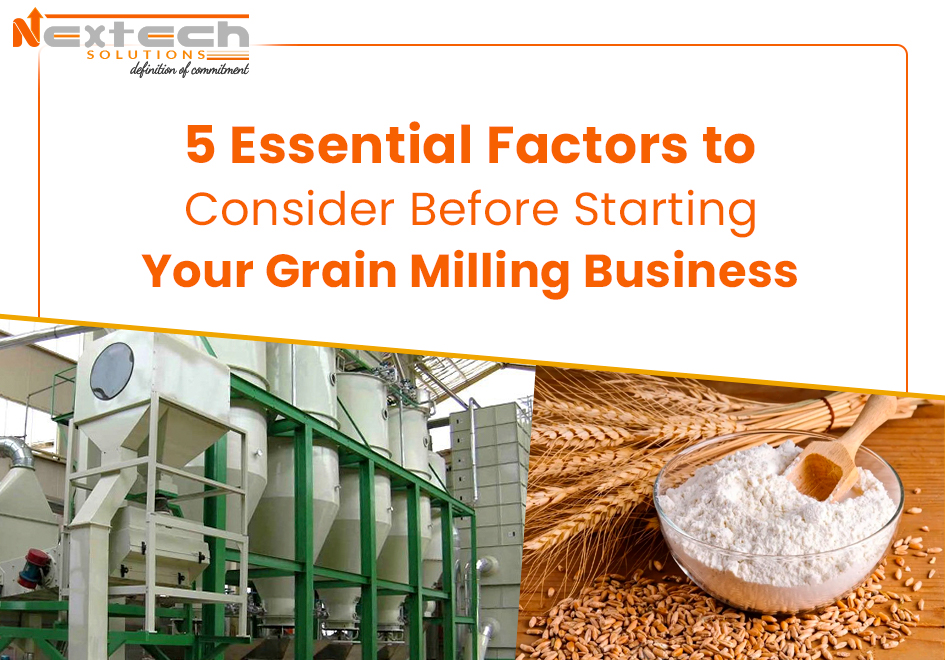
5 Essential Factors to Consider Before Starting Your Grain Milling Business

we’ll give you the Grain Milling Solutions on the 5 essential factors that you need to keep in mind before launching your venture. From market research to equipment selection, we’ve got you covered. So grab a cup of coffee and let’s get started!

Introduction to Grain Milling Business

There are many different types of grain mills, and Rice Mill Business the best one for your business will depend on your specific needs and requirements.

When starting a grain milling business, there are several key considerations that you need to take into account. These include:

The type of grain that you will be milling

Rice is the most common type of grain milled, but other options include corn, rye, barley, oats, etc. Each type of grain has its own unique characteristics and requires different equipment and processing techniques.

Your target market

Are you planning to sell your products to consumers, businesses, or both? You will need to tailor your marketing and sales strategies accordingly.

Your financial resources

Starting a grain milling business can be capital intensive, so you will need to have access to adequate funding.

Factors to consider before launching a grain milling business

There are several factors to consider before launching a grain milling business. The first is the type of grain you will be milling. There are many different types of grains, each with its own unique characteristics. You will need to research which type of grain is best suited for your particular business.

Location

There are a few essential factors to consider before launching your grain milling business. The first is location. You’ll need to find a spot that’s convenient for your customers and has enough space to accommodate your equipment. If you’re planning on selling online, you’ll also need to factor in shipping costs.

Another important consideration is the type of grains you’ll be milling. Different grains require different types of equipment, so it’s important to do your research and choose a mill that’s right for the job.

Equipment and Tools

Assuming you have the basic infrastructure in place (access to water, electricity, and storage) there are a few key pieces of equipment you will need to launch your grain milling business:

Buckets or containers
Packaging materials

Market Research and Competition Analysis

Before starting any business, it is important to understand the market and the competition. The grain milling industry is no different. By doing your research, you can better understand the opportunities and challenges that exist in this space.

When it comes to competition analysis, there are a few key things to keep in mind as well. First, you need to identify your main competitors. Second, you need to assess their strengths and weaknesses. Third, you need to develop a competitive advantage that will allow you to stand out from the crowd. By taking these steps, you can develop a strong plan for launching your grain milling business successfully.

Financing

There are a few essential factors to consider before launching your grain milling business. One of the most important is financing. You will need to have enough capital to get started and to keep your business running until it becomes profitable. There are a few options for financing your grain milling business:

1) Bootstrapping
2) Small Business Loans
3) Equity Financing
4) Crowdfunding
5) Personal Credit Cards

Staffing

One of the most important aspects of staffing a grain milling business is ensuring that there are enough qualified employees to safely and effectively operate the machinery. Grain milling businesses should consider both full-time and part-time staff to ensure that they have adequate coverage at all times. In addition, it is important to have a good mix of experienced and inexperienced workers so that new employees can be trained by those with more experience.

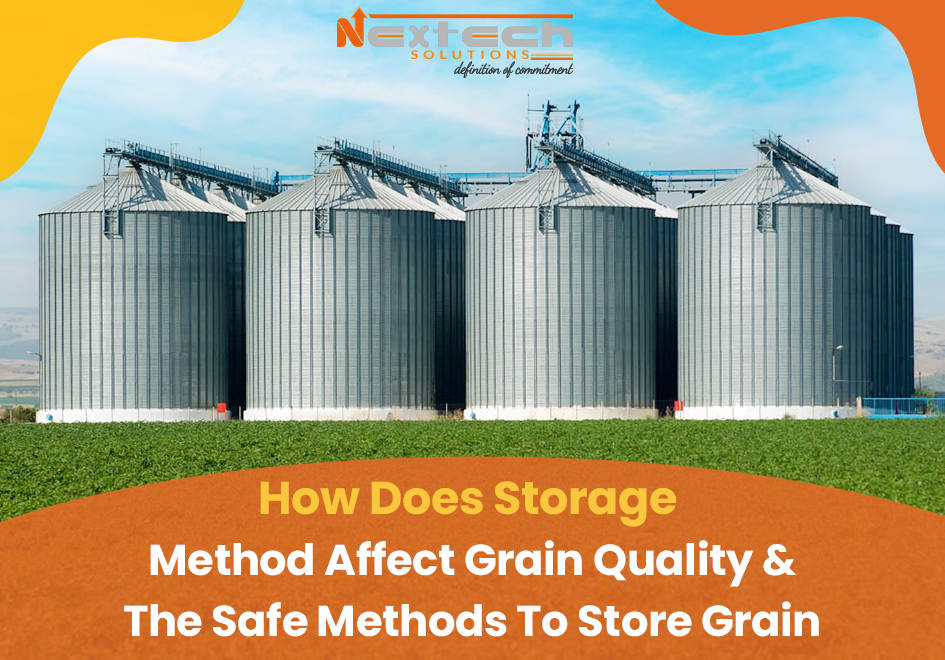
How Does Storage Method Affect Grain Quality & The Safe Methods To Store Grain

When it comes to storing your grains, you need to think about a lot of things. How will you store them? How often should you replace your storage containers? But most importantly, what kind of quality will they maintain over time?

 The right storage solution can have a tremendous impact on the quality and condition of your stored grain.

 Storing grains can be difficult enough as it is without worrying about the conditions that are beyond your control. If you’re ready to get started with proper storage, read on for some insights into which options are best for different kinds of grain, and how each one affects grain quality.

What Does Storage Method Do To Grain Quality?

The best way to understand the impact the storage method has on grain quality is to look at the properties of different types of grain; quality is affected by so many factors that it’s virtually impossible to generalize. For example, bran and germ quality is affected by the kind of crop, the growing conditions, and how the grain is stored.

Some varieties remain intact during storage, while others become more bran, less germ. Depending on how well the grain is stored, storage silos is the safe method to store grain this can affect its germination rate and quality. The moisture content of the grain can also have a significant impact.

If the grain is too dry, it will be more difficult for the seed to germinate, and if it is too wet, it is more likely to spoil.

Differences Between Grain Storage Options

There are a few key differences between different methods of grain storage, and the best way to store your grains depends on a few different factors.

Firstly, there are issues of age and quality that can be caused by quality issues with the storage containers themselves.

There are two main issues that can occur when storing grains in containers 

Container Age and Quality Issues.

  1. Container Age  This refers to how old your containers are before use. As grains are not alive, they don’t age, so the true age of the containers is unknown. However, if you store grain in containers that are significantly older than the specifications in the article, you run the risk of container corrosion, which has the potential to damage your grains.

2. Container Quality:  As with any other product, not all containers are created equal. Some containers may have a coating or sealant that could have degraded over time, and this could be slightly affecting the quality of your grains.

When Should You Use Which Method?

Different kinds of grains can be stored in different ways Bulk storage system but there are a few general rules that apply to most types of grains. 

Whole grains – such as corn, or oats – can be stored for up to a year. Whole grains are best for use as animal feed, as they don’t need to be milled first, and can be fed directly to most livestock. Because of the grain’s high nutrient density, grain can be fed directly, but mixing it with other feed is best for more efficient digestion. 

Pasta-type grains – such as couscous, quinoa – should be stored in airtight containers. These can be stored for 6-12 months and are best used as a quick and easy alternative to traditional grains when cooking.

Cereal grains have a shorter shelf life, and should be stored in an airtight container between 1 and 3 months.

Best Ways To Store Grains

Air-Tight And Light:   Proof Storage Containers:  The best way to store grains is in silos storage that are light-proof, and ideally should be in an area that is dry and dark.

 Keeping Grain In The Dark:   One of the best ways to store grains is to keep them in the dark. This reduces their exposure to sunlight, which is what triggers the enzymatic breakdown and fermentation of starches in grains.

Cool Temperatures And Moisture:   The ideal temperature for storing grains is between 12 and 18 degrees Celsius, with a relative humidity between 65 and 80%. This temperature range is best for reducing the risk of any potential quality issues, but also has the potential to slow down the enzymatic breakdown of starches.

Conclusion

Storing grains correctly can be easy, but it’s also important to be mindful of the impact your method has on grain quality. 

There are a few different ways to store grain, and each has different aspects that affect grain quality. To get the best results, it’s best to store your grain in an airtight container in a dry and dark place. This can be a lot of work, but it can ensure that your grains stay in the best condition possible.

Modernize Design Consulting For Storage Silo & Warehouse

Modern design consulting for Storage Silo & Warehouse is a way of changing thinking perspectives and bringing revolutionary solutions to your problems.

Thinking to create warehouse avenues but are new to the industry? Here we got you covered! The storage silo and warehousing are hefty tasks when it comes to planning and initialising the process. It is indeed important to be well aware of the facts and know your possibilities of cost efficiency and profitable parts. The business is a risky opportunity however can prove to be the most worthwhile when done with precautions. Modern design consulting for Storage Silo & Warehouse is a way of changing thinking perspectives and bringing revolutionary solutions to your problems. Morden day consulting helps you in establishing your business in storage silo and warehousing from scrap with all the right equipment and material that goes into commencement. 

Storage silo needs a high-end variety of equipment that would be a heavy initial investment and before running into big deals, one must always look for optimum solutions. These optimum solutions are researched for you and strategies dynamically according to your requirements by nextech solutions, the best Storage Silo Project Consultant. Having expertise and experience in the holistic business environment for setting up storage silos and warehouses makes us the best consultant in the industry. In an industry where competition is high and well versatile, before establishing your brand name, you should have a 360-degree view of the market, supply chain, and other long-term aspects.

Why Are Storage Silo Consultants Needed?

Upgrading your warehouse or even starting a new venture, an investment analysis along with a cost structure analysis of equipment is equally important. For such steps to be correct, it is extremely advisable to hire storage silo consultants that can guide you better. 

1. Making The Most Of Everything

Having wide industry experience, these consultants are experts in the field and know almost everything in detail. However being new to the industry your knowledge is limited and apart from it, you still do not have access to rectify asymmetric information. This creates gaps in your researched and planned systems and thus the outcomes are inefficient. Storage silo consultants on the other hand have perfect information and know how to optimize your values. 

2. Picking The Right Fit 

Cost efficiency is a goal when it comes to upgrading. Consultants have more resources to locate your needs and requirements, understand the problem and then act upon it. They can help you modernize and use better cost-friendly technologies within the scope of your business. Storage silo consultants are best at breaking down your complex problems and suggesting the right fit solution for you. 

3. Use Your Power Mind In Operations 

Once you hire storage silo consultants, your works become easier and simpler. Experts will work to put professional solutions for your problems and you have all the time in hand to focus on other business operations. This frees up your resources like labour and in-house advisers and they can be put to some other crucial aspects of the business. 

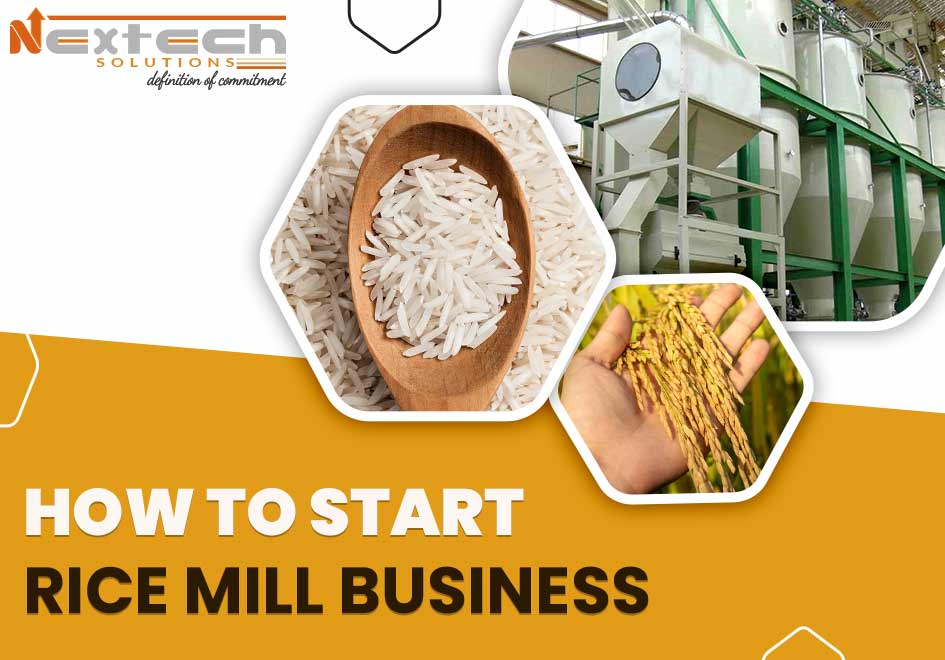
How to start Rice Mill Business

The Rice mill business is a profitable avenue when trends in healthy lifestyles show an increased demand for natural and nutritious food. Rice is a rich source of proteins, vitamins and minerals which makes it crucial for growth consumption majorly in form of flour or by-products of rice flour. Setting up a rice mill business is a profitable investment that creates sufficient ROI over the years due to high necessity demand. Setting up a rice mill needs a good amount of initial investment in grain milling equipment.

Guide to starting a rice mill business

Since rice milling is an important step in the channel of rice production and supply, it becomes important for agro-industries to rely on rice milling businesses. The quality and life of rice depend on how fine it is milled and the maximum nutrients that it retains further making it more usable in making products like baby food or raw material for bakery items. To start a rice mill business following steps are to be performed in sequel order: –

1.    Registration as a business

To start a business in India, you are needed to first find the right location and logistics and then register your rice mill business with the government. Until your registration is approved, you cannot build up the operational advocacy.

2.    Licensing and clearance 

It is equally important and preliminary to brain a factory license regarding your new business startup which is subject to an establishment of a factory. Once you obtain the license to set up your mill plant at a specific location, the next step is to work on the infrastructure. Licensing also involves other legal registrations like GST registration, FSSAI license, PFA and ESIC registration.

3.    Infrastructure and machinery

Establishing a rice mill requires fast and efficient infrastructure combined with an effective labour force. The Rice mill business requires rice milling machinery that supports the extensive milling process in less time and cost-effective manner. Nextech Agri Solution is one of the leading consultants of rice milling machinery in India. The most important factor that affects the milling process is the type and quality of raw material which is the quality of the paddy crop. The machinery involved in the rice milling process is:-

    1. Paddy Separator
    2. Paddy Cleaner
    3. Rice Huller
    4. Rice Whitener
    5. Rice Grader
    6. Paddy Dehusker
    7. Rice Destoner
    8. Rice Cleaning Machine
    9. Rice Length Grader
    10. Rice Mill Dryer
    11. Rice Pulverize
    12. Rice Polisher
    13. Rice Flour Mill
    14. Paddy Dryer Plant
    15. Pneumatic Rubber Sheller
    16. Husk Aspirator
    17. Rice Plan sifter
    18. Rice Dehusking Machine
    19. Rice Bran Centrifugal Separator

All the above-mentioned machinery depends on the size of plants and business. Depending upon the expansion and level of business certain equipment might not be necessary to start the rice mill business. Depending upon how you built the initial investment and yield from it, the further process of mill expansion and business level-up takes place.

To Know more – Low-cost Steps to Starting Your Own Rice Mill As An Entrepreneur


Enquire Now


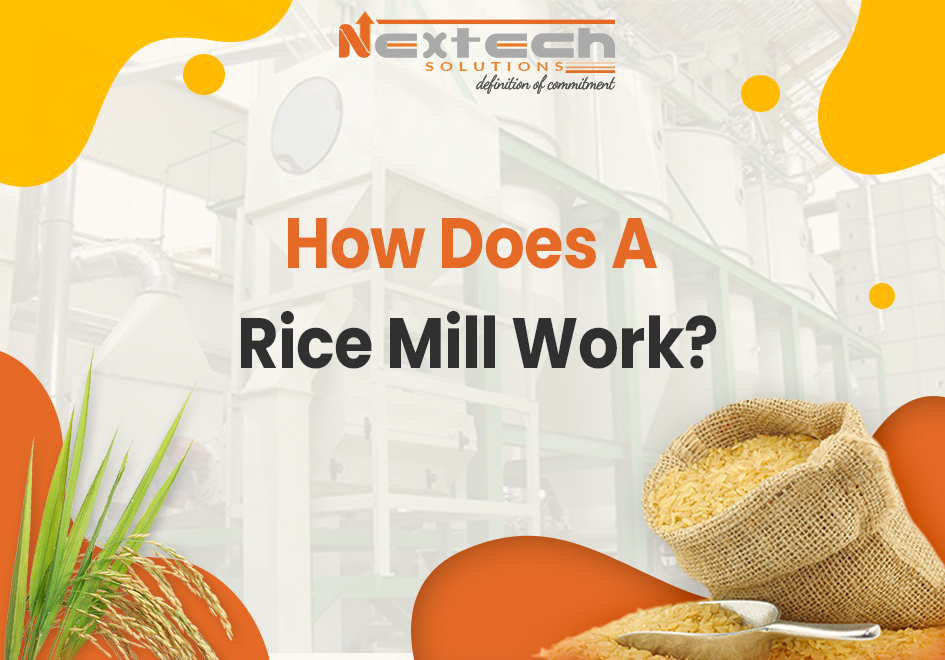
How Does A Rice Mill Work?

Rice is the staple food in most of the country, including India. People love to eat rice, which is essential for our diet; deficiency in the same may cause Niacin disease. But hardly anyone knows how the paddy gets converted into rice and the importance of the rice mill plant in rice mill business.

Rice is a Kharif crop that is sown during the onset of monsoon, i.e., between June and July, and harvested in December. After the harvesting is done, farmers sell their rice to the rice mill owner, and in the mill, further process is done to achieve the fine-quality of rice.

If you are a farmer or entrepreneur and planning to enter the rice business, then just read this full article to know about different rice processes, and the importance of rice mill plant and rice mill design.

Step By Step Processes Of How Rice Mill Plant Works?

1]Cleaning

When the rice mill receives the rice from the farmer, the first process done is cleaning. It helps to separate all impurities like straw, dust, clay, and sand. Cleaning the rice helps to increase the oil percentage in the bran.

2] Stone Separation

Once cleaning is done, the second process is destining, in which the stones are removed. As we know, during harvesting, many stones come along with the paddy, and the removal of the same is a must.

3] De-Husking

After cleaning and stone separation, the rice is put in the de-husking machine to separate the husk and paddy. In this process, paddy grain is passed through the abrasive surface, and due to the friction, the husk is removed from the paddy grains.

4] Paddy Separation

During the de-husking process in the rice mill, some unhooked paddy rice remains, and the removal of the same is done by the paddy separation process.

5] Rice Polishing

In rice mill plants rice polishing is usually done in the rice to remove the bran layer from the paddy either through friction polisher or abrasive.

6] Rice Parboiling

Rice Parboiling is a three-layered process in which raw rice is sowed in warm or cold water, and then steam is passed at high pressure to gelatinize the rice starch. In the third layer, the final product goes through the drying process.

7] Sorting Of Rice

Sorting of rice at the rice mill is done before packaging, and it is very necessary to sort the broken and long grains from the rice stock. After sorting, the rice is graded based on quality.

8] Packaging

Last but not least, the packaging is the final process, in which the rice is packaged in gunnies or plastic sacks, and thereafter it is weighed. After the above process, a seal is marked to show the weight and grade of the rice.


To Wrap Up

Rice travels a long distance to come into the market from the field. Rice mill is also a lucrative business, and if you want to enter into this business, you need investment, machinery, and much more. Furthermore, proper information for rice mill works is also essential as the same will help you to yield good quality rice from the mill.

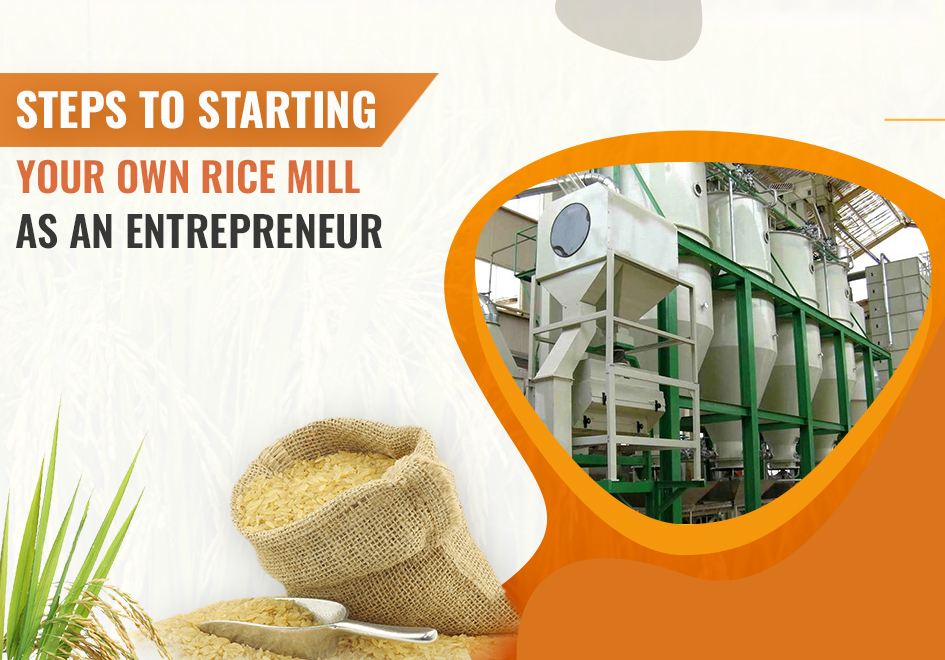
Low-cost Steps to Starting Your Own Rice Mill As An Entrepreneur

Rice is the most important commercial food crop, providing nourishment for more than half the population in the globe. The Rice milling industry is getting more popular among the people. Rice milling removes hulls and brans from the paddy grain, offering polished rice to consume. Those living in the paddy-production areas can set up the rice mill plant. If you desire to start Rice Mill Business, you should follow the below-given steps properly. Let’s see a few instructions:

Choose the rice milling category 

One of the essential foods for Indian people is Rice so setting up the rice mill plant is a rewarding business. There are various methods to start the business, such as one pass, two-step process, and commercial milling. It would be best if you chose the correct rice milling type which meets your requirements.

Create the business plan 

As an entrepreneur, you need to know everything about the rice mill to operate the business smoothly. It is essential to write the business plan, which contains funds needed to purchase, the number of employees required, establish a business, cash flow analysis, and profit and loss investigation. Besides, the business plan is an important document you can utilize to grab the investor’s attention. Read more: The Advantages of Grain Milling Solutions

Rice mill company registration 

The rice mill plant should have the necessary registration procedure. You should get a license from Government authorities. It includes registering your business with ROC, factory license, Udyog Aadhaar MSME registration, GST registration, and others. It is beneficial to consult the best rice and grain milling solutions consultant to obtain registration.

Purchase equipment

It would help if you bought quality equipment for the rice milling business. There are many contemporary rice milling machines, such as Rice color sorters, Rice cleaning equipment, Rice de-stoner device, Paddy separator instrument, and much more. It helps you to run the rice milling business successfully.

Land requirement 

According to the processing capability of the rice milling unit, you can buy land for your business. The agricultural land is the perfect option for setting rice mill because it includes several operations. You can construct the rice mill plant, which offers smooth operation. 

Getting raw materials 

Getting the raw material from a reliable source is vital. Maintaining production throughout the year is key to your business’ success. There are two ways to source the raw materials: developing rice farms and purchasing the rice from suppliers. You can choose the suitable method and start production.

If you have planned to start a rice mill, you can get help from the Nextech rice mill consultant. They provide food grain and rice milling consultancy services with certified engineers.

Related Posts: How To Utilize Rice Mill To Generate More Profit

Related Posts: How to Setup Paddy Milling Plants

Related Posts: Consult With Experienced Rice Mill Engineers & Designers For Your Milling Business

How To Utilize Rice Mill To Generate More Profit ?

The Rice Mill Business is one of the profitable ones for generating more profit. These would give you more manufacturing opportunities with gain more revenue. Rice Mill Plant helps to get rice grain from paddy by easily eliminating rice husk as well as rice bran. When you are dwelling in paddy producing area then it is quite a significant option to begin the rice mill plant.

Main reason is that the Rice mill business is a money-making business. There is only low capital required for it. Rice mills are traded to different outside businesses with a separate Setting for a productive business. There are also certain components essential for starting a business.

Design and Constructions:

Rice milling business requires the paramount component with a suitable design. There are also different developments that ought to be carried out to get smooth operations. Having the paramount structures would be easily incorporated with the storehouse or godowns for storing the crude paddy.

These Sheds include various sectors such as the rice handling unit, parboiling territory, cleaning unit, as well as other comparable segments. There are various machinery for the rice mill plant required such as

  • Grain dryer
  • Measure and packing machine
  • Paddy separator machine
  • Lighting equipment
  • Grading machine
  • Paddy husker machine
  • Rice cleaning machine

Land Requirement:

The contingent of transforming limit in the agro speciality enables different operations. The area ought to have low-lying regions. Rice Mill Plant aids in getting rice grain from paddy with extensively eliminating rice husk and rice bran. These require a large space where you pick decently associated with accessibilities.

Market Potential:

Analyzing the Market potential of the Rice Mills plant is quite important for ensuring to easily make huge money. India is known for having the major market in packaged rice segment. Raw materials from the rice mill plant are rice bran, so it is necessary to analyze the need for raw materials. Starting the Rice business in India is a profitable business, especially in

  • Rice production
  • Rice milling market
  • Exporting basmati rice

License And Registrations:

For starting the rice mill plant business, it is necessary to have the appropriate License and registrations. These would be provided by the state government authority. Registration of firm is most essential, and these could be either Proprietorship or Partnership Firm. When you are initiating business as One Person Company, then you can register the firm as a proprietorship which assures you to provide you with great results.

When you are undergoing the partnership operation, then you need to register LLP-Limited Liability Partnership (LLP) using the Registrar of Companies (ROC). The UdyogAadhaar MSME Registration assists in easily gaining the specific benefits of the government scheme. Starting the rice mill lets, you generate more profit the excellence.

How to Setup Paddy Milling Plants?

Modernising Paddy Processing Methods and Machinery saves time and improves rice quality, and allows you to produce more rice in less time. Paddy separators and other advanced technologies such as husking-rubber rolling technology and friction-type whitener polisher are commonly used in current rice mills.

Modernisation is the most acceptable strategy to boost earnings since it allows you to increase production and quality. It’s always crucial to choose the best Rice Mill Consultant.

The article goes through the process of establishing a paddy milling factory and the numerous factors to consider, such as rice kind, manpower, and equipment. While the procedure is critical to the success of rice production, it is just one component of the whole cycle. Other factors, such as planting, harvesting, and storage, also contribute to good rice production. Farmers may improve their chances of success by taking the time to learn all of the phases involved in the rice-producing cycle.

Using the best variety possible

The kind of rice that will mill is one of the most crucial factors. Because various rice varieties have varying milling needs, it is critical to choose one that is best suited to the temperature and soil conditions of the location where the facility will be situated. Another critical element is worker availability.

Selecting the best equipment

Paddy milling is labour-intensive; therefore, having a consistent stream of labourers is critical. The kind of equipment employed may also have a significant influence on the plant’s performance. To minimise expensive failures, use equipment built for the exact variety of rice being milled and well-maintained. Paddy milling is a critical step in the rice-producing process. Millers may boost their chances of success by taking the time to analyse all aspects of establishing a plant.

The advantages of modern paddy processing machinery

There are many things that current machines can accomplish that older equipment cannot. Among them are:

  • Modern technologies may let you prepare rice with varying whiteness while minimising broken grains.
  • It might assist you in producing high-quality rice.
  • They are more efficient in milling. It may produce a large volume of rice in a short period. This is very beneficial to those that export rice to other nations.
  • They don’t take a lot of upkeep.
  • They lower the electric bill.

The advantages of contemporary paddy processing technologies

  • Contemporary rice processing processes, like modern technology, are becoming more popular nationwide. They provide several advantages, including:
  • You can meet the specific quality and quantity requirements of your customers.
  • Grain loss is reduced.
  • Milled rice may be stored for a more extended time, resulting in superior grain storage options.
  • The most challenging problem for rice millers is maintaining consistent output. Furthermore, people are becoming increasingly worried about the quality of rice.
  • The best approach to achieve both needs, namely more output and higher quality, is to modernise paddy processing methods and equipment.

Conclusion

We at Next Tech Solutions can assist you in modernising your rice mill so that you may spend less on operations and earn more by producing higher-quality rice. As the best Rice Mill Consultant, we can also assist you in exporting your rice. Whether you need a storage silo consultant, a rice mill project consultant, rice mill engineers and designers, or simply storage solutions, we can help. We have everything you’ll need for your rice milling company.

Consult With Experienced Rice Mill Engineers & Designers For Your Milling Business

So, if you wish to start a rice mill business, you must consult with experienced rice mill engineers & designers soon.

The Rice milling business is essential for graining and milling practices. Of course, people often visit the rice mill to grain the paddy and other Agri products. So, if you wish to start a rice mill business, you must consult with experienced  rice mill engineers and designers soon.

They will suggest a few ideas to implement for a successful milling business. A professional consultant helps you by analyzing the land areas and implementing their knowledge in the rice mill business. Your rice mill business, however, needs consultant helps. Proper guidance should give you risk-free ideas to start the mill.


Design And Plan Well 

To make your business stronger, you have to approach a rice mill consultant from a professional firm. Nextech Agri solutions are giving a wonderful approach to strengthening your rice milling business. They give you steady results in starting and make your milling business amazing.

The rice mill consultant is always helpful in designing and planning for mill business. It is relevant to your budget and aims to give you a risk-free solution for your desires. So, it takes full pledge solutions to explore changes in the rice mill design and planning.

  • Execute and design a plan
  • Handle the milling risks easier
  • Able to give milling ideas and fulfill the clients desires
  • Plan and investigate the land area for milling business


An Experienced Rice Mill Engineers & Designers Fulfill The Milling Business 

It has to take a full pledge need and be able to implement strategies for designing the milling business. The customers must look at the branded designs with the rice mill consultant’s help. Your milling business is on the right path by completely fulfilling the customer’s needs. So, it ensures a good one and forever explores changes in the milling business.

For rice mill business, consultant proves their skills to design and optimize a better plan for you. Rice mill engineers will design the mill as per the land area size. It gives admiring benefits and hence suits the requirements well.


Adapts On Consultant Guidance 

A consultant will know the safety steps to start the plan and design them accordingly. It ensures a good one and can connect you in rice mill business. A business owner must rely on the professional rice mill engineers’ opinions and ideas. It gives a possible solution and adapts to high-end solutions for your desires.

Rice mill engineers must plan well and maintain the business effectively. It gives high-end solutions and explores changes in the rice mill consultant helps. Before starting a milling business, you must get consultant help immediately.

They will plan and design according to the land area. So, don’t hesitate to book the consultant service for your milling business. A professional engineer at Nextech Agri Solutions will design a rice milling plant with complete fulfillment.


Some Major Factors That Affect Milling Quality

Do you want to explore the major factors that affect milling quality? Then this guide can help you explore such production factors.

Do you want to explore the major factors that affect milling quality? Then this guide can help you explore such production factors. In general, the quality of milling can be effectively influenced by any production factor that affects kernel strength. It is entirely responsible for the kernel to withstand the bran removal and hulling process without breaking apart.


Impact Of Rice Milling Yield:

The rice milling yield can be effectively quantified by two numbers such as 58/70.

Here the number 70 represents the milled rice yield. It can be determined by the total amount of white rice remaining after the milling and hulling process. You can calculate it by dividing the total mass of the milled rice by the original mass of rough rice before processing. Then it can typically range from 68 to 72% very effectively.

Then the number 58 represents the head rice yield. You can determine it by exploring the total amount of milled rice kernels that can become whole. Here the whole milled kernels can remain 3/4th or more than their original length.

The head rice yield can be effectively calculated by dividing the total mass of head rice by the original mass of rough rice. Here the head rice yield may vary from zero. It means that all kernels are broken based on the milled rice yield. It can be similar to 68 to 72% with no kernels broken.


Explore Milling Quality:

The milling quality can often be expressed as the head rice yield ratio to the milled rice yield. For instance, a 58/70 value can indicate the milled rice yield of 70%, head rice yield of 58% and 12% broken kernels (The difference between those two values).

After that, the harvest moisture content will have an extraordinary impact on rice milling quality around the producer’s control. Here the head rice yield may differ with the moisture content from which the rice has been harvested.

Based on the weather conditions, the harvest moisture content may vary and have other impacts. You can grab 22 to 24% for medium-grains and 19 to 21% for long-grain cultivars.

When the rice matures, kernels on the panicle occur at different moisture contents. It will mainly represent the kernel strength and maturity levels. Some kernels are green or immature with more than 22% moisture, whereas others are dry kernels with less than 14% moisture.


Final Verdict:

From the scenario mentioned above, you now know the factors affecting milling quality. You can get in touch with the leading rice mill consultant at Nextech Grain Processing and Engineering Solutions Pvt. Ltd to overcome serious factors. Finally, you can stay away from significant issues and enhance milling quality.


Enquire Now