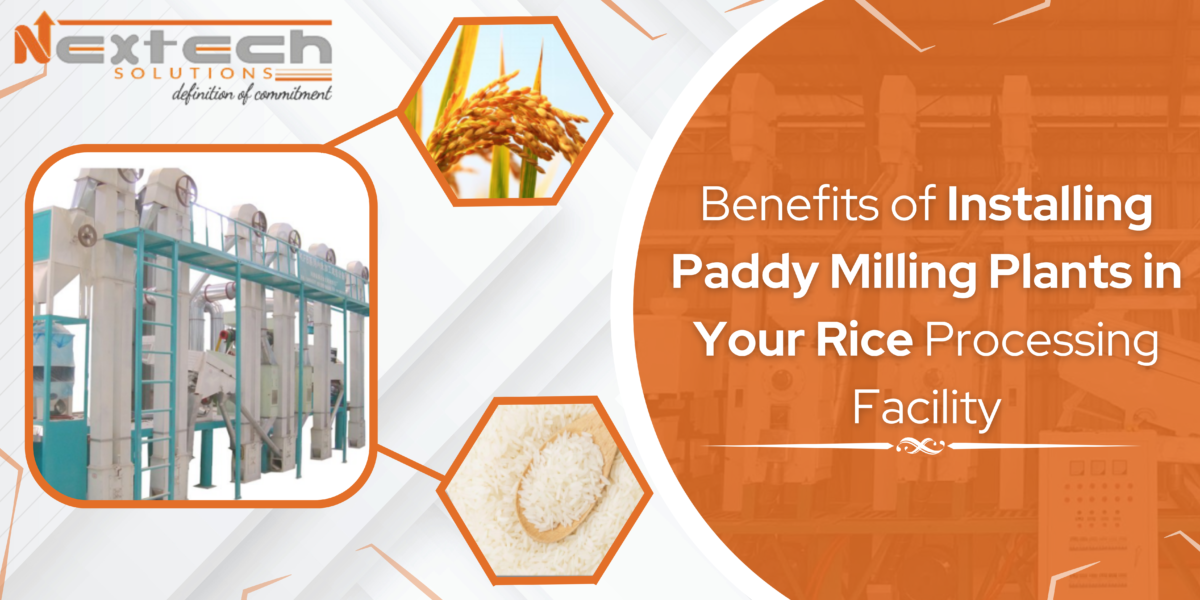
Benefits of Installing Paddy Milling Plants in Your Rice Processing Facility

Rice is a staple food that is consumed by millions of people all over the world. It is high in carbohydrates and is a good source of energy. As the world’s population grows, the demand for rice is increasing day by day. This makes it necessary for farmers to maximize their rice production to meet the demand. Paddy milling plants are one of the most effective ways to increase rice production. They offer several advantages over traditional methods of rice production, such as increased efficiency, better quality control, and reduced labor costs. In this article, we will explore the advantages of paddy milling plants and how they can help you to maximize your rice production.

Benefits of using paddy milling plants


Paddy milling plants have several benefits that make them a popular choice among rice farmers. Firstly, they are more efficient than traditional methods of rice production. With a paddy milling plant, rice can be processed quickly and efficiently, saving time and labor costs. Secondly, paddy milling plants offer better quality control. Farmers can ensure that their rice meets the required standards for quality and hygiene. Thirdly, paddy milling plants are more cost-effective than traditional methods of rice production. They require less labor and can process rice at a faster rate, reducing the overall cost of production.


Paddy milling plant components


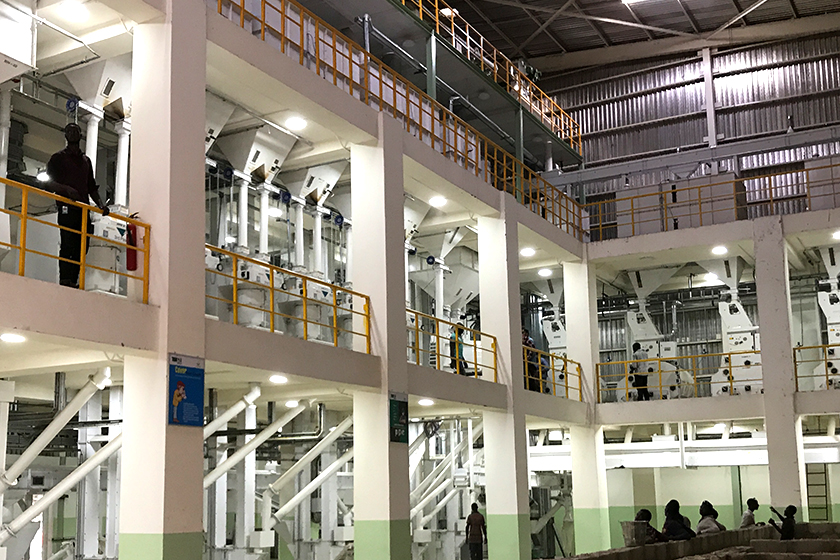
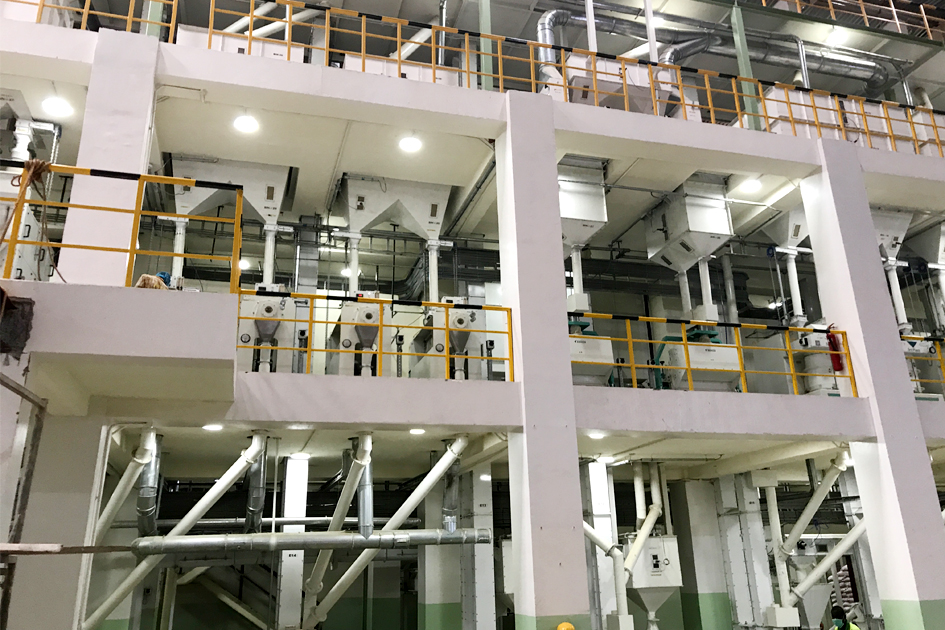
A paddy milling plant consists of several components that work together to process rice. These components include a paddy separator, a husker, a whitener, and a grader. The paddy separator separates the paddy from the rice husk, which is then removed using a husker. The whitener removes the bran layer from the rice, making it white and polished. The grader then sorts the rice into different sizes based on their quality.


Types of paddy milling plants


There are two types of paddy milling plants: traditional and modern. Traditional paddy milling plants are manually operated and require a lot of labor. They are less efficient and can process less rice than modern paddy milling plants. Modern paddy milling plants, on the other hand, are fully automated and require less labor. They are more efficient and can process more rice than traditional paddy milling plants.


Factors to consider choosing a paddy milling plant


When choosing a paddy milling plant, there are several factors that you should consider. These include the size of your farm, the amount of rice you want to process, and your budget. You should also consider the quality of the Rice Mill Business you want to produce and the level of automation you require. It is important to choose a paddy milling plant that meets your specific needs to maximize your rice production.


Maintenance of paddy milling plants


Like any other machinery, paddy milling plants require regular maintenance to ensure that they function efficiently. Regular maintenance includes cleaning, lubrication, and replacement of worn-out parts. It is important to follow the manufacturer’s instructions when maintaining your paddy milling plant to ensure that it operates at optimal levels.


Common issues and how to fix them


Paddy milling plants may experience several issues during operation. These issues include clogging of the machinery, overheating, and mechanical breakdowns. To fix these issues, you should first identify the cause of the problem. For example, clogging of the machinery may be caused by the presence of foreign materials in the rice. Once you have identified the cause of the problem, you can take the necessary steps to fix it. This may involve cleaning the machinery or replacing worn-out parts.


Conclusion


Paddy milling plants are an effective way to increase rice production. They offer several advantages over traditional methods of rice production, including increased efficiency, better quality control, and reduced labor costs. When choosing a paddy milling plant, it is important to consider factors such as the size of your farm, your budget, and the level of automation you require. Regular maintenance is also necessary to ensure that your paddy milling plant functions efficiently. By investing in a paddy milling plant, you can maximize your rice production and meet the growing demand for this valuable crop.

 

How Does A Rice Mill Work?

Rice is the staple food in most of the country, including India. People love to eat rice, which is essential for our diet; deficiency in the same may cause Niacin disease. But hardly anyone knows how the paddy gets converted into rice and the importance of the rice mill plant in rice mill business.

Rice is a Kharif crop that is sown during the onset of monsoon, i.e., between June and July, and harvested in December. After the harvesting is done, farmers sell their rice to the rice mill owner, and in the mill, further process is done to achieve the fine-quality of rice.

If you are a farmer or entrepreneur and planning to enter the rice business, then just read this full article to know about different rice processes, and the importance of rice mill plant and rice mill design.

Step By Step Processes Of How Rice Mill Plant Works?

1]Cleaning

When the rice mill receives the rice from the farmer, the first process done is cleaning. It helps to separate all impurities like straw, dust, clay, and sand. Cleaning the rice helps to increase the oil percentage in the bran.

2] Stone Separation

Once cleaning is done, the second process is destining, in which the stones are removed. As we know, during harvesting, many stones come along with the paddy, and the removal of the same is a must.

3] De-Husking

After cleaning and stone separation, the rice is put in the de-husking machine to separate the husk and paddy. In this process, paddy grain is passed through the abrasive surface, and due to the friction, the husk is removed from the paddy grains.

4] Paddy Separation

During the de-husking process in the rice mill, some unhooked paddy rice remains, and the removal of the same is done by the paddy separation process.

5] Rice Polishing

In rice mill plants rice polishing is usually done in the rice to remove the bran layer from the paddy either through friction polisher or abrasive.

6] Rice Parboiling

Rice Parboiling is a three-layered process in which raw rice is sowed in warm or cold water, and then steam is passed at high pressure to gelatinize the rice starch. In the third layer, the final product goes through the drying process.

7] Sorting Of Rice

Sorting of rice at the rice mill is done before packaging, and it is very necessary to sort the broken and long grains from the rice stock. After sorting, the rice is graded based on quality.

8] Packaging

Last but not least, the packaging is the final process, in which the rice is packaged in gunnies or plastic sacks, and thereafter it is weighed. After the above process, a seal is marked to show the weight and grade of the rice.


To Wrap Up

Rice travels a long distance to come into the market from the field. Rice mill is also a lucrative business, and if you want to enter into this business, you need investment, machinery, and much more. Furthermore, proper information for rice mill works is also essential as the same will help you to yield good quality rice from the mill.

Need for Modernizing the Methods and Machinery of Paddy Processing?

Modernizing the Methods And Machinery of Paddy Processing not only helps you save your time but it also helps you improve the quality of the rice and produce more rice in less time. 

Paddy separators and other modern methods such as husking-rubber rolling technology, friction-type whitener polisher are being widely accepted in the modern rice mills. 

 Benefits of modern machinery for paddy processing

There are a lot of things that modern machines can do and the old ones cannot. Few of them are: 

  • Modern machines can help you process rice of all degrees of whiteness with minimum broken
  • It can help you produce high-quality rice.
  • They have higher milling efficiency. It can produce a high amount of rice in less amount of time. This is really useful for people who export rice to other countries. 
  • They don’t require too much maintenance.
  • They reduce the electricity bill.

Benefits of modern methods of paddy processing

Just like modern machinery, modern methods of paddy processing are also being widely accepted across the country. They offer a lot of benefits such as:

  • You can cater to the exact customer demand for quality and quantity. 
  • Less loss of grains.
  • Can store the milled rice for a longer period of time i.e better grain storage solutions

In the milling business, sustained production is the biggest challenge rice millers have to face. Moreover, people are getting more concerned about the quality of the rice. 

The best way to meet both the demands i.e. increased productivity and better quality is by Modernizing the Methods And Machinery of paddy processing.

Bottom Line

Allowing you to increase productivity and improve quality, modernization is the best way to increase your profits. 

We at Nextech Solutions can help you modernize your rice mill so you have to spend less on operations and can earn more by producing better quality rice. Being the leading Rice Mill Consultant we even help you if you want to export your rice. No matter if you’re looking for a storage silo consultant or a rice mill project consultant or rice mill engineers & designers, or just storage solutions. We offer everything you’ll ever need throughout your rice milling business.

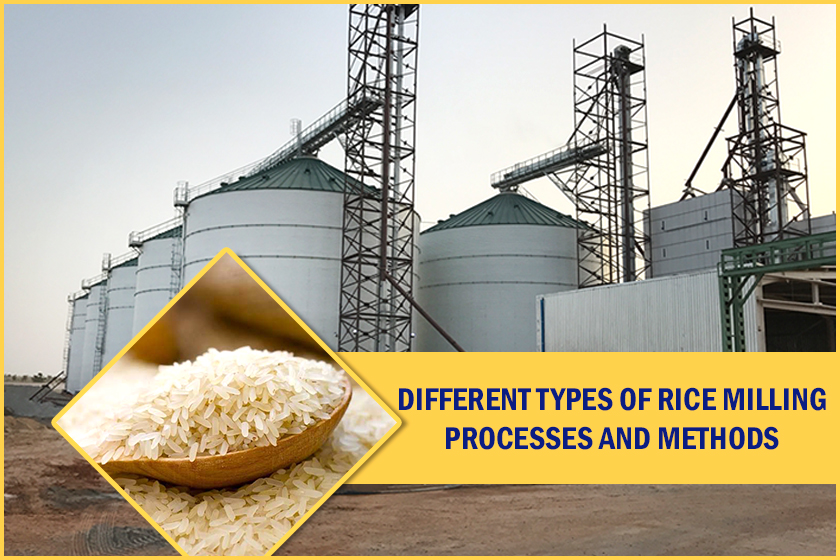
Different Types of Rice Milling Processes & Methods

The process of removing the husk and bran layers, and producing white rice kernel that is free of impurities is referred to as rice milling. Usually, the three methods of purifying the rice are a one-step process where husk and bran removal are done together, a two-step process where husk and bran are removed separately, and a multistage process in which rice undergoes a series of different rice milling processes & methods.


The two categories in which the rice milling is divided are Village Rice Mills and Commercial Mills. Rice mills which are used for milling paddy of farmers for home consumption are called as village rice mills whereas when the rice is sufficiently milled and all the husks and stones are removed to appeal to the customers, it is known as commercial rice milling. Another objective of commercial mills is to minimize grain breakage.


Multistage Rice milling Process

The paddy is boiled partially, in order to increase its nutritional value, and this process is called parboiling. It reduces breakage and even changes the texture of cooked rice.


Pre-cleaning method: In order to attain high milling recoveries, pre-cleaning of the rice is necessary. If not done properly, the fines in the rice can create dust and can reduce the airflow through the rice grain. De-stoning is done to remove undesired stones present in the rice using a gravity separator or a de-stoner. The process includes passing the rough rice through a series of sieves and a closed-circuit aspiration system.

De-Husking: The process of removing the husk from rice grains is referred to as de-husking. The process includes directing paddy into a pair of rubber rolls, rotating in opposite directions and at different speeds. A shear force is generated on the surface of the hull because of horizontal inward pressure that is applied on rubber rolls. Removing the husk from the brown rice or unhusked paddy is known as husk aspiration.

Paddy Separation: The surface of a rice grain is smooth, whereas the surface of paddy is rough. Paddy Separator uses this difference in texture to spate brown rice from paddy.

Whitening & Polishing: A humidified rice polisher is used to polish the surface of the rice. The factors which determine the extent of whiteness are the radial velocity of the stone wheels, the grid size of the stones, and the external pressure on the outlet chamber of the whitening machine. 

Weighing and bagging machines are then used to pack and weigh the rice accurately to be sold in the market.


Conclusion

With so many different rice milling processes & methods, it can be confusing if you don’t have prior knowledge of it. It’s always better to look for Rice Mill Consultants for advice so as to get better results even in the initial stage of the mill. Having more than 10 years of experience, Nextech Grain Processing & Engineering Solutions Pvt. Ltd. can provide a solution to all your queries related to the food grain industry.


Enquire Now

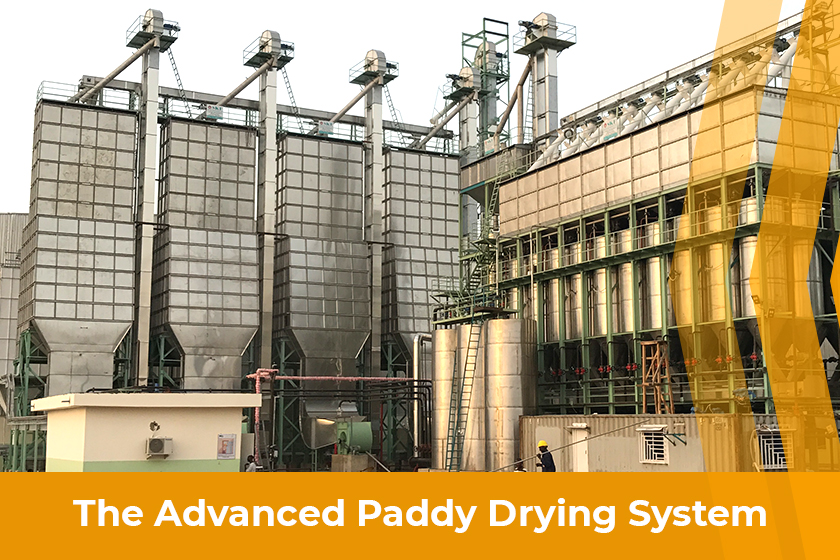
The Advanced Paddy Drying System

Paddy Drying is the basic process of yielding rice. During the paddy arrival season, the moisture percentage in freshly harvested paddy is 18% and above, the paddy should be dried to bring down the moisture percentage of 14% which is ideal for storage purpose. After the process of parboiling and steaming the moisture increases to 35% which is actually wet paddy. So to reduce the moisture from it various steps are involved such as field drying, sun drying, heated air drying, in-store drying.

If moisture not removed from the paddy, the quality of grain decreases. Instead of sun drying and traditional drying methods, Nextech Solutions offers advancement with Paddy Drying System such as installation & design of paddy dryer machine. This helps in the drying process efficient than traditional drying methods for safe storage.

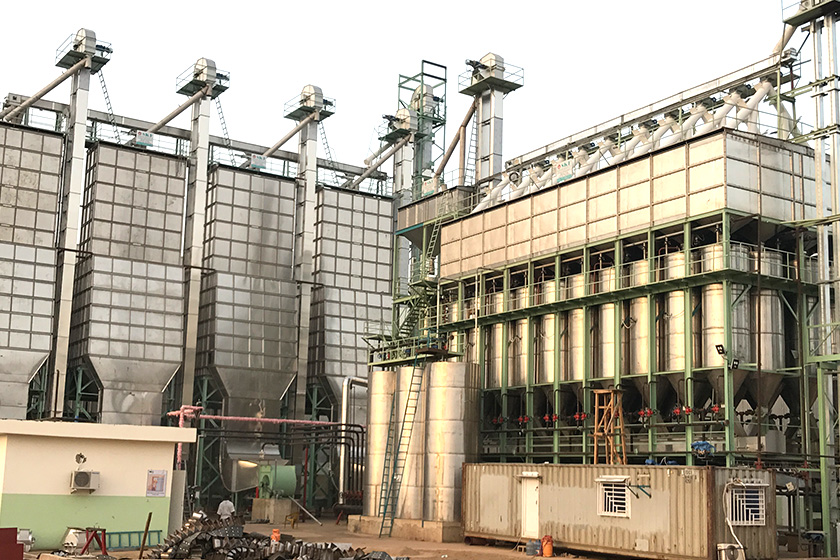
A Paddy Dryer Machine is designed to suit all the grains. It comes with a blower and furnace digitalized with meters for controlled drying, with the air flow circulation to dry the paddy grains in a closed chamber. The machine works with two chambers or tanks one for filling in and another for discharge. This Paddy dryer Machine can be efficient Paddy Drying Solution for batch type drying and continuous drying processes.

Features of Advanced Paddy Drying Machine.
  • It is designed to suit up all the paddy grains.
  • The design includes quality material such as stainless steel which doesn’t affect any harm to the paddy.
  • Rice Mill Consultant can help you to reap all the benefits of the Paddy Dryer Machine, to use the husk, wood or biomass obtained.
  • It comes with PLC monitor system to monitor and control the temperature for the drying process.
  • Efficient drying as to reduce 5% moisture, the process is likely to run for 5 hours.
  • Can reduce the labor cost, as minimal manpower is required.
  • Also, the maintenance of this Grain Dryer is very low.
  • The Grain Dryer is designed to provide uniform steaming to maintain the quality of the paddy grains.


We at Nextech Solutions help you out with Rice Milling Plant Layout Design with our team of Rice Mill Engineers and Designer which will help to plan about Paddy Dryer Machine Setup. This counseling and planning about Paddy Drying Solutions with Rice Mill Engineers and Designers will help you with much profitable business.


Enquire Now

Different Milling Techniques– Modern and Traditional Mills.

Rice has remained the staple food to more than half the humanity since time immemorial despite waves of food revolutions. Covered by two different layers, namely- bran (the inner layer) and husk (outer layer), Rice paddy becomes rice only when the two layers are removed properly through hulling and milling of paddy and hence processing of rice can be termed as the hulling and milling ratio. Production wise India has risen to become the second largest producer of rice in the world (21 percent of global rice production), next only to China. The growth of population exerts more pressure- pushing for higher productivity of crops while a larger quantity of food grain continues to be lost due to inefficient milling processes in the country. Therefore, it calls for a better processing technique of rice to prevent processing loss. Generally, rice kernels are often susceptible to breakage due to inefficient milling processes. Therefore, more efficient milling processes are becoming imperative with Government encouragement and policies so that with better recovery ratio and quality rice kernel production hunger in India is ameliorated after 2030.

The efficiency of grain milling processes denotes three factors-technologies, degree of competition and capacity of utilization each of which Nextechagrisolutions- the leading Rice Mill Consultant in the domestic Food and Grain Industry elevates substantially. Nextechagrisolutions Engineering Solutions Pvt. Ltd.,- India’s leading Rice Mill Project & Rice Mill Plant Manufacturer India  & of Rice Mill Machinery Consultants facilitate the transformation from a traditional Rice Mills to a modern one by transferring the expertise and experience of erecting the 360o ecosystem. Nextech Grain Processing & Engineering Solutions Pvt. Ltd. possesses the necessary wherewithal for automating and upgrading of existing Rice Mills to state of the art, automated mill through innovation and automation for customized needs. The quality in terms the rice output’s quality, whiteness, milling degree, grain dimensions is enhanced and enables the manufacturers to fulfill the exacting customer demands on quantity as well as quality parameters to capture market share and ensure greater returns.

Difference Between Traditional & Modern Milling

Generally, rice kernels are often susceptible to breakage and hence hulling and milling ratio is low due to inefficient milling processes. Therefore, modern efficient milling processes that raise productivity are often automated while ensuring a modern product ready for the supermarkets. This not only ensures better recovery ratio & quality rice kernel production but also better returns. The quality of finished rice/polished rice is also dependent on the quality of raw paddy used for conversion, the new technological improvements introduced in rice milling, but the growing demand is making never before demands on rice production. One of Nextech’s specialties is to impart 360o consultancy for the Modernization Of Rice Mills.

Rice Milling Technology– Then & Now

Traditionally, maintaining high quality and output of rice was easy with limited technology, government policies, little investment, miss-management etc. This led to the rejection of many shipped consignments due to poorer than international quality standard. Rice Mill plants were not efficient in terms of energy conservation, maintenance, productivity, and Quality management systems were not employed. The units even lacked testing labs for routine check-ups. Now(automatic and semi-automatic) manufactured and supplied by Japan & Germany are extensively employed  and new technologies were introduced including the use of rubber roller technology for husking; Two-stage whitening process; Use of Paddy separators; Old stone disk hullers, vertical cone polishers replaced by emery-coated cylinders etc., Emphasis is now on Skilled operators, use of NUE (Nitrogen Use Efficient) technology and Turbo & extractive milling to speed  up the process while saving energy. Nextech Solutions introduces ever more innovations to produce high-quality products for greater returns.


Enquire Now

New Innovations And Techniques Of Paddy Processing

Modern technology needs to be inducted at a rapid pace to keep abreast of the changes worldwide. Maintaining high quality and output while maintaining consistency of rice is not an easy task.

Technological changes are overtaking every sector and are overwhelming today the rice milling sector too. Rice mill owners have understood the need for modernization and are actively pursuing total transformation. Hence they strive to remain ahead of the curve by upgrading the existing rice mill to a fully automated, state of the art plant. This ensures will the consistency of high quality but greater acceptance and marketability. This generates not only humongous appetite for the brand in the domestic markets but abroad too. The government today, too is encouraging the drive towards modern ‘Rice mills meeting global quality standards’. Modern trends like for husking- Rubber roller technology, the whitening process in 2 stages incorporating Paddy separators, emery-coated cylinders, friction-type whitener polisher, and dry & wet mist polishers all are being rapidly inducted. Nextech Grain Processing & Engineering Solutions Pvt. Ltd., India’s leading consultants for Rice Milling Business offer consultancy and mentoring to imbibe the entire ecosystem of the Latest Rice Mill Technology. They handhold and facilitate the upgradation of existing Rice Mills smoothly by leveraging their vast expertise and experience gained in setting up plant across the world. The  Company comes in to help with extensive experience to transform the existing Rice mills through innovation and automation to customized needs.

Modern technology needs to be inducted at a rapid pace to keep abreast of the changes worldwide. Maintaining high quality and output while maintaining consistency of rice is not an easy task. Inducting modern automated Rice Mill Machinery (and semi-automatic) manufactured and supplied by Japan & Germany is imperative. Alongside technologies like the use of NUE (Nitrogen Use Efficient) to increase & double plant growth and yield; Turbo & extractive milling that only speed up the process, but ensure substantial economies need to be inducted. Skilled operators, excellent raw paddy quality,  timely maintenance are all acutely needed. However, as the technology changes an entire ecosystem needs to be put into place – including specialized marketing techniques, business development, skilled and experienced human resources to maintain requisite productivity as well as positive government policies and infrastructure.

NEXTECH ADVANTAGE  FACILITATES TRANSFORMATION TO ULTRA MODERN TECHNOLOGIES

The extensive experience enables Nextech to strategize an approach customized to the modernization needs. The company employs Employing the latest computer-aided design, engineering and analysis tools, each alternative is tested through reliable & efficient analysis and specifications. Designs and process flows are evolved specifically to the needs before their implementation.   Adoption of state of the art energy saving technologies is mentored to optimize the operating costs. Leveraging strengths in the process flow, process control know-how as well as designing & detailed engineering, Nextech evolves customized solutions amalgamating latest technologies, human resources and processes to facilitate 360-degree modernization. This ensures optimized yields, least losses, and maximum productivity & efficiency. Customized and detailed process designing ensures optimal plant, process and equipment uptime. Nextech ’s extensive experience from the total  Grain & Seed Industry enables us to transform existing Rice Mills to state of the art automated mills by leveraging innovation & automation by customizing it to specific needs. The transformation is facilitated at each step through hand holding and eased into within the time and budget constraints.


Enquire Now

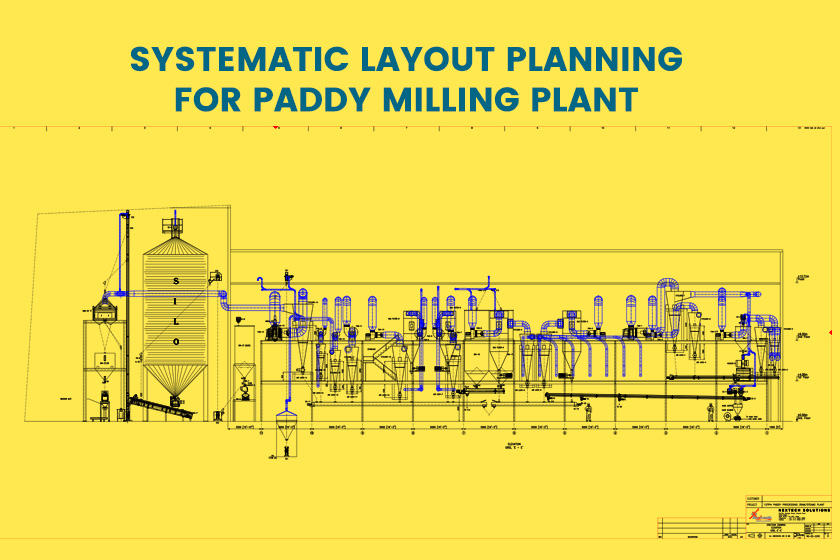
Systematic Layout Planning for Paddy Milling Plant

Paddy Milling Plants nowadays are largely automated and need optimization at the design stage to maximize the returns. For this entirely automated process a micromanaged and Systematic Layout Planning is a prerequisite that begins with the refining of the paddy and ranges.

Paddy Milling Plants nowadays are largely automated and need optimization at the design stage to maximize the returns. For this entirely automated process, a micromanaged and systematic Layout Planning is a prerequisite that begins with the refining of the paddy and ranges through sorting and ends with packaging and even has to act as Storage Silo Consultant.
Moreover, the addition of Flavor, taste, and textures are imperative in order to enhance the desirability factor that ensures a sustained market for the products. Facilities design comprises the layout design and the handling systems design after considering all equipment, machinery and support structure within the operational perimeter. This is necessary if the rice mill is to be optimized and all processes reflect the principle of minimizing inputs and maximizing outputs.
Being India’s leading edge Rice Mill Engineers & Designers, Nextech Solutions extends 360-degree consultancy for Rice Mill Layout Design & Rice Mill Machinery for Rice Mill Plant Manufacturers in India.
Rice Mill Plant Designs are usually classified as fixed position layout, process-oriented layout, group or cellular layout, product-oriented layout. The type of layout ultimately is decided upon usually on the quality of rice to be manufactured that encompasses the volume and variety of the products to be produced. The Rice Mill layout designing is extremely challenging, especially for the process-oriented layout.
Three alternative layouts are brought out using Systematic layout planning, which is a systematic way of generating layout alternatives. The proposed alternative layout involves choices in moving the machines closer or farther based on interrelationships. The detailed plant layout and processes are executed using tools such as the operation process chart, activity relationship chart & flow process chart. Often the choice depends on the creation of optimal e.g, the “under-runner” disk mill is very popular in the Indian subcontinent. Similarly, Rice Mills with fewer moving parts are subject to less wear and produces an acceptable quality of rice.
Investors and owners are usually from the farming background and prefer to employ Rice mill consultants for constructing Paddy Milling Plant, since they can hand over part of their usual tasks to concentrate on processing, a task that requires an operation and administration skills.

As the leaders in Paddy Milling Plants including Paddy drying Solutions, Nextech Solutions has 360-degree expertise in these fields. Seamless integration of latest technologies, Rice Mill Machinery and automation of processes are undertaken to provide optimal solutions.

The critical aspect of planning the plant layout is micromanaged at the stage as every process is crucial. Ultra-efficient solutions are evolved to the smallest micro level like the placement of machines and medium of bulk storage while taking the size and objectives into consideration. Each step has to pass stringent quality checks to ensure each equipment & process runs error free to get the greatest returns from investments.


Enquire Now

Raw Paddy Drying Solutions by Nextech

By “drying” is meant the phase of the post-harvest system during which the product is rapidly dehydrated to a so-called “backup” moisture. This desiccation is intended to sufficiently reduce the moisture content of the grain to ensure favorable conditions for storage or subsequent processing of the product.

By “drying” is meant the phase of the post-harvest system during which the product is rapidly dehydrated to a so-called “backup” moisture. This desiccation is intended to sufficiently reduce the moisture content of the grain to ensure favorable conditions for storage or subsequent processing of the product.

It is possible to obtain the drying of the products by circulating more or less hot air in a mass of grains. In its movement, the air gives heat to the grains, absorbing moisture from the most superficial layers.

The water present in the surface layers of the grains evaporates much more efficiently and more rapidly than that of the inner layers.

It is therefore much more difficult to lower the water content of a product from 25% to 15% than from 35% to 25%. It would be wrong to think that this difficulty can be overcome by carrying out a rapid drying at a high temperature. Indeed, such drying conditions generate internal tensions, producing small cracks that can lead to breakage of grains during subsequent treatments.

For the drying of grains, the methods employed are, in essence, two in number:
– Natural drying
– Artificial drying

Both have advantages and disadvantages, and there is no ideal way to meet all needs.

Natural Drying

The method of natural paddy dryer, to which the techniques illustrated in the section on pre-drying operations also relate, consists essentially in exposing the beaten products to the air (in the sun or the shade). To obtain the desired moisture content, the grains are spread in thin layers over a drying area, where they are exposed to air (in the sun or the shade) for a maximum of 10-15 days. To promote uniform drying, the seeds should frequently be stirred, especially if they are exposed to direct sunlight. In addition, for the drying to be sufficient, the relative humidity of the ambient air must not exceed 70%.

Artificial Drying

The introduction of high-yielding crop varieties and the gradual mechanization of agriculture now make it possible to harvest large quantities of grain in a short period. In the tropical and subtropical humid zones, given the unfavorable weather conditions at the time of harvest, it is often difficult to safeguard the quality of the products.

To meet the need to increase agricultural production, it is, therefore, necessary to dry the products in a relatively short time, and whatever the ambient conditions. Thus, paddy dryer plant must be used. This method consists essentially in subjecting the grains to a forced ventilation of more or less heated air. It requires the use of individual devices called “dryers.”

Artificial Raw Paddy Dryer

From the point of view of construction, the essential elements of a rice dryer machine are:

– the dryer body, which contains the grains to be dried;
– The hot air generator, which allows heating the air drying;
– The fan, which allows the circulation of drying air in the grain mass.

For the artificial drying of the grains, two types of dryers are used:

– Static or batch dryers;
– Continuous dryers.
The former is inexpensive and only treat small quantities of grain; they are therefore more suited to the needs of small and medium-sized collection and processing centers.

As for the latter, they are high flow paddy drying technology that requires more complex infrastructure, additional equipment and especially a particular planning and organization. They are therefore more suitable for large centers, silos or shops, where very large quantities of product are processed. Nextech Agri Solutions is a reliable brand if you want to purchase agricultural solutions.


Enquire Now

Why Rice Mill Plant need a Consultant?

While ignoring the barriers of the income as well as the living standards of the people living in the state, country or city, rice is one of the grains that are affordable by the large population in any country. Besides, rice is stable food in most of the Asian countries. This is clear by now that a huge amount of quantity of this food item is traded to other countries, where the production is low.

While ignoring the barriers of the income as well as the living standards of the people living in the state, country or city, rice is one of the grains that are affordable by the large population in any country. Besides, rice is stable food in most of the Asian countries. This is clear by now that a huge amount of quantity of this food item is traded to other countries, where the production is low.

Now the question arises that with the right rice milling machine, we can easily produce a picture where the high output, productivity and market efficiency of the mills are required. This credit for mass production definitely goes to the rice mill consultants. These professionals are hired in large number by various mill merchants who aim for better output and working.

With the presence of milling consultants, the production and quality of the crops levels get higher. Their presence makes a big difference in the working procedures and environment. Here is how the rice mill plant consultant are a necessity these days:

Being a rice industry specialist, they help the customers with the right choice of business. This implies that irrespective of customer needs to begin the cultivation business, discount, dealership, and retail rice offering business.

Obviously, the beginning of rice plant is productive and various organization take attainable study and stage as the initial step in order to guarantee the benefits to the business. Rice mill consultants facilitate the clients with the fundamental components. For instance, prerequisite arrival, outlining and development, assets and other factors that influence the day to day working of rice machine and mills.

The need of perfect land piece and its determination is fundamental as most of the plant proprietors require highly stable capacity zone for this purpose that by now, has been processed and will be processed without much ado. Expert rice consultants have a vision to this, they make deals and perform various troublesome exercise and choose right rice processing machine. They are held responsible to consider the land zone where the production will take place.

Furthermore, the design and development are vital to accomplishing the gigantic benefits from the rice processing business. Factories and mills, under their guidance, out to produce in such a way that they permit smooth and fulfilling operations along within the arranged space. Stores and Godowns are outlined and create so as to store crude paddies and arranging the rice securely.
The consultants also take care of cleaning units, parboiling domains and various fragments reserved suitably.

Keeping up with the high rice milling equipment alongside the desired amount of production is an errand for the proprietors. These two variables add advantage to the era ability of the business. The rice mill consultants set their attention in the right direction while fitting into the interests in the rice processing hardware. They generally prescribe another rice milling process machine. In the present day, the interests, machinery, and technology offer vital protection, simple upkeep process, the higher efficiency with decreased generation cost and improved productivity of the rice mill plants.

Nextech agri solutions
is an all-inclusive agriculture machinery and solution providers for grains and seed industry. They provide high-quality assistance and machinery for rice mills and others.


Enquire Now