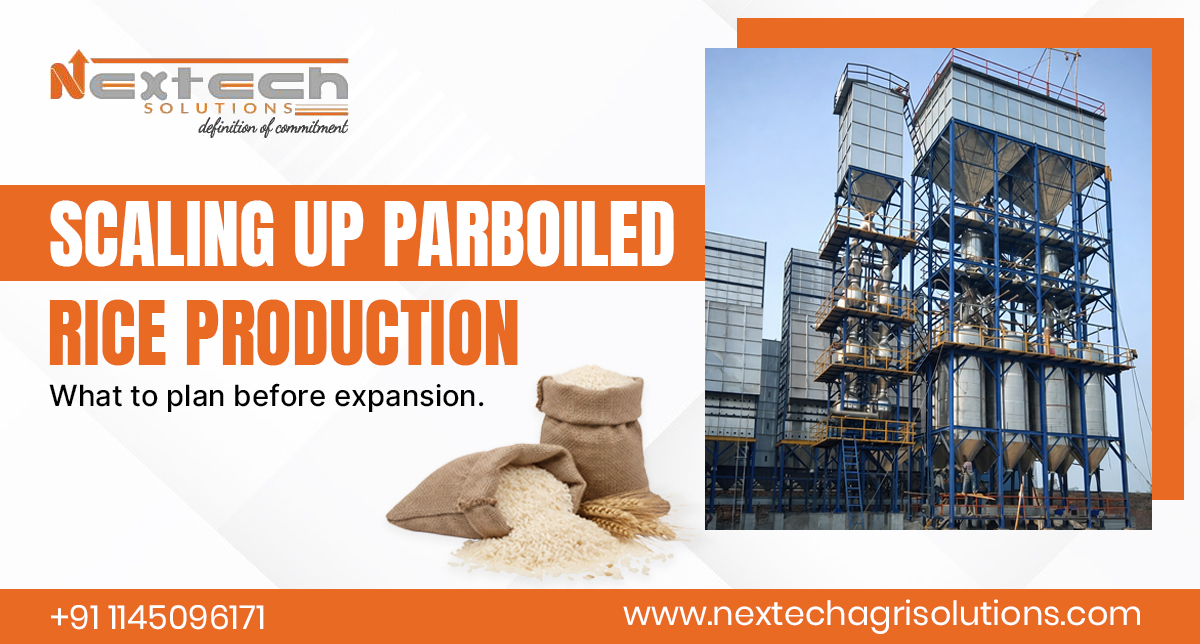
Scaling Up Parboiled Rice Production: What to Plan Before Expansion

Expanding a rice processing facility is a major step for any mill owner or agribusiness operator. As global demand for Parboiled Rice continues to grow due to its nutritional value, durability, and cooking quality, many producers are planning to increase their production capacity. However, scaling operations requires more than simply adding new machines — it involves careful planning across infrastructure, technology, workflow efficiency, and quality control.

With proper strategy and technical support from industry experts like Nextech Agri Solutions, expanding production can improve efficiency, profitability, and product consistency while minimizing operational risks.

Understanding the Growing Demand for Parboiled Rice

The global market for Parboiled Rice has expanded significantly in recent years, especially in regions where rice is a staple food. The strengthening of the grain during processing, reduced breakage during milling, and improved shelf life make this product highly desirable in both domestic and export markets.

The parboiling process of rice enhances nutritional retention by driving vitamins and minerals from the husk into the grain. Because of this, consumers increasingly prefer parboiled varieties over regular milled rice.

For millers, scaling production of Parboiled Rice presents an opportunity to meet rising demand while improving operational margins.

Evaluating Existing Production Capacity

Before expanding, it’s essential to evaluate your current production system. Many mills discover that inefficiencies in workflow, drying systems, or steaming units limit output more than equipment size alone.

Assess the following:

  • Current plant throughput capacity
  • Boiler efficiency and steaming capability
  • Drying time and drying yard capacity
  • Storage infrastructure
  • Milling recovery rates

A technical audit of the parboiling process often reveals opportunities to increase output without major structural changes.

Planning Infrastructure for Expansion

Infrastructure plays a critical role when scaling Parboiled Rice production. Increasing output requires consistent handling of larger volumes of paddy, water, steam, and finished product.

Key infrastructure considerations include:

Soaking Tanks

Larger soaking tanks or additional tanks may be needed to maintain continuous production cycles in the parboiling process of rice.

Steam Generation Systems

Boiler capacity must match increased production demands. Insufficient steam supply can slow the entire parboiling process.

Drying Systems

Drying is often the biggest bottleneck in Parboiled Rice production. Upgrading to mechanical dryers or expanding drying areas can significantly improve efficiency.

Storage Facilities

Expanded paddy storage and finished rice warehouses are essential to maintain uninterrupted production cycles.

Technology Selection and Automation

Modern automation plays an important role in scaling production efficiently. Automated control systems ensure consistency across the parboiling process of rice, reducing manual intervention and operational errors.

Technology upgrades may include:

  • Automated soaking systems
  • Controlled steaming chambers
  • Mechanical or vertical dryers
  • Conveyor-based material handling
  • Moisture monitoring systems

When scaling Parboiled Rice production, automation improves uniformity and reduces dependency on manual labor.

Optimizing the Parboiling Process

Efficiency improvements in the parboiling process can significantly increase production without compromising quality. Uniform soaking, controlled steaming pressure, and proper drying temperatures are essential for maintaining grain integrity.

Important process optimization factors include:

  • Uniform water absorption during soaking
  • Controlled steaming duration and pressure
  • Gradual drying to avoid grain cracking
  • Proper tempering time before milling

Maintaining consistency across every stage ensures premium-quality Parboiled Rice with minimal breakage.

Energy and Resource Management

Energy consumption increases as production expands. Efficient energy management is essential for maintaining profitability in large-scale Parboiled Rice operations.

Consider improvements such as:

  • Heat recovery systems
  • Energy-efficient boilers
  • Insulated steam pipelines
  • Water recycling systems

Optimizing energy usage during the parboiling process of rice reduces operating costs and supports sustainable production.

Quality Control During Expansion

Maintaining quality standards becomes more challenging as production grows. Consistency in soaking, steaming, drying, and milling determines the final quality of Parboiled Rice.

Quality control measures should include:

  • Moisture testing at each stage
  • Grain strength testing
  • Milling recovery monitoring
  • Color and appearance inspection

Reliable quality control ensures that expanded production does not compromise product reputation.

Workforce Planning and Training

Scaling production requires skilled operators who understand the parboiling process and equipment operation. Training programs should focus on process control, equipment maintenance, and safety practices.

A well-trained workforce ensures consistent output and reduces downtime in Parboiled Rice production facilities.

Financial Planning for Expansion

Investment planning is crucial before scaling production. Expansion costs typically include:

  • Equipment upgrades
  • Infrastructure development
  • Installation and commissioning
  • Utility upgrades
  • Workforce training

Working with experienced engineering partners like Nextech Agri Solutions helps mill owners design cost-effective expansion strategies for Parboiled Rice facilities.

Partnering With the Right Engineering Experts

Scaling a rice mill requires technical expertise in plant design, workflow optimization, and process engineering. Professional consultation ensures the expanded facility operates efficiently from day one.

From soaking systems to drying solutions, engineering guidance helps maintain consistency in the parboiling process of rice while increasing production capacity.

Conclusion

Expanding Parboiled Rice production is a strategic investment that requires careful planning across infrastructure, equipment, workforce training, and process optimization. When executed correctly, expansion improves productivity, reduces waste, and strengthens market competitiveness.

By focusing on efficiency, automation, and quality control, mill owners can scale operations without compromising product standards. With industry expertise and engineering support from Nextech Agri Solutions, producers can confidently expand their facilities and meet the growing global demand for high-quality Parboiled Rice.

FAQs

What is the parboiling process of rice?

It involves soaking, steaming, and drying paddy before milling to improve grain strength and nutritional value.

Why is Parboiled Rice production increasing globally?

It offers better nutrition retention, reduced grain breakage, and longer shelf life compared to regular rice.

What is the biggest challenge when scaling production?

Drying capacity and steam generation are often the main bottlenecks in large-scale Parboiled Rice production.

Does automation improve parboiling efficiency?

Yes, automation improves consistency, reduces labor dependency, and ensures uniform processing.

How can Nextech Agri Solutions help with expansion?

They provide engineering design, plant layout planning, and technology solutions for efficient Parboiled Rice production.
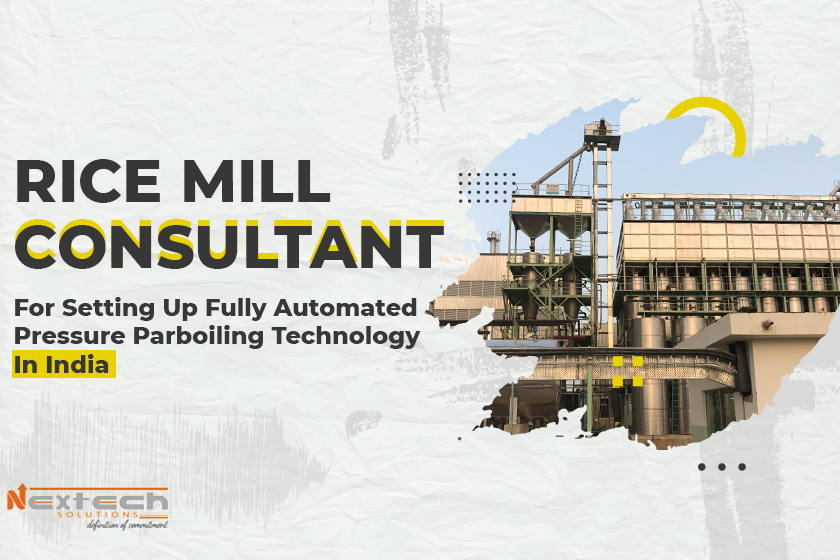
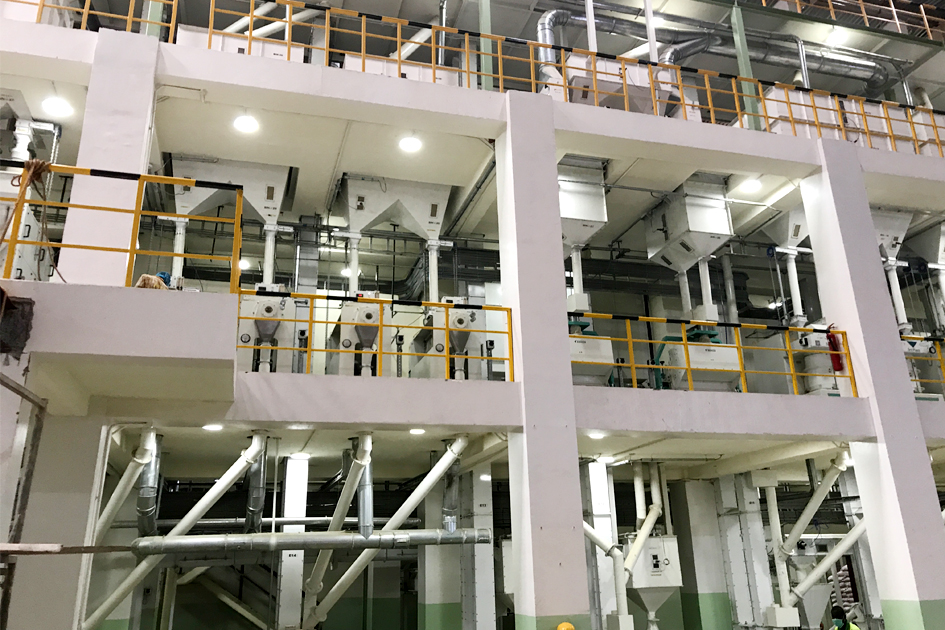
Rice Mill Consultant For Setting Up Fully Automated Pressure Parboiling Technology In India

Parboiling Technology is widely preferred for getting high-quality rice. Parboiling includes different systems to ensure the ancient process of boiled rice in paddy form. While using the fully automated pressure parboiling technology, the paddy will be soaked partially and mainly treated using high pressure. Pressure Parboiling Technology is considered as a quick process compared to the traditional parboiling method.

It is quite a convenient option to save more money. Pressure parboiling of rice mainly provides the better option for getting quality rice. In this process, the rice would be gelatinized instantly. Upon choosing the leading Rice Mill Consultant, it is quite an efficient option to set up the fully automated pressure parboiling technology in India.

Setting Up Fully Automated Pressure Parboiling Technology

Nextech Grain Processing & Engineering Solutions Pvt. Ltd is the leading consultant for providing you with the complete guidance and resources for setting the proven technology of pressure parboiling technology. Installing this unique system automatically allows getting quality rice with a simple process than traditional methods.

Trend of Fully Automated Parboiling system has been increasing and steadily picking up its pace. These overcome many drawbacks existing in batch-wise processing. New installations are looking for the best solution providers of paddy parboiling based on the demands. This provides automatically parboiling, which will complement the sophisticated technology on saving more time.

Under the Parboiling, the colours of the final rice as well as nutritional values are upto the highest quality. The right process is established here to achieve the desired end product. The Storage Silo Project Consultant is ready to help in establishing a Rice Mill Layout Plant for producing parboiled rice that mainly ranges from deep yellow to white.

Nextech assures providing the best rice parboiling plants that are available with current technology. Complete parboiling infrastructure is specially designed on the basis of process mainly carried out in the plant, demography, environmental system and based on the grain.

Three-Stage Process:

  • Stage 1: Pre-Hydration

With completely cleaning the paddy, it will be placed in the pre-hydration machine so the steam would enforce the low pressure for increasing porosity in the husk. This increases bonding strength.

  • Stage 2: Hydration

The Hot Water Hydration process is the 2nd phase for easily drawing the water-soluble vitamins as well as minerals from barn layers as well as germs. When the grain reaches saturation level, the hydration process will be stopped.

  • Stage 3: Gel Cook

The Gel Cook is the final stage in which the low medium pressure and steam are introduced. Water-soluble nutrients will be pressed into the endosperm. Gel cook treatment automatically locks nutrient into the grain with maintaining the quality.

Nextech is the leading Rice Mill Business and is only responsible for bringing tried, tested, proven and well-established technology of pressure parboiling to India from STUDIO TECNICO APPIANI of Italy. They offer the all-in-one solution in manual, semi-auto and auto modes of operation based on customers’ preference.


Enquire Now

Why Rice Mill Plant need a Consultant?

While ignoring the barriers of the income as well as the living standards of the people living in the state, country or city, rice is one of the grains that are affordable by the large population in any country. Besides, rice is stable food in most of the Asian countries. This is clear by now that a huge amount of quantity of this food item is traded to other countries, where the production is low.

While ignoring the barriers of the income as well as the living standards of the people living in the state, country or city, rice is one of the grains that are affordable by the large population in any country. Besides, rice is stable food in most of the Asian countries. This is clear by now that a huge amount of quantity of this food item is traded to other countries, where the production is low.

Now the question arises that with the right rice milling machine, we can easily produce a picture where the high output, productivity and market efficiency of the mills are required. This credit for mass production definitely goes to the rice mill consultants. These professionals are hired in large number by various mill merchants who aim for better output and working.

With the presence of milling consultants, the production and quality of the crops levels get higher. Their presence makes a big difference in the working procedures and environment. Here is how the rice mill plant consultant are a necessity these days:

Being a rice industry specialist, they help the customers with the right choice of business. This implies that irrespective of customer needs to begin the cultivation business, discount, dealership, and retail rice offering business.

Obviously, the beginning of rice plant is productive and various organization take attainable study and stage as the initial step in order to guarantee the benefits to the business. Rice mill consultants facilitate the clients with the fundamental components. For instance, prerequisite arrival, outlining and development, assets and other factors that influence the day to day working of rice machine and mills.

The need of perfect land piece and its determination is fundamental as most of the plant proprietors require highly stable capacity zone for this purpose that by now, has been processed and will be processed without much ado. Expert rice consultants have a vision to this, they make deals and perform various troublesome exercise and choose right rice processing machine. They are held responsible to consider the land zone where the production will take place.

Furthermore, the design and development are vital to accomplishing the gigantic benefits from the rice processing business. Factories and mills, under their guidance, out to produce in such a way that they permit smooth and fulfilling operations along within the arranged space. Stores and Godowns are outlined and create so as to store crude paddies and arranging the rice securely.
The consultants also take care of cleaning units, parboiling domains and various fragments reserved suitably.

Keeping up with the high rice milling equipment alongside the desired amount of production is an errand for the proprietors. These two variables add advantage to the era ability of the business. The rice mill consultants set their attention in the right direction while fitting into the interests in the rice processing hardware. They generally prescribe another rice milling process machine. In the present day, the interests, machinery, and technology offer vital protection, simple upkeep process, the higher efficiency with decreased generation cost and improved productivity of the rice mill plants.

Nextech agri solutions
is an all-inclusive agriculture machinery and solution providers for grains and seed industry. They provide high-quality assistance and machinery for rice mills and others.


Enquire Now

The Benefits of Eating Parboiled Rice

Most of us know that rice is one of the most consumed foods on this planet and more than 50% of its human population relies on rice as its staple food item. Of the many, amazing varieties of rice used globally, one is parboiled rice. This moniker might fool you into believing that it is a pre-cooked/boiled variety, but that is just not the case.

Most of us know that rice is one of the most consumed foods on this planet and more than 50% of its human population relies on rice as its staple food item. Of the many, amazing varieties of rice used globally, one is parboiled rice. This moniker might fool you into believing that it is a pre-cooked/boiled variety, but that is just not the case. It is just processed differently from other rice varieties and the resultant rice is cooked and served just like other varieties of rice.

As opposed to the most consumed rice variety, i.e. the white rice, which is processed by removing the hull, the parboiled variety retains the hull, and is hydrated and steamed during its processing. This lets the grains retain the nutrition provided by the bran layer. This steaming process causes the vitamins and mineral to migrate from the bran to the rice kernel.

This practice of parboiling rice was widespread in southern India along with a few Southeast Asian countries before it caught favour with the western nations. Let’s now discuss how healthy this parboiled variety of rice is:

Carbohydrates

Parboiled rice has almost double the fiber content than the most consumed white rice. A single cup of parboiled rice is a source of 41 grams of total carbohydrates, which is about a third of our daily carbohydrate requirement. This same amount of parboiled rice satiates 4-6% of our daily fiber need. Moreover, the carbohydrates in this variety do not cause a surge in the blood sugar level due to their low glycemic score of 38, which is more than twice as low as that of white rice.

B Vitamins

The parboiled variety is a rich source of B vitamins, niacin and thiamine. When combined, these vitamins digest the sugar and help convert the carbohydrate into energy. B vitamins in parboiled rice also help you create neurotransmitters and hormones.

Minerals

A cup of parboiled rice provides around 3% of our daily requirement of calcium, magnesium, iron and potassium. Your body also gets about 5-7% of your daily zinc requirement. These help your body in forming the protein structure and regulate DNA. It also saves your immune system from getting impaired.

Folate

Folate or Vitamin B9 helps our body metabolize amino acids and nucleic acid. These are used to make protein and DNA respectively. Parboiled rice serves as an amazing source of folate. Eating parboiled rice ensures that our homocysteine levels stay normal, thereby reducing the risk of cardiovascular diseases. A cup of parboiled rice provides us with more than 200 micrograms of folate, which is slightly more than 50% of our daily requirement.

Parboiled rice is very similar to brown rice. All those familiar with brown rice know that it’s slightly more difficult to digest, as compared to white rice. This is mainly due to the starch not getting broken down so easily. This is, however, not the case with parboiled rice. The starch in this variety is more gelatinized, due to the hydration and steaming process.

To know more about the various such rice varieties and their health implications, make sure you keep following Nextech Agri Solution.


Enquire Now

The Process Of Making Parboiled Rice

Everyone in the country knows what white rice or a brown rice is. However the awareness about parboiled rice is very limited. So it often happens that you are asked about what is parboiled rice when you tell someone that you consume this third of the many breeds of Rice.

Everyone in the country knows what white rice or a brown rice is. However the awareness about parboiled rice is very limited. So it often happens that you are asked about what is parboiled rice when you tell someone that you consume this third of the many breeds of Rice. In simple terms, Parboiled Rice means the type of rice which is partially boiled. But boiled where? The grain is simmered in the husk.

Since the process of parboiling involves three major steps which are soaking, steaming, and drying, the other name of the grain is ‘soaking rice’. As mentioned, the first and foremost process involves drenching of the grain. The act is carried out by transferring the rice into the soaking tank, setting the machine temperature at 20-30 degree Celsius and leaving the grain for 36-48 hours as per the need of the situation. Once the drenching part is done, the rice is then shifted for steaming process which requires heating up the grain for making the grain harder. The procedure isn’t much time consuming as it depends on the manufacturer what kind of grain color he or she wants to attain considering the higher the heating temperature, the lesser the processing time. Although, steaming at high temperature increases the chances of grain getting darker in color.

The final act involves drying the grain. It must be noted that withering the grain in huge quantity isn’t easy. Especially in the case when the rice are parboiled. So, the grains are sun-baked with the help of a large number of workers who have to work actively and are required to timely turn and mix the rice. Approximately 20-40% of moisture gets reduced in the initial stage of drying while the remaining percentage later.

‘Nextech Solutions’ is the leading grain processing unit proffering top-notch consultancy services as well as high-end milling equipments.


Enquire Now

Frequently Asked Questions (FAQs)

1. What is Parboiled Rice?

Parboiled rice is rice that has been partially boiled in the husk before being milled. This process makes the rice firmer, less sticky, and more nutritious compared to regular white rice. The partial boiling drives nutrients from the bran into the grain, improving its overall nutritional value.

2. What is the meaning of Parboiled Rice?

The parboiled rice meaning lies in its name—“partially boiled rice.” The grain undergoes three major stages: soaking, steaming, and drying. These steps make the rice more durable, nutrient-rich, and resistant to weevils during storage.

3. How is Parboiled Rice different from regular rice?

Unlike regular white rice, par boiled rice is processed before milling. This helps the rice retain more vitamins and minerals, gives it a slightly yellowish tint, and makes it less prone to breakage during cooking. It also has a firmer texture and doesn’t become mushy easily.

4. Is Parboiled Rice healthier than white rice?

Yes. Parboiled rice is considered healthier than white rice because the parboiling process preserves essential nutrients such as thiamine, niacin, and iron. It has a lower glycemic index, making it suitable for people managing blood sugar levels.

5. What are the uses of Parboiled Rice?

Parboiled rice is widely used in South India, West Africa, and Southeast Asia for daily consumption. It’s ideal for dishes like biryani, fried rice, and steamed rice because it holds its shape and texture well after cooking.

6. How long does it take to make Parboiled Rice?

The entire process—from soaking to drying—can take anywhere between 2 to 4 days, depending on the soaking duration, drying conditions, and the equipment used.

7. Does Parboiled Rice taste different?

Yes, parboiled rice has a slightly different taste and texture compared to regular rice. It is firmer, less sticky, and has a mild nutty flavor. Many people prefer it for its ability to stay separate and fluffy after cooking.