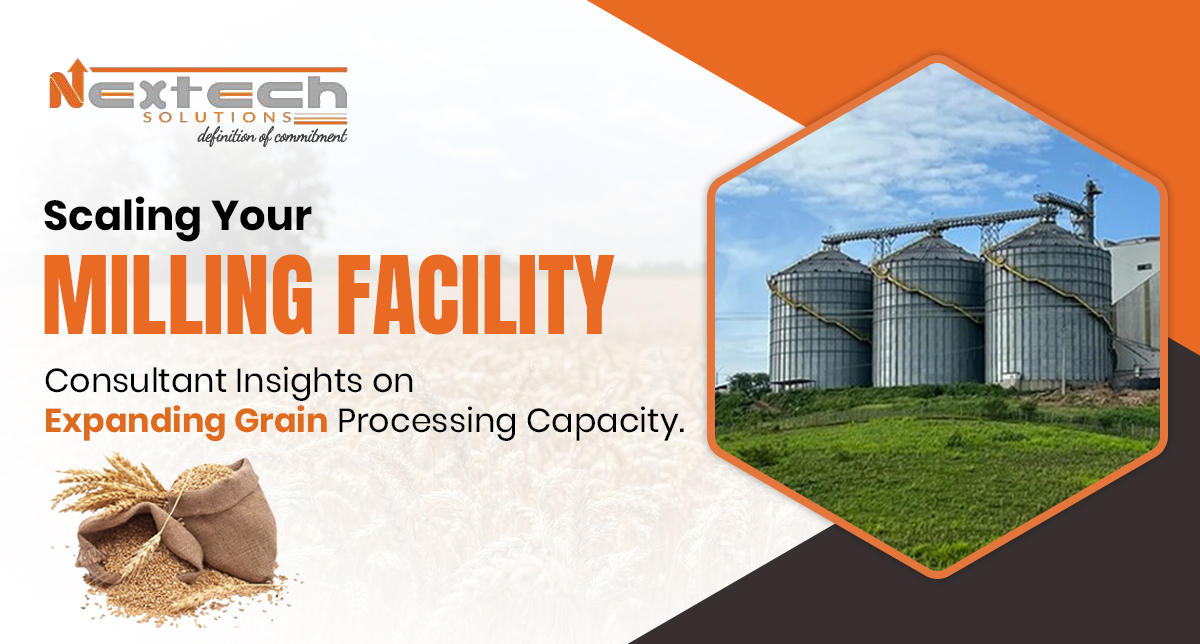
Scaling Your Milling Facility: Consultant Insights on Expanding Grain Processing Capacity

As global demand for processed grains continues to rise, milling businesses face increasing pressure to scale operations efficiently. Whether driven by growing consumer needs, export opportunities, or diversification into value-added products, expanding grain processing capacity is a strategic move that requires careful planning. This is where expert guidance and modern Grain Milling Solutions play a critical role.

At Nextech Agri Solution, we work closely with mill owners to design scalable, future-ready facilities that balance capacity growth, operational efficiency, and long-term profitability.

Understanding the Need for Capacity Expansion

Before investing in expansion, it is essential to understand why your milling facility needs scaling. Common drivers include increased raw material availability, consistent order overflow, outdated machinery, or rising operational costs due to inefficiencies.

A professional Grain Milling Consultant helps analyze current production bottlenecks, equipment utilization rates, and process losses. This assessment ensures that expansion decisions are data-driven rather than reactive, reducing the risk of overinvestment or underperformance.

Evaluating Your Existing Grain Milling Process

Every successful expansion begins with a detailed evaluation of the existing grain milling process. This includes:

  • Raw grain intake and cleaning efficiency
  • Grinding and separation performance
  • Energy consumption per ton of output
  • Material flow and handling systems
  • Storage and dispatch infrastructure

Often, mills assume that expansion means simply adding machines. In reality, optimizing the current process can unlock hidden capacity. Process redesign, layout improvements, and equipment upgrades frequently deliver better returns than increasing floor space alone.

Role of Grain Milling Technology in Scaling Operations

Modern grain milling technology has transformed how facilities scale production. Automation, digital controls, and high-efficiency machinery allow mills to increase output without proportionally increasing labor or energy costs.

Advanced technologies enable:

  • Precise process control and quality consistency
  • Reduced product loss and contamination risks
  • Real-time performance monitoring
  • Predictive maintenance to minimize downtime

By integrating smart technology, mills can scale sustainably while maintaining high product standards—an essential factor for competitive markets.

Choosing the Right Expansion Strategy

Not all expansion strategies are the same. A skilled Grain Milling Consultant evaluates multiple pathways based on your business goals, budget, and market conditions. Common strategies include:

1. Modular Expansion

Adding modular units allows gradual capacity growth without disrupting ongoing operations. This approach is ideal for mills planning phased investments.

2. Process Optimization Before Expansion

Improving efficiency in cleaning, grading, and grinding stages often frees up capacity. This minimizes capital expenditure while improving profitability.

3. Vertical Integration

Expanding into storage silos, packaging, or by-product processing adds value without solely relying on higher throughput.

At Nextech Agri Solution, we align expansion strategies with long-term operational and commercial objectives.

Infrastructure Planning and Layout Optimization

Scaling capacity requires more than machines—it demands intelligent infrastructure planning. Poor layouts increase material handling time, labor dependency, and maintenance challenges.

Key considerations include:

  • Smooth material flow with minimal manual intervention
  • Space allocation for future upgrades
  • Safety compliance and accessibility
  • Efficient storage and dispatch zones

Well-designed layouts enhance productivity while keeping operational complexity under control.

Managing Cost, Efficiency, and ROI

Expansion investments must deliver measurable returns. A professional Grain Milling Consultant helps calculate realistic ROI by considering:

  • Capital and installation costs
  • Energy and maintenance savings
  • Labor optimization
  • Output quality improvements

The goal is not just higher capacity but better profitability per ton processed. Strategic Grain Milling Solutions focus on long-term efficiency rather than short-term gains.

Importance of Compliance and Quality Control

As milling capacity increases, maintaining regulatory compliance and consistent product quality becomes more challenging. Scaling operations without standardized quality systems can lead to customer complaints and compliance risks.

Modern grain milling technology integrates quality checks, traceability, and process control systems that scale seamlessly with production. This ensures compliance with food safety standards while protecting brand reputation.

Partnering with the Right Grain Milling Consultant

Successful expansion depends heavily on expert guidance. An experienced Grain Milling Consultant brings industry insight, technical expertise, and practical execution experience.

At Nextech Agri Solution, we provide end-to-end support—from feasibility studies and process design to technology integration and commissioning. Our focus is on building scalable, resilient milling facilities that grow with your business.

Conclusion

Scaling a milling facility is a complex but rewarding journey when approached strategically. By optimizing the existing grain milling process, adopting advanced grain milling technology, and implementing tailored Grain Milling Solutions, businesses can expand capacity without compromising efficiency or quality.

With the right planning and expert consultation, expansion becomes a sustainable growth opportunity rather than a financial risk. Nextech Agri Solution remains committed to helping millers scale smarter, faster, and more efficiently.

FAQs

1. When is the right time to expand a grain milling facility?

The right time is when demand consistently exceeds capacity, operational inefficiencies increase costs, or existing equipment limits scalability. A professional assessment helps confirm readiness.

2. Do I need to replace all equipment to increase capacity?

Not always. Optimizing the current grain milling process and upgrading specific machines can significantly increase output without complete replacement.

3. How does grain milling technology support scalability?

Modern technology improves automation, reduces losses, ensures consistent quality, and allows real-time monitoring, making large-scale operations more efficient and manageable.

4. What role does a Grain Milling Consultant play in expansion?

A consultant evaluates feasibility, designs scalable solutions, selects suitable technology, and ensures smooth implementation with minimal operational disruption.

5. How long does it take to scale a milling facility?

Timelines vary based on project size, but phased expansion with proper planning helps minimize downtime and ensures smooth transition.
Challenges in the Grain Milling Industry and How Innovative Solutions Solve Them

The grain milling industry stands at a crossroads of tradition and transformation. As global demand for processed grains grows, millers face the dual challenge of maintaining quality and efficiency while adopting sustainable, tech-driven processes. Nextech Agri Solutions, a leader in Grain Milling Solutions, is pioneering innovations that help the industry adapt to these modern realities.

Understanding the Grain Milling Industry Landscape

The milling industry is the backbone of the global food chain — converting raw grains into edible products like flour, rice, and animal feed. Yet, behind every finely milled grain lies a complex ecosystem of logistics, technology, and process optimization. From sourcing raw material to ensuring the end product meets quality standards, every step in the milling process demands precision. With rising global competition and consumer expectations for consistency and sustainability, millers are under pressure like never before.

1. Inefficiencies and Outdated Machinery

A key challenge confronting the industry is operational inefficiency. Many milling units still rely on outdated equipment that lacks automation, consumes excessive energy, and leads to inconsistent outputs.

Common issues include:

  • High energy consumption
  • Excessive wastage during processing
  • Inconsistent grain grading
  • Downtime due to frequent maintenance

This is where Grain Milling Solutions play a transformative role. Modern automation systems and digital monitoring tools enable real-time tracking of equipment performance. Smart process integration helps reduce energy use, minimize waste, and improve throughput — boosting profitability while lowering operational costs.

2. Quality Control and Product Consistency

Quality control is another major hurdle. Grain quality varies due to factors like weather, storage conditions, and supply chain inconsistencies. Maintaining uniform quality across batches requires advanced sensing and grading systems.

Nextech Agri Solutions integrates smart sensors and data analytics in their Grain Milling Solutions that ensure every stage of milling — from cleaning to packaging — maintains consistent standards. These solutions use automated sampling and precision sorting to enhance grain purity and minimize contamination risks.

 Hook: Turning the Grind into Opportunity

“From rising energy costs to unpredictable grain quality, millers today face more than just the grind — they’re battling an industry in transformation. But what if innovation could turn these challenges into opportunities?”

The answer lies in embracing advanced Grain Milling Solutions that combine automation, sustainability, and data intelligence. With innovation at its core, the future of milling looks both efficient and resilient.

3. Sustainability and Energy Efficiency

Sustainability is no longer optional; it’s essential. The milling sector consumes significant energy and water while generating waste and emissions. To stay competitive and compliant, millers must adopt green practices.

Innovative Sustainable Solutions:

  • Energy-efficient motors and drives reduce power consumption.
  • Waste heat recovery systems recycle process energy.
  • Integrated dust control and filtration systems improve air quality.
  • Eco-friendly packaging minimizes the environmental footprint.

By implementing these Grain Milling Solutions, businesses can significantly reduce their carbon footprint while improving operational cost-efficiency — a win-win for both profit and planet.

4. Automation Gaps and Digital Transformation

Automation is reshaping industries, and milling is no exception. Yet, many mills operate with minimal automation, relying on manual inputs prone to errors.

Modern Grain Milling Solutions leverage Industry 4.0 technologies such as:

  • IoT (Internet of Things): Real-time machine data and predictive maintenance
  • AI-driven analytics: Process optimization and yield forecasting
  • SCADA systems: Centralized monitoring and control

These smart systems not only improve efficiency but also provide traceability — an increasingly vital factor for food safety compliance and customer trust.

5. The Role of Storage and Post-Harvest Management

Even the best milling operations can fail if grain storage isn’t handled properly. Moisture, pests, and temperature variations can deteriorate grain quality before it even reaches the mill.

That’s where expert consultation from a Storage Silo Consultant becomes crucial. With precision-engineered silos and modern aeration systems, post-harvest losses can be minimized. Nextech Agri Solutions’ team of Storage Silo Consultants designs customized storage infrastructure that ensures grains remain fresh and ready for milling.

6. Integrating Solutions for the Rice Mill Business

In the Rice Mill Business, quality, yield, and efficiency are paramount. The sector faces challenges in processing paddy, maintaining grain length, and controlling breakage. By incorporating Grain Milling Solutions, rice millers can achieve automation in sorting, polishing, and packaging — ensuring premium output.

Additionally, consulting with a Storage Silo Consultant ensures that the rice remains moisture-free before and after milling. This not only maintains product quality but also enhances profitability in the competitive Rice Mill Business sector.

7. How Innovative Technologies Are Revolutionizing Milling Operations

Innovation is driving a new era in grain processing. Some key advancements transforming milling operations include:

a. Smart Automation

Automated control systems adjust parameters like temperature, grinding speed, and airflow for maximum yield and minimum energy use.

b. Data Analytics and Predictive Maintenance

With data-driven Grain Milling Solutions, millers can anticipate machine breakdowns before they occur — saving both time and money.

c. Modular Design and Scalability

Modern milling setups offer flexible configurations, enabling easy scaling as business needs grow.

d. Advanced Cleaning and Sorting

AI-powered optical sorters and precision cleaners ensure that only the highest-quality grains make it through the process, guaranteeing product consistency.

Why Choose Nextech Agri Solutions?

Nextech Agri Solutions stands as a trusted partner in designing, implementing, and optimizing Grain Milling Solutions for global clients. With decades of experience across Rice Mill Business setups, pulse milling, and storage systems, the company combines engineering expertise with smart technology.

Their comprehensive approach — from conceptualization to commissioning — ensures that every project delivers maximum output, efficiency, and sustainability. Whether it’s designing automated milling plants or serving as a Storage Silo Consultant, Nextech’s solutions empower millers to embrace the future confidently.

The Road Ahead: A Smarter, Sustainable Milling Future

The milling industry is evolving — and those who embrace technology will lead the transformation. Smart automation, sustainability practices, and integrated Grain Milling Solutions are not just trends; they are the foundation for the next generation of milling success.

By adopting these innovations, millers can achieve:

  • Higher efficiency and profitability
  • Consistent quality output
  • Sustainable and eco-friendly operations
  • Real-time decision-making through data

Conclusion

The challenges in the grain milling industry — inefficiencies, quality control, sustainability issues, and automation gaps — may seem daunting. Yet, with modern Grain Milling Solutions, they become gateways to innovation and growth.

Nextech Agri Solutions continues to lead this revolution, empowering millers to not only adapt but thrive in a rapidly changing industry. The future of milling is smarter, greener, and more efficient — and it starts with the right innovation.

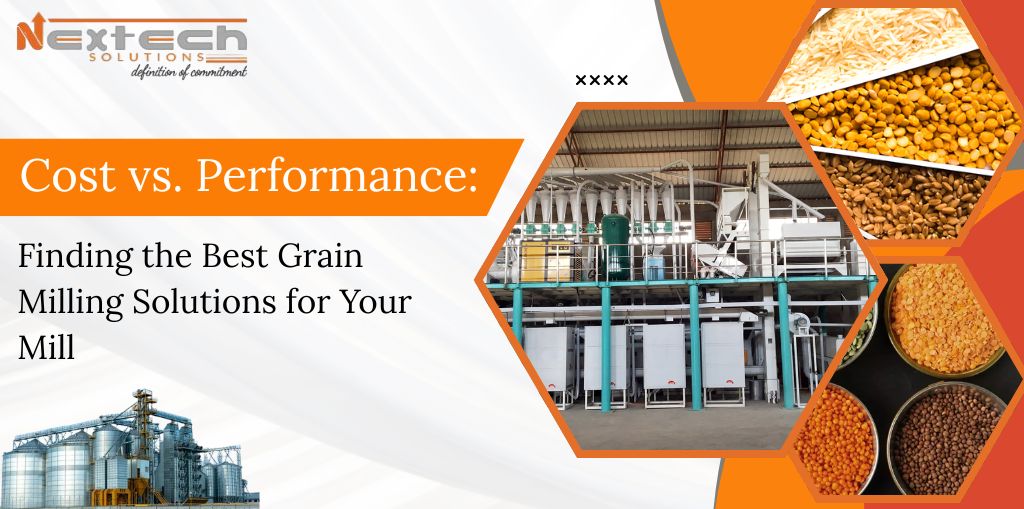
Cost vs. Performance: Finding the Best Grain Milling Solutions for Your Mill

Running a grain mill requires more than just heavy machinery—it demands precision, efficiency, and cost-effectiveness. Whether you are setting up a new mill or upgrading an existing one, finding the right Grain Milling Solutions for Your Mill is the key to long-term success. With so many options available in the market, the challenge lies in striking the right balance between cost and performance.

In this article, we’ll explore how to evaluate milling technologies, optimize your investment, and make informed choices while ensuring high-quality output for your customers.

Why Choosing the Right Solution Matters

Every grain mill is unique in terms of size, production requirements, and operational goals. Choosing the right Grain Milling Solutions for Your Mill ensures:

  • Consistent product quality
  • Higher production efficiency
  • Reduced downtime and maintenance costs
  • Long-term savings on energy and resources

Without the right solution, mills risk overpaying for technology that doesn’t suit their scale or underperforming with cheaper alternatives.

Balancing Cost and Performance in Milling

When analyzing Grain Milling Solutions for Your Mill, most millers face the same dilemma: Should they prioritize affordability or performance? The answer lies in finding a balance.

  • Cost Factor: Lower upfront investment might be appealing, but it often comes with compromises in efficiency and durability.
  • Performance Factor: High-performance solutions ensure better output and consistency but can demand higher initial investment.

The smartest approach is to focus on solutions that guarantee efficiency without unnecessary overspending.

Essentials for Different Climates, Terrains, and Cultural Settings

One key aspect of selecting Grain Milling Solutions for Your Mill is adaptability. A solution that works in one region might not deliver the same results in another.

  • Climate: Humidity affects storage and grinding efficiency. Advanced solutions help maintain grain quality.
  • Terrain: Rural or remote areas may require machinery with lower energy needs.
  • Cultural Preferences: Local diets and flour requirements play a huge role in choosing the right milling technology.

👉 Essentials for different climates, terrains, and cultural settings. This is where expert consultants like Nextech Agri Solutions step in, offering customized strategies to match your mill’s unique environment.

Factors to Consider While Selecting Milling Solutions

To identify the best Grain Milling Solutions for Your Mill, consider these important factors:

  1. Capacity Requirements – Match the machinery to your mill’s production goals.
  2. Energy Efficiency – Look for solutions that reduce electricity consumption.
  3. Automation & Technology – Modern automation can improve accuracy and cut labor costs.
  4. Durability – Invest in machinery that withstands heavy use over years.
  5. After-Sales Support – Reliable service and spare parts availability reduce downtime.

Balancing these aspects ensures your mill stays productive while managing costs effectively.

Grain Milling Solutions: A Long-Term Investment

While the upfront cost of high-performance machinery may seem daunting, mills often recover this expense through better efficiency and lower operational costs. Quality Grain Milling Solutions provide:

  • Reduced wastage
  • Higher output consistency
  • Longer machine lifespan
  • Lower maintenance overheads

This makes performance-focused investment a cost-effective choice in the long run.

Role of Expert Guidance in Choosing the Right Solutions

Deciding on Grain Milling Solutions for Your Mill requires technical knowledge and industry experience. Many mill owners turn to professional consultants who specialize in optimizing milling operations.

Nextech Agri Solutions, with years of expertise, helps mill owners design, plan, and implement efficient milling plants tailored to their specific needs. By combining cost analysis with performance benchmarks, they ensure that your mill achieves maximum profitability and output efficiency.

Practical Tips for Mill Owners

Here are some actionable steps for choosing Grain Milling Solutions for Your Mill:

  • Compare Options: Never rely on a single supplier. Compare both cost and performance.
  • Consider Local Needs: Align milling output with the demands of your regional market.
  • Plan for Growth: Invest in solutions that can scale as your business grows.
  • Consult Experts: Leverage consultants who understand the technical and economic aspects.

Final Thoughts

In today’s competitive market, simply choosing the cheapest machinery isn’t enough. The best approach is to balance cost vs. performance and adopt the right Grain Milling Solutions for Your Mill that ensure efficiency, quality, and long-term profitability.

By focusing on essentials like climate, cultural needs, and production capacity, mill owners can unlock better results while reducing risks. With the right guidance from experts like Nextech Agri Solutions, investing in reliable Grain Milling Solutions for Your Mill becomes not just a purchase—but a strategic decision for future success.

Essential Equipment for an Efficient Grain Milling Plant

The global demand for processed grains is growing rapidly, and with it comes the need for highly efficient and technologically advanced Grain Milling Plants. For businesses in the agricultural sector, setting up a modern milling facility is not just about meeting production targets—it’s about ensuring consistent quality, maximizing yield, and reducing operational costs. Achieving this balance requires careful selection of equipment that forms the backbone of a milling plant.

Companies like Nextech Agri Solutions have been at the forefront of designing and implementing advanced grain milling solutions that integrate the latest technology with practical functionality. Let’s explore the essential equipment required to run an efficient grain milling operation.

1. Pre-Cleaning Equipment: The First Step Toward Quality

Before grains enter the milling process, they must be cleaned thoroughly to remove dust, stones, husks, and other impurities. Pre-cleaning ensures smooth functioning of the plant and protects downstream equipment from wear and tear.

Key equipment includes:

  • Vibratory Separators – Remove large and small impurities efficiently.
  • Destoners – Separate heavier stones from the grains.
  • Magnetic Separators – Eliminate metallic particles that could damage machinery.

This step is critical because the quality of raw material directly affects the output of the entire milling process.

2. Milling Machines: The Core of the Operation

The heart of any Grain Milling Plant lies in its milling machinery. Depending on the type of grain—whether rice, wheat, maize, or pulses—different machines are used to process raw grains into finished products.

Typical milling equipment includes:

  • Roller Mills – Crush and grind grains with precision for consistent flour quality.
  • Hammer Mills – Break down harder grains for animal feed and coarse products.
  • Plan sifters – Classify ground material into various grades.

Modern mills are equipped with automated controls to ensure uniformity and minimize human error. Automation not only increases efficiency but also reduces energy consumption.

3. Storage Silos: Safeguarding Grains and Flour

Proper storage is essential to protect both raw grains and finished flour from spoilage, moisture, and pests. Silos provide controlled environments, ensuring that products remain safe and market-ready.

Benefits of silos in milling plants:

  • Maintain consistent grain quality.
  • Enable bulk storage, reducing handling costs.
  • Support continuous plant operations without interruptions.

Incorporating modern silo systems into your plant ensures smooth supply chain management.

4. Cleaning and Polishing Machines

In rice and maize milling, specialized cleaning and polishing machines enhance product quality by removing husks, bran layers, and other impurities. Polishing adds a glossy appearance and improves market appeal.

Common equipment includes:

  • Rice Polishers – Give rice grains their characteristic shine.
  • Bran Removers – Separate bran layers without damaging kernels.

This stage is vital for meeting consumer expectations of visual and nutritional quality.

5. Grading and Sorting Equipment

Not all grains are the same size or quality. To ensure uniformity, grading and sorting machines are used to separate grains based on size, weight, and color.

  • Color Sorters – Detect and remove discolored or defective grains.
  • Grain Graders – Separate grains into categories for specific end uses.

Accurate sorting improves product consistency and boosts the value of the final output.

6. Packaging Systems

Efficient packaging ensures that the finished product reaches the consumer safely and in good condition. In a modern milling facility, automated packaging machines are used to speed up the process and maintain hygiene standards.

Packaging options include:

  • Small retail packs for direct consumer markets.
  • Bulk packaging for wholesalers and distributors.

With growing competition in the food industry, attractive and durable packaging can also give your product an edge.

7. Dust Control and Aspiration Systems

Dust is an inevitable by-product of milling, but if not managed properly, it can lead to contamination, equipment wear, and even health hazards for workers. Installing dust control systems keeps the plant environment safe and compliant with regulations.

Systems often include:

  • Cyclone separators.
  • Bag filters and central aspiration lines.

A clean working environment enhances productivity and ensures safety.

8. Automation and Control Systems

One of the biggest advancements in modern grain milling solutions is automation. Sophisticated control systems monitor every step of the milling process, from intake to packaging.

Advantages include:

  • Real-time monitoring of operations.
  • Reduction in manual labor.
  • Consistency in quality output.
  • Energy savings and reduced downtime.

Automation ensures that the milling plant operates efficiently, with minimal errors and maximum output.

9. Auxiliary Equipment for Seamless Operations

Apart from core machinery, several auxiliary systems play a crucial role in efficient operations:

  • Conveyors and elevators – For smooth material handling.
  • Weighing systems – For accurate measurement and billing.
  • Moisture controllers – To maintain grain quality during processing.

These supporting systems ensure that the plant functions as a cohesive unit.

Conclusion

An efficient Grain Milling Plant is much more than a collection of machines—it is a carefully designed system where each piece of equipment plays a vital role in ensuring productivity, quality, and profitability. From pre-cleaning to milling, storage, sorting, and packaging, every step requires precision and the right technology.

With the increasing demand for processed grains, businesses must invest in advanced grain milling solutions that not only meet current needs but also prepare them for future growth. Companies like Nextech Agri Solutions provide end-to-end expertise in planning, designing, and implementing these systems, helping businesses build facilities that are efficient, reliable, and sustainable.

👉 If you’re planning to set up or upgrade your Grain Milling Plant, connect with Nextech Agri Solutions today and take the first step toward building a smarter, more efficient, and future-ready milling operation.

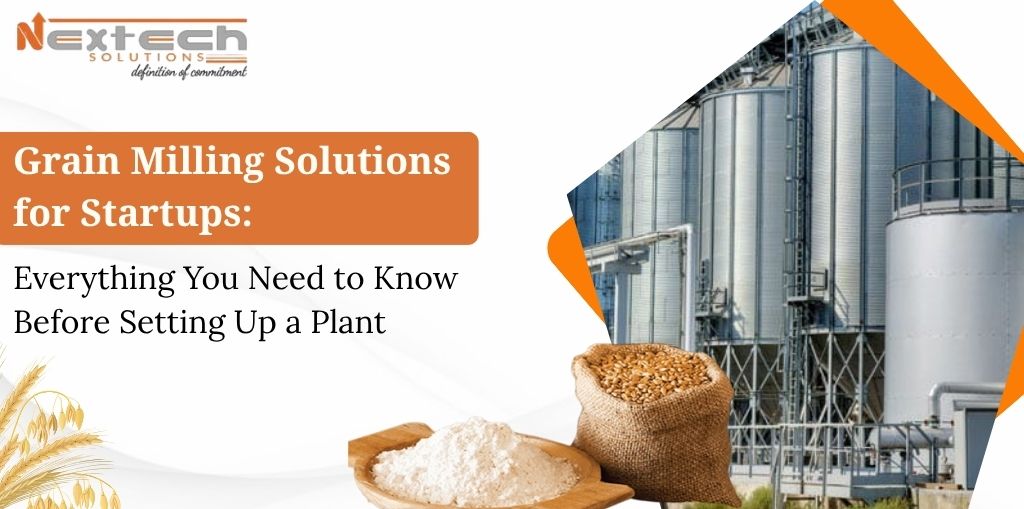
Grain Milling Solutions for Startups: Everything You Need to Know Before Setting Up a Plant

The grain milling industry has always been a cornerstone of the food supply chain, providing essential ingredients like flour, semolina, and other processed grains used globally. With rising demand for processed food and packaged staples, many entrepreneurs are exploring opportunities in this sector. However, setting up a grain milling plant is not just about installing machinery—it requires in-depth planning, understanding of processes, and integration of modern grain milling solutions to ensure long-term success.

In this blog, we’ll guide startups through the key considerations before establishing a grain milling unit, with insights from industry experts like Nextech Agri Solutions, a trusted name in providing turnkey milling consultancy and engineering services.

1. Understanding the Grain Milling Industry

Before investing in infrastructure, it’s vital to understand the scope and demand of the grain milling market. The industry caters to diverse products, including wheat flour, rice, cornmeal, and specialty grains. Consumer preferences vary by region, so identifying the target market is the first step.

  • Market Demand: Research consumption patterns in your chosen location. For example, wheat flour is in high demand in urban India, while rice milling dominates in states like Punjab or West Bengal.
  • Competitor Analysis: Study existing mills to identify gaps in production quality, packaging, or distribution that you can leverage.
  • Regulatory Environment: Grain processing is closely regulated, and startups must comply with food safety standards like FSSAI, HACCP, or ISO certifications.

2. Selecting the Right Grain Milling Solutions

Choosing the right technology is at the heart of a successful milling plant. Modern milling solutions not only improve efficiency but also enhance product quality and reduce operational costs.

Key Aspects to Consider:

  • Automation and Efficiency: Advanced machinery enables higher throughput with minimal manpower, crucial for startups aiming to scale operations.
  • Energy Optimization: Energy-efficient solutions reduce production costs and environmental impact.
  • Flexibility: Select equipment that can handle multiple grain types if you plan to diversify products later.

Companies like Nextech Agri Solutions specialize in designing plants that integrate these features, offering end-to-end solutions from concept to commissioning.

3. Plant Layout and Design

A well-planned layout is critical for smooth operations and long-term scalability. The design should allow optimal material flow, from raw grain intake to finished product packaging.

Factors Influencing Layout:

  • Available Space: Efficient use of land can reduce construction costs.
  • Process Flow: Avoid cross-contamination by maintaining separate paths for raw and processed materials.
  • Future Expansion: Leave scope for adding new lines or storage units as demand grows.

Professional consultants can help design layouts that maximize productivity while adhering to hygiene and safety standards.

4. Raw Material Sourcing and Storage

The quality of grains directly affects the end product. Reliable sourcing from farmers, cooperatives, or suppliers is essential. Moreover, storage plays a critical role in maintaining grain quality before milling.

Storage Considerations:

  • Temperature and Moisture Control: Prevents spoilage and pest infestation.
  • Capacity Planning: Storage should align with production volumes to avoid bottlenecks.
  • Inventory Management: Use technology for tracking and managing stock levels efficiently.

5. Compliance and Quality Control

Food safety is non-negotiable in grain milling. Startups must invest in stringent quality control measures to meet consumer expectations and regulatory requirements.

  • Laboratory Testing: Regular checks for moisture, protein content, and contaminants.
  • Certifications: Acquiring certifications like ISO 22000 or HACCP boosts credibility in domestic and international markets.
  • Traceability: Implement systems to track raw materials from procurement to finished goods for accountability and safety.

6. Financial Planning and ROI

Setting up a milling plant is capital-intensive, and careful financial planning is crucial. Beyond machinery and infrastructure, consider recurring expenses such as labor, energy, and maintenance.

Cost Factors:

  • Machinery and installation
  • Land and building construction
  • Licensing and compliance fees
  • Working capital for initial operations

Startups should also analyze potential returns, considering local demand and distribution opportunities. Well-optimized plants using modern grain milling solutions typically see better margins due to reduced wastage and higher efficiency.

7. Partnering with Experts for Success

Many entrepreneurs underestimate the complexity of setting up a milling plant. Partnering with experienced consultants like Nextech Agri Solutions can significantly reduce risks and ensure a smoother launch. They provide comprehensive services, including feasibility studies, plant design, machinery selection, installation, and staff training—ensuring startups can focus on operations rather than technical hurdles.

Conclusion

Entering the grain milling business is a promising venture, but it demands thorough planning, reliable technology, and expert guidance. From understanding market dynamics to selecting the right grain milling solutions, every step impacts the success and profitability of your plant. By working with experienced partners like Nextech Agri Solutions, startups can confidently navigate challenges and establish efficient, scalable, and profitable milling operations.

Ready to turn your milling business idea into reality? Connect with Nextech Agri Solution today for expert guidance and end-to-end support in setting up your grain milling plant.

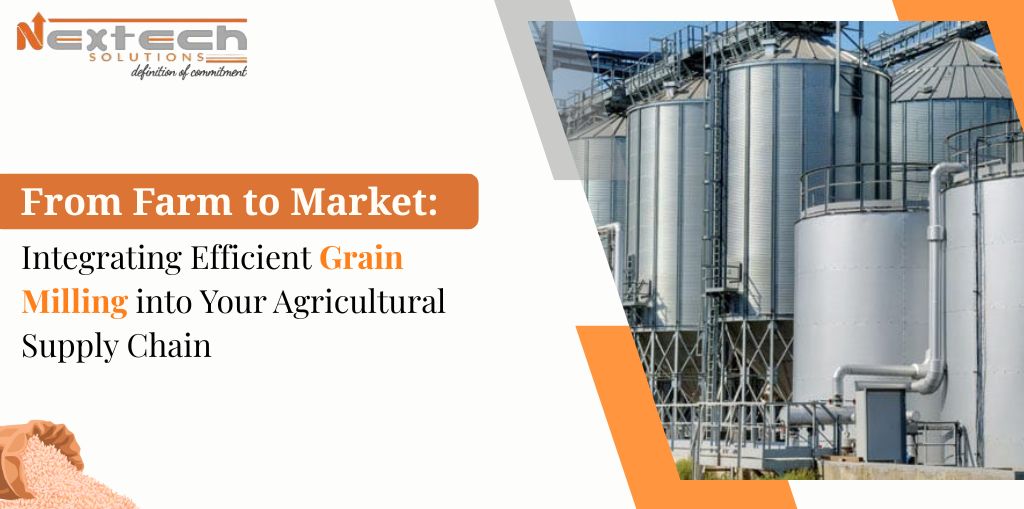
From Farm to Market: Integrating Efficient Grain Milling into Your Agricultural Supply Chain

The agricultural landscape is rapidly evolving, with farmers and agribusinesses seeking innovative ways to maximize value from their harvests. One of the most transformative strategies involves integrating efficient milling operations directly into the agricultural supply chain, creating a seamless pathway from farm to market while significantly enhancing profitability and quality control.

The Strategic Importance of Integrated Milling Operations

Modern agriculture demands more than just growing crops; it requires strategic thinking about post-harvest processing and value addition. By incorporating advanced grain milling solutions into your supply chain, you create multiple competitive advantages that extend far beyond traditional farming practices.

The integration of milling facilities allows farmers to:

  • Retain control over product quality from harvest to final packaging
  • Capture additional profit margins typically claimed by intermediaries
  • Respond quickly to market demands with customized products
  • Reduce dependency on external processing facilities
  • Build direct relationships with end consumers and retailers

Understanding Modern Grain Processing Technologies

Today’s milling technologies have revolutionized how agricultural products move through the supply chain. Advanced systems now offer precision control over every aspect of grain processing, from cleaning and sorting to final packaging.

Key Components of Efficient Milling Systems

Primary Processing Equipment: Modern mills incorporate sophisticated cleaning systems that remove impurities while preserving grain integrity. These systems use gravity separators, aspirators, and magnetic separators to ensure only the highest quality grains proceed to milling.

Milling Machinery: Contemporary milling equipment features automated controls that maintain consistent output quality while maximizing yield. These systems can be calibrated for different grain types and end-product specifications.

Quality Control Systems: Integrated monitoring systems track moisture content, particle size distribution, and contamination levels throughout the processing cycle, ensuring consistent product quality.

Rice Mill Project Planning: A Comprehensive Approach

When considering a rice mill project, successful implementation requires careful planning across multiple dimensions. The complexity of modern rice processing demands attention to technical specifications, market analysis, and operational efficiency.

Essential Planning Elements

Market Assessment: Understanding local and regional demand patterns helps determine optimal capacity and product mix. This includes analyzing competitor positioning, pricing strategies, and potential customer segments.

Infrastructure Requirements: Proper site selection considers factors such as grain storage capacity, transportation access, power availability, and proximity to both suppliers and markets. The location should facilitate efficient logistics while minimizing operational costs.

Technology Selection: Choosing appropriate equipment involves balancing initial investment with long-term operational efficiency. Modern systems offer automation features that reduce labor costs while improving consistency and quality.

Financial Planning: Comprehensive budgeting must account for equipment costs, installation expenses, working capital requirements, and ongoing operational expenses. Many successful projects benefit from phased implementation approaches that spread investments over time.

Building an Efficient Rice Mill Plant

The construction and setup of a rice mill plant represents a significant investment in agricultural infrastructure. Success depends on careful attention to design principles that optimize both efficiency and scalability.

Design Considerations for Maximum Efficiency

Workflow Optimization: Plant layout should minimize material handling while maintaining clear separation between different processing stages. This reduces contamination risks and improves overall efficiency.

Scalability Planning: Designing systems with expansion capabilities allows operators to increase capacity as markets develop. Modular equipment arrangements facilitate future upgrades without disrupting ongoing operations.

Energy Efficiency: Modern plants incorporate energy-saving technologies such as variable frequency drives, efficient lighting systems, and heat recovery mechanisms that reduce operational costs while supporting sustainability goals.

Automation Integration: Advanced control systems enable remote monitoring and automated adjustments that improve consistency while reducing labor requirements.

Quality Assurance and Market Positioning

Successful integration of milling operations requires robust quality assurance programs that meet or exceed industry standards. This involves implementing systematic approaches to quality control that cover every aspect of the processing operation.

Building Market Credibility

Certification Programs: Obtaining relevant certifications such as food safety standards, organic certifications, or quality management systems enhances market credibility and opens access to premium market segments.

Traceability Systems: Modern consumers increasingly demand transparency about food origins and processing methods. Implementing comprehensive traceability systems from farm to final product builds consumer confidence and supports premium pricing.

Brand Development: Developing strong brand identity around quality and reliability helps differentiate products in competitive markets while building customer loyalty.

Financial Benefits and Return on Investment

The financial advantages of integrated milling operations extend beyond simple profit margin improvements. Successful implementations typically see significant returns through multiple revenue streams and cost reductions.

Value-added processing can increase product value by 200-400% compared to selling raw grains. Additionally, integrated operations reduce transportation costs, minimize quality losses during handling, and provide greater flexibility in responding to market opportunities.

Future-Proofing Your Agricultural Investment

As agricultural markets continue evolving, integrated milling operations position farmers and agribusinesses for long-term success. By partnering with experienced providers like Nextech Agri Solutions, agricultural enterprises can access cutting-edge technologies and expert guidance that ensure optimal implementation and ongoing success.

The integration of efficient grain milling solutions into agricultural supply chains represents more than just process improvement; it’s a strategic transformation that creates sustainable competitive advantages while building stronger connections between producers and consumers. Through careful planning, appropriate technology selection, and commitment to quality, agricultural enterprises can successfully navigate this transformation and achieve significant long-term benefits.

Why Investing in Professional Grain Milling Solutions Yields Long-Term Gains

The face of farming is changing at lightning speed, and with it, the demand for upgraded, efficient, and scalable milling solutions is at an all-time high. For rice processors and agribusinesses that aspire to quality output and long-term viability, investing in professional grain milling solutions is no longer a choice—it’s a business imperative that reaps many benefits.

From enhanced operational effectiveness to improved product quality, properly planned rice mill plants help businesses in gaining a competitive edge in a quality and innovation-driven market.

Embracing the Role of Grain Milling Solutions

Grain milling is more than just a mechanical process. It involves a well-coordinated process of cleaning, drying, dehusking, polishing, grading, and packaging. All these steps need to be optimized for efficiency, quality, and cost.

Professional grain milling solutions are meant to maximize this entire value chain. They ensure that the milling process conforms to safety standards of today, delivers uniform output, and guarantees return on investment.

Key Benefits of Professional Milling Systems

1. Increased Operating Efficiency

One of the best advantages of a professionally engineered rice mill plant is that it can operate smoothly with minimum supervisory intervention. Automation and precise engineering reduce human mistake and increase productivity through control of:

  • Grain input and sorting

  • Energy consumption

  • Maintenance cycles

  • Real-time monitoring

Through the reduction of breakdowns and delays, companies are able to enhance operations in a smooth way and meet growing market demands.

2. Excellent Grain Quality Output

Grain or rice quality has a direct impact on customer satisfaction as well as market price. Poorly efficient milling could lead to grain breakage, discolouration, and adulteration—issues responsible for losses as well as brand deterioration.

Optimal grain milling solutions ensure high-grade dehusking, polishing, and grading deliver top-grade grains. In Indian rice mills particularly, home country and international demands call for the rigorous implementation of quality norms.

3. Cost and Energy Efficiency

A modern rice milling plant involves energy-efficient equipment and optimization of workflow design. This results in reduced electricity consumption, lower labor costs, and minimal material wastage.

Technology like pneumatic conveying technology, automatic weighing machinery, and efficient dryers can result in high degree of variation in operating cost in general, making initial investments recoverable in the long term.

4. Industry Standards Compliance

Food safety regulations and environmental regulations are becoming stricter worldwide. An investment in expert milling solutions ensures that your rice mill plant is FSSAI, ISO, and other regulatory compliant, hence making audits and certifications hassle-free.

Environmental compliance as far as waste management, dust collection, and water usage is concerned also becomes easier with a professionally installed system.

5. Scalability and Customization

Every firm is different in terms of size, grain type, and production goals. Large milling solution providers offer customized plant design and equipment that suit individual needs. Scalable solutions offered by these firms are flexible, allowing firms to expand operations without major infrastructure redesigns.

Real-World Impact: A Case for India

India is among the finest producers and consumers of rice in the world. With rising demand for exports and increased demand for finer quality grains, Indian rice mills have no option but to meet international standards of efficiency and quality.

Outdated equipment and conventional installations are no longer in a position to deliver precision or mass scale. In line with this, professionally designed grain milling plants are emerging as India’s rice processing industry strength.

Whether you are a new startup entering the market or an existing miller wanting to move up, collaboration with experts keeps you ahead of the game in an industry that relies on innovation and performance.

Selecting the Right Technology Partner

A proper mill installation is not just about possessing the correct machinery—it’s about having the correct people behind them. Operators like Nextech Agri Solutions have carved a niche for themselves by offering end-to-end consultancy and turnkey solutions best suited for the grain processing industry.

From feasibility study and layout of the plant through equipment and installation, specialist partners offer better value in setting up a future-proof rice mill plant. With professionalism, your investment is a direct lead to tangible rewards—improved productivity, improved quality, and sustainable profitability.

Long-Term Advantages that Make a Difference

Investment in specialist grain milling solutions is long-term in focus. The rewards are more than short-term yield—future-proof advantages shape the path forward for your business.

Some of the long-term advantages include:

  • Brand Reputation: High-quality grain consistently enhances your reputation in your local and global markets.

  • Customer Retention: Satisfied customers are more likely to become long-term business associates.

  • Sustainability: Systems that are efficient reduce environmental impact and waste of operations.

  • Financial Stability: Low downtime and high output for a streamlined plant mean better financial return year in and year out.

  • Workforce Optimization: Automated processes reduce dependency on skilled workforce, which lowers recruitment and training costs.

Conclusion

Expert grain milling solutions are not just a technological advancement—they are an essential platform for success in today’s agriculture and food processing. Whether putting up a new rice mill facility or upgrading an existing one, solution-led by experts yield measurable results in efficiency, quality, and profitability.

For rice mills in India and the world over, joining forces with a seasoned ally like Nextech Agri Solutions secures your investment for the future and sets it up for long-term growth. In an industry where quality and precision are what make success possible, there’s no replacement for professional excellence.

How to Reduce Energy Costs in Grain Milling with Advanced Solutions

Introduction

One of the greatest operating expenses for the grain milling sector is energy usage. As energy costs increase and sustainability is of greater importance, mill operators are keen on reducing energy expenditure without compromising on efficiency. Advanced grain milling solutions are capable of helping companies optimize operations, boost productivity, and avoid energy waste. Here, we discuss how new technologies and best practices can help save energy in grain milling, especially in the rice mill project and rice mill business segments.

Grasping Energy Consumption in Grain Milling

Grain milling involves multiple energy-consuming processes, including cleaning, conditioning, grinding, and packaging. The primary sources of energy expenditure in a rice mill project are:

  • Milling Equipment Operations – Rice hullers, polishers, and sorters are high-energy equipment that use a lot of power.
  • Air Compressors – Air compressors find application in pneumatic control systems and consume a lot of energy, thus adding a significant percentage to the energy bill.
  • Steam Generation and Drying – Steaming, drying, and parboiling of rice demand a lot of heat energy.
  • Lighting and Ventilation – Right light and airflow are required for ensuring optimum working conditions.

Advanced Solutions to Minimize Energy Expenses in Grain Milling

1. Energy-Efficient Equipment

Advanced milling machinery is engineered to use less energy with increased output. Replacement of machinery with energy-efficient models like automatic rice milling machines can greatly lower power usage. Some of the major advantages are:

  • Lower Power Consumption – Newer models of milling machines have lower energy levels with high output.
  • Optimized Performance – Smart automation enables improved control over the milling operation leading to reduced wastage of energy.

2. Process Optimization and Automation

Investment in high-end automation systems can optimize grain milling solutions by minimizing manual intervention and increasing efficiency. Some of the major automation advantages are:

  • Automated Control Systems – Intelligent software is able to monitor and manage milling parameters in real-time, minimizing unnecessary energy consumption.
  • Predictive Maintenance – IoT-based systems can identify machinery inefficiencies at the early stages, avoiding loss of energy through malfunctioning equipment.

3. Adoption of Renewable Energy Sources

Transitioning to renewable energy sources offers long-term cost benefits and sustainability advantages. A few effective strategies are:

  • Solar Power Integration – Integrating solar panels is a major step towards reducing reliance on traditional power sources.
  • Biomass Energy Utilization – Utilizing rice husk as fuel for steam generation is an environmentally friendly and economical means of powering milling operations.

4. Heat Recovery Systems

Heat loss in grain drying and parboiling can be reduced by adopting heat recovery systems. These systems recover waste heat and utilize it for preheating or drying operations, lowering overall energy usage.

  • Waste Heat Recovery Boilers – Recover excess heat from processing units and convert it into usable energy.
  • Heat Exchangers – Enhance efficiency in steam-powered milling processes.

5. Air Compressor and Ventilation Optimization

Air compressors and ventilation systems are necessary for ensuring adequate airflow and dust particle removal from the mill. They can, however, be significant energy sinks if not optimized.

  • Variable Frequency Drives (VFDs) – Vary air compressor speed according to demand, minimizing power wastage.
  • High-Efficiency Ventilation Systems – Enhance airflow while reducing energy usage.

6. Scheduling Regular Equipment Maintenance

Malfunctioning machinery can create inefficiencies in energy use, raising operating costs. Regular maintenance can ensure that:

  • Equipment lifespan is improved – Properly maintained machines use less energy and run more efficiently.
  • Downtimes are minimized – Avoid unexpected machine breakdowns that can cause production delays and increased power consumption.

How Nextech Agri Solutions Can Help

Nextech Agri Solutions is a prominent provider of state-of-the-art grain milling solutions, providing cutting-edge technologies and professional consulting to enable businesses to become energy efficient. Their areas of expertise are:

  • Designing and deploying energy-efficient rice mill business solutions.
  • Supplying automation and optimization strategies according to particular milling needs.
  • Helping to integrate renewable energy alternatives in order to decrease operating costs.

Conclusion

Minimizing energy expenditure in grain milling is crucial for maximizing profitability and sustainability. Through the adoption of innovative grain milling solutions, including energy-efficient equipment, automation, and renewable energy integration, owners of mills can greatly reduce their energy costs. Companies operating in the rice mill project industry can leverage professional guidance and innovative technologies offered by Nextech Agri Solutions, with a guarantee of optimal performance and minimal energy use.

Implementing these measures will not only save costs but also lead to a more environmentally friendly and sustainable milling industry.


Grain Milling Solutions for Large-Scale and Small-Scale Industries

In today’s changing agricultural industry, grain milling is an essential function of having high-quality processing of grain for both large-scale and small-scale industries. Whether local markets or international exports, having the right milling solution can mean success for a rice mill business or failure to cope with demand.

Understanding Grain Milling Solutions

Grain milling solutions are the equipment and technologies used to turn raw grains into end products like flour, rice, or other grain foodstuffs. New milling solutions not only make the processing more efficient but also give the end product a better overall quality.

Primary Advantages of New Milling Solutions

  • Efficiency: New milling equipment is capable of processing grains quicker, enhancing production capacities for companies of any size.
  • Quality Control: Sophisticated solutions utilize technology to provide consistent milling, eliminating impurities and preserving the grain’s integrity.
  • Cost-Effective: Although the initial capital outlay is high, contemporary machinery reduces waste and long-term operating expenses.
  • Scalability: Companies can readily expand their operations by moving to larger or more advanced equipment as their requirements change.

Milling Solutions for Large-Scale Industries

Mass industries usually need high-capacity milling systems to handle enormous amounts of grains effectively. Such companies are advantaged by:

  • Automated Milling Lines: This minimizes the use of human labor and guarantees uniform quality output.
  • Sophisticated Sorting and Polishing Machinery: This guarantees the elimination of all contaminants and improves the aesthetic value of finished products.
  • Energy-Efficient Systems: Minimizing power usage while still producing high volumes is critical for mass operations.

Nextech Agri Solutions provides customized grain milling solutions that are engineered to suit the requirements of high-capacity operations for maximum performance and reliability.

Small-Scale Industry Milling Solutions

Small-scale industries have tighter budgets and might be catering to local markets. They need flexible and cost-effective milling solutions, including:

  • Compact Milling Units: Perfect for small spaces, these units provide great performance at a lower price.
  • Manual and Semi-Automatic Systems: These enable businesses to manage costs without compromising product quality.
  • Modular Designs: Small-scale businesses can begin with simple equipment and upgrade as business expands.

Establishing a Rice Mill Business

Businesses that operate a rice mill business must have careful planning and the proper grain milling solutions in order to be successful. Some of the most important steps are:

  1. Market Research: Research the demand for rice and other grain products within the local and regional areas.
  2. Business Plan: Construct an extensive plan including equipment requirements, manpower, and financial expectations.
  3. Select Proper Equipment: Weigh production capabilities, energy conservation, and pricing while choosing the machinery.
  4. Quality Control: Use procedures to keep the product at a high level of quality and meet industry expectations.
  5. Raw Materials Sourcing: Build long-term relationships with efficient suppliers to secure consistent grain supply.
  6. Brand Identity: Design an original brand to make your company stand out from the crowd in a competitive environment.

Trends in the Milling Industry

The grain milling business is seeing some innovations to enhance efficiency and sustainability. Some of the important trends are:

  • Digitalization: Adoption of IoT (Internet of Things) and AI-driven systems for real-time tracking and process enhancement.
  • Sustainable Milling Practices: Implementing energy-efficient equipment and minimizing water usage to ensure less environmental footprint.
  • Traceability: Sophisticated tracking technologies that enable customers to track the source of their grains, fostering transparency and confidence.

Choosing the Right Partner

Choosing a reliable partner in the solution for grain milling is important to achieve long-term business success. Nextech Agri Solutions provides advanced technology and professional consultancy services to enable businesses to meet their production objectives. With solutions for both small-scale and large-scale industries, Nextech provides high efficiency, quality, and reliability.

Conclusion

Whether you own a large or small business, investing in innovative grain milling technologies is crucial for enhancing efficiency, quality, and profitability. Businesses can gain customized solutions that cater to their individual needs by aligning with leaders in the sector such as Nextech Agri Solutions and put themselves in position for long-term success.

Moving towards innovation and quality will keep businesses ahead in the current vibrant grain milling industry.

Sustainable Grain Milling Solutions for Eco-Friendly Production

In a world that places more importance on sustainability Farming faces increasing pressure to adopt practices that balance productivity and environmental management. For the rice mill business Adopting sustainable practices is not just an ethical decision. Rather, it is a strategic move that aligns with consumer demand and long-term profitability.

The importance of sustainable practices in rice milling

Grain milling is a cornerstone of food production that affects the lives of millions of people around the world. However, traditional milling They often involve the use of large amounts of energy, water use, and waste generation. These factors contribute to environmental degradation. This makes sustainability a pressing concern. Adopting sustainable grain milling solutions helps businesses Can reduce the ecological footprint. while ensuring long-term operational viability.

Environmentally friendly production not only conserves natural resources. But it also improves the quality of the final product. Consumers are now more aware of where their food comes from. By giving importance to products that come from sustainable sources. This shift in consumer behavior presents an opportunity for businesses to differentiate themselves in a highly competitive market.

Key components of a sustainable grain milling solutions

Energy Efficiency

One of the main goals of a sustainable grain mill is to reduce energy use. Modern milling equipment with energy-saving motors and automation can significantly reduce electricity consumption. Experts will guide businesses in selecting and using these technologies. To ensure maximum efficiency and cost savings.

Waste Management

Traditional grain milling It produces a large amount of waste, including rice husks, bran and dust. Sustainable practices involve converting these by-products into valuable resources. For example, rice husks can be used as biofuel or in the production of biodegradable materials. Tailored solutions for waste utilization transform potential liabilities into revenue streams.

Water Conservation

Water is an important resource in a rice mill business. This is especially true in processes such as steaming in a rice mill. By adopting water-saving technologies such as closed-loop systems, which recycle water within the factory, conserve water, reduce costs, and ensure compliance with environmental regulations…

Economic Benefits of Sustainable Grain Milling

Adopting environmentally friendly practices has significant economic benefits. Although the initial investment in sustainable technology may seem high, But long-term energy, water, and waste management savings often outweigh the costs. Additionally, businesses that prioritize sustainability are more likely to attract partnerships and investment from stakeholders who value environmental responsibility.

Sustainable grain milling solutions also open doors to the premium market. Products produced using environmentally friendly methods can command a higher price. Attracting consumers who are willing to pay more for sustainability, compliance with global environmental standards also facilitates access to international markets. and increase business opportunities as well

The role of technology in changing grain milling

Technology plays a key role in making grain milling sustainable. automatic system data analysis And artificial intelligence allows precise tracking and control of the milling process. Increase efficiency and reduce waste Advanced equipment and new methods Helping businesses Optimize operations

For example, automated quality control systems reduce manual intervention and ensure consistent product quality. Data-driven insights help businesses identify inefficiencies and make targeted improvements. By integrating these technologies, businesses can achieve a seamless blend of sustainability and productivity.

Challenges and solutions in implementing sustainable practices

While the benefits of sustainable grain milling are obvious, But businesses They often face challenges in transitioning to environmentally friendly practices. Common barriers include high startup costs. Lack of technical expertise and resistance to change Helping businesses These obstacles can be overcome by providing end-to-end support from feasibility studies to implementation training.

Experts work closely with clients to develop customized solutions to meet their unique needs and goals. By fostering a culture of innovation and collaboration, businesses can confidently embrace sustainability.

Conclusion

When the world population increases The demand for food will only increase. Sustainable grain milling solutions are essential to meeting this need without compromising the health of our planet. Businesses that prioritize green production today will be better positioned to prosper in the future. Gain a competitive advantage and contribute to a sustainable food system.

Nextech Agri Solutions is committed to creating positive change in the agriculture sector. By collaborating with various businesses It is considered a future where performance and sustainability go hand in hand.