 MAIL US :
 CALL US :
>
CALL US :
>
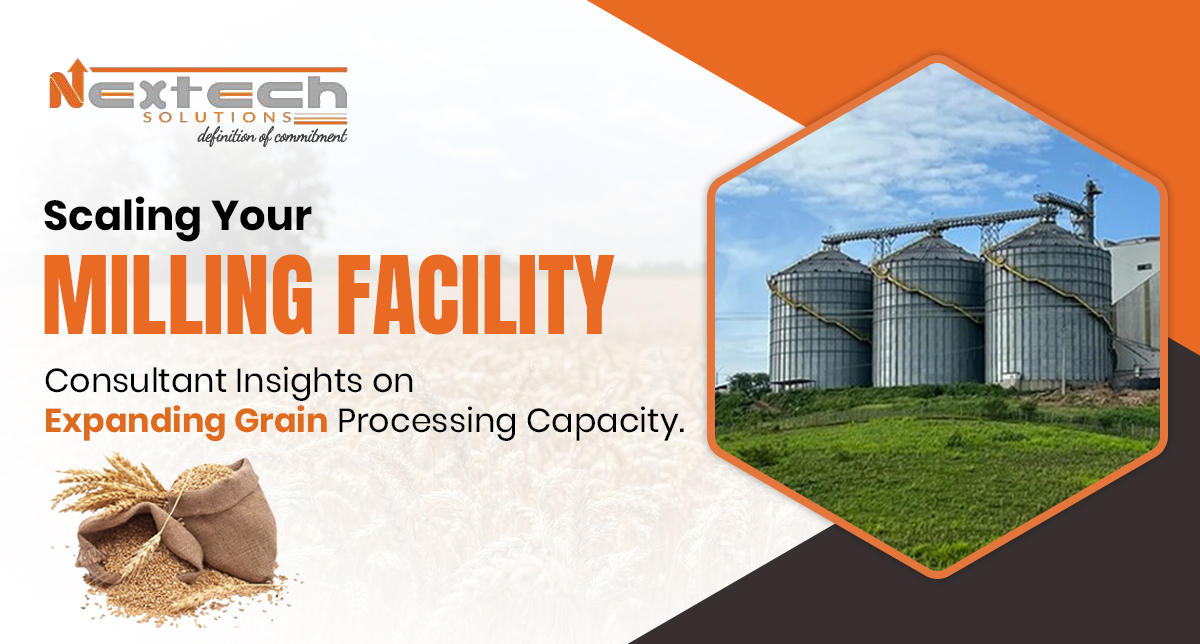
As global demand for processed grains continues to rise, milling businesses face increasing pressure to scale operations efficiently. Whether driven by growing consumer needs, export opportunities, or diversification into value-added products, expanding grain processing capacity is a strategic move that requires careful planning. This is where expert guidance and modern Grain Milling Solutions play a critical role.
At Nextech Agri Solution, we work closely with mill owners to design scalable, future-ready facilities that balance capacity growth, operational efficiency, and long-term profitability.
Understanding the Need for Capacity Expansion
Before investing in expansion, it is essential to understand why your milling facility needs scaling. Common drivers include increased raw material availability, consistent order overflow, outdated machinery, or rising operational costs due to inefficiencies.
A professional Grain Milling Consultant helps analyze current production bottlenecks, equipment utilization rates, and process losses. This assessment ensures that expansion decisions are data-driven rather than reactive, reducing the risk of overinvestment or underperformance.
Evaluating Your Existing Grain Milling Process
Every successful expansion begins with a detailed evaluation of the existing grain milling process. This includes:
- Raw grain intake and cleaning efficiency
- Grinding and separation performance
- Energy consumption per ton of output
- Material flow and handling systems
- Storage and dispatch infrastructure
Often, mills assume that expansion means simply adding machines. In reality, optimizing the current process can unlock hidden capacity. Process redesign, layout improvements, and equipment upgrades frequently deliver better returns than increasing floor space alone.
Role of Grain Milling Technology in Scaling Operations
Modern grain milling technology has transformed how facilities scale production. Automation, digital controls, and high-efficiency machinery allow mills to increase output without proportionally increasing labor or energy costs.
Advanced technologies enable:
- Precise process control and quality consistency
- Reduced product loss and contamination risks
- Real-time performance monitoring
- Predictive maintenance to minimize downtime
By integrating smart technology, mills can scale sustainably while maintaining high product standards—an essential factor for competitive markets.
Choosing the Right Expansion Strategy
Not all expansion strategies are the same. A skilled Grain Milling Consultant evaluates multiple pathways based on your business goals, budget, and market conditions. Common strategies include:
1. Modular Expansion
Adding modular units allows gradual capacity growth without disrupting ongoing operations. This approach is ideal for mills planning phased investments.
2. Process Optimization Before Expansion
Improving efficiency in cleaning, grading, and grinding stages often frees up capacity. This minimizes capital expenditure while improving profitability.
3. Vertical Integration
Expanding into storage silos, packaging, or by-product processing adds value without solely relying on higher throughput.
At Nextech Agri Solution, we align expansion strategies with long-term operational and commercial objectives.
Infrastructure Planning and Layout Optimization
Scaling capacity requires more than machines—it demands intelligent infrastructure planning. Poor layouts increase material handling time, labor dependency, and maintenance challenges.
Key considerations include:
- Smooth material flow with minimal manual intervention
- Space allocation for future upgrades
- Safety compliance and accessibility
- Efficient storage and dispatch zones
Well-designed layouts enhance productivity while keeping operational complexity under control.
Managing Cost, Efficiency, and ROI
Expansion investments must deliver measurable returns. A professional Grain Milling Consultant helps calculate realistic ROI by considering:
- Capital and installation costs
- Energy and maintenance savings
- Labor optimization
- Output quality improvements
The goal is not just higher capacity but better profitability per ton processed. Strategic Grain Milling Solutions focus on long-term efficiency rather than short-term gains.
Importance of Compliance and Quality Control
As milling capacity increases, maintaining regulatory compliance and consistent product quality becomes more challenging. Scaling operations without standardized quality systems can lead to customer complaints and compliance risks.
Modern grain milling technology integrates quality checks, traceability, and process control systems that scale seamlessly with production. This ensures compliance with food safety standards while protecting brand reputation.
Partnering with the Right Grain Milling Consultant
Successful expansion depends heavily on expert guidance. An experienced Grain Milling Consultant brings industry insight, technical expertise, and practical execution experience.
At Nextech Agri Solution, we provide end-to-end support—from feasibility studies and process design to technology integration and commissioning. Our focus is on building scalable, resilient milling facilities that grow with your business.
Conclusion
Scaling a milling facility is a complex but rewarding journey when approached strategically. By optimizing the existing grain milling process, adopting advanced grain milling technology, and implementing tailored Grain Milling Solutions, businesses can expand capacity without compromising efficiency or quality.
With the right planning and expert consultation, expansion becomes a sustainable growth opportunity rather than a financial risk. Nextech Agri Solution remains committed to helping millers scale smarter, faster, and more efficiently.
FAQs
1. When is the right time to expand a grain milling facility?
The right time is when demand consistently exceeds capacity, operational inefficiencies increase costs, or existing equipment limits scalability. A professional assessment helps confirm readiness.
2. Do I need to replace all equipment to increase capacity?
Not always. Optimizing the current grain milling process and upgrading specific machines can significantly increase output without complete replacement.
3. How does grain milling technology support scalability?
Modern technology improves automation, reduces losses, ensures consistent quality, and allows real-time monitoring, making large-scale operations more efficient and manageable.
4. What role does a Grain Milling Consultant play in expansion?
A consultant evaluates feasibility, designs scalable solutions, selects suitable technology, and ensures smooth implementation with minimal operational disruption.
5. How long does it take to scale a milling facility?
Timelines vary based on project size, but phased expansion with proper planning helps minimize downtime and ensures smooth transition.