Basmati Rice Processing Excellence: Specialized Milling Solutions for Premium Rice Varieties

India’s basmati rice stands as a crown jewel in the global grain market, renowned for its distinctive aroma, elongated grains, and exceptional cooking qualities. The journey from paddy to premium basmati rice requires sophisticated processing techniques and cutting-edge technology that preserves the grain’s inherent characteristics while maximizing yield and quality.

The Art and Science of Basmati Processing

Basmati rice processing demands a delicate balance between traditional knowledge and modern technology. Unlike regular rice varieties, basmati requires specialized handling throughout every stage of milling to maintain its premium status in international markets.

The processing begins with careful paddy selection, where moisture content, maturity levels, and grain integrity are meticulously evaluated. This initial assessment determines the entire milling strategy, as basmati’s fragile nature requires gentler handling compared to other rice varieties.

Critical Factors in Premium Rice Milling

Moisture Management Optimal moisture levels between 12-14% are crucial for basmati processing. Excessive moisture leads to grain breakage, while insufficient moisture results in brittle grains that shatter during milling operations.

Temperature Control Heat-sensitive basmati grains lose their aromatic compounds when exposed to high temperatures. Advanced milling systems incorporate temperature monitoring and cooling mechanisms to preserve the grain’s natural fragrance.

Gentle Handling Mechanisms Traditional abrasive milling methods damage basmati’s delicate structure. Modern grain milling solutions employ rubber roll hullers and friction-based whitening systems that minimize grain stress and breakage.

Advanced Milling Technologies for Superior Results

Multi-Stage Processing Systems

Contemporary rice mill plant designs incorporate multiple processing stages, each optimized for specific functions:

Pre-cleaning and Destoning Advanced screening systems remove impurities, stones, and damaged grains before processing begins. This preliminary step significantly improves final product quality and reduces equipment wear.

Precision Hulling Specialized hulling machines designed for long-grain varieties ensure consistent hull removal without damaging the underlying grain structure. Variable pressure settings accommodate different grain sizes within the same batch.

Controlled Whitening Multi-pass whitening systems gradually remove bran layers while preserving grain integrity. Each pass is carefully calibrated to achieve desired whiteness levels without over-processing.

Quality Enhancement Features

Modern milling solutions integrate several quality enhancement technologies:

  • Optical sorting systems that detect and remove discolored, chalky, or damaged grains
  • Length grading mechanisms that separate grains by size for uniform packaging
  • Broken grain separation systems that maximize head rice recovery
  • Dust aspiration systems that remove fine particles and broken bran

The Indian Advantage in Rice Processing

Rice mills in India have evolved significantly over the past decade, driven by export demands and quality standards. Indian manufacturers have developed specialized expertise in basmati processing, combining traditional knowledge with international best practices.

Export Quality Standards

Indian basmati processors must meet stringent international quality parameters:

  • Head rice recovery rates exceeding 65%
  • Broken grain content below 5%
  • Moisture levels maintained at 12-13%
  • Foreign matter content less than 0.1%
  • Aromatic compound retention for authentic basmati fragrance

Technological Innovations

Leading processors have invested in state-of-the-art equipment featuring:

Automated Control Systems Computer-controlled processing parameters ensure consistent quality across batches while reducing human error and labor dependency.

Energy Efficient Operations Modern mills incorporate energy recovery systems and optimized power consumption mechanisms that reduce operational costs while maintaining processing efficiency.

Traceability Systems Advanced tracking mechanisms monitor grain movement from intake to packaging, ensuring quality accountability and regulatory compliance.

Maximizing Profitability Through Precision Processing

Yield Optimization Strategies

Successful basmati processing requires strategic approaches to maximize both quantity and quality yields:

Paddy Quality Assessment Comprehensive testing protocols evaluate grain maturity, moisture distribution, and damage levels to optimize processing parameters for each batch.

Process Parameter Adjustment Real-time monitoring systems adjust milling intensity, whitening duration, and handling speeds based on grain characteristics and desired output specifications.

Byproduct Utilization Efficient mills maximize revenue through proper utilization of rice bran, broken grains, and hulls for animal feed, oil extraction, and biomass applications.

Market Positioning Advantages

Premium basmati processing capabilities enable processors to:

  • Access high-value export markets with stringent quality requirements
  • Command premium pricing for superior grade products
  • Build long-term relationships with international buyers
  • Diversify product portfolios across different grain lengths and qualities

Future Outlook and Industry Trends

The basmati rice processing industry continues evolving with emerging technologies like artificial intelligence-based quality assessment, blockchain traceability systems, and sustainable processing methods. Nextech Agri Solutions remains committed to advancing these innovations, helping processors achieve excellence in basmati rice production while meeting global market demands.

Investment in specialized milling infrastructure positions processors to capitalize on growing international demand for premium Indian basmati rice, ensuring sustainable growth and market leadership in this competitive sector.
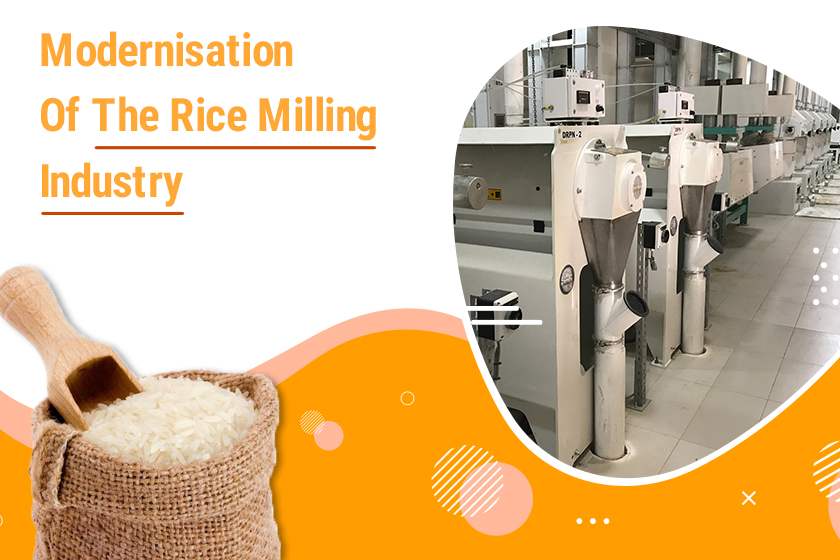
Modernisation Of The Rice Milling Industry

The process of converting paddy into Rice by using modern technologies is called modernisation of the Rice Milling Industry. This process helps easily remove the husks, dust, extracting the kernel of Rice, and produce edible Rice by using high tech machines.

The process of converting paddy into Rice by using modern technologies is called modernization of the Rice Milling Industry. This process helps easily remove the husks, dust, extracting the kernel of Rice, and produce edible Rice by using high-tech machines. You can be able to get more Rice with the involvement of the Modern Rice Milling process. Many industries are likely to change their old plant to the latest technology. Various operations are being followed all over in milling for the production of the end product named Rice. 

The Processes Involved In Modern Rice Milling:

There are eight processes involved in Modern Rice Milling, and every process is carried out in order. Each process depends on others and waits until the completion of the previous process. But it is a rare scene because of several tons of paddy involved. Modern rice milling delivers polished Rice with great quality to the customers and retailers. Modern rice milling machines are a great cost to plants. But it is worth its cost and gives a huge profit to rice merchants.

  • Pre-cleaning
  • Dehusking or Dehulling
  • Separation of Paddy
  • Polishing or Whitening
  • White Rice Separation
  • Mixing of Rice
  • Polishing of Mist
  • Packing and weighing of Rice

Working Of Modern Rice Milling Industry:

Pre-cleaning is an initial process, and it increases the chance of Dehulling. This process prepares paddy for the easy removal of husks. The de-husking process completely removes husks bypassing paddy with different speeds in abrasive surfaces. Brown rice is converted to Paddy Rice by the paddy separation process. Three or four whitening machines are connected to polishing the Rice by removing gems and brans. 

Large and small Rice are being collected from separating white Rice after polishing. The rice mixing process involves volumetric mixers for mixing Rice in the right proportion depending on the country.  In mist polishing, the final mist of water is applied to Rice before packing. After this, the Rice Milling Industry uses weighing mechanisms to pack Rice and ready to sell. These steps are being followed for packing all varieties of paddy crops. Specialized operators are being involved in the rice machine operation.

Responsibilities Of Rice Mill Consultants:

The rice mill merchants assist consultants for higher production with great quality. They use consultants to attract customers for the right choice of selling good products. Instant development in Rice’s production in the day-to-day process influences consultants to make great dealing with a client. Rice Mill Consultants also look after each unit in the process of milling. They take care of the efficiency of work and provide guidelines for industries. They involve choosing the quality rice machines to operate without giving problems at production time. Thus the consultants of this field help the merchants to have a good deal of business profitably.


Enquire Now

Basmati Rice Milling Processing Technology in Bangladesh

In its raw form, Paddy cannot be eaten as it needs processing to become fit to be eaten. It consequently undergoes several stages before it appears in stores and supermarkets. Rice milling, is the entire process through which paddy grains are transformed into tasty, succulent rice.

In its raw form, Paddy cannot be eaten as it needs processing to become fit to be eaten. It consequently undergoes several stages before it appears in stores and supermarkets. Rice milling, is the entire process through which paddy grains are transformed into tasty, succulent rice. A series of processes help clean, sift bundle and segregate Paddy and to remove its impurities before it becomes fit for consumption. Nextech Solutions is one of the leading food grain industry consultants in India.

As Bangladesh is a rice consuming country, Rice milling industry in Bangladesh is enormous. Rice milling is accomplished by multiple systems that vary in scale tremendously. These can range from the very small to those requiring very large scale factories. Some of these require ultramodern imported machines based on intricate scientific principles.

PADDY PROCESSING


Rice procurement is a long and winding process wherein it ’s cultivated by farmers and after being made fit for factories by usage of threshers and harvesters, it reaches the factories. After this, rice processing is an equally complex process.

    • The Pre-Cleaner is undertaken to resolve pre-cleaning issues that may arise after the transportation.


    • Paddy Dryers are employed to ensure rice is uniformly dried to be fit for processing. This usually requires preprocessing and minimizes moisture content before storing it in warehouses.


    • De-Husking A fully automatic rubber roll control system ensures that a prefixed percentage of paddy is mixed before being fed to the tray of separators.


    • Paddy Separators To set apart rice from its kernels, these machines move sideways to roll the mixture downwards.


    • Polishers Moving friction in the moving rice grains ensures an even polishing. At this stage segregation into the light and heavy seeds, cereal and granular materials are accomplished through Fine Cleaners.


    • The final stage is Grading and Sorting where stringent quality control processes by experts ensure the perfect grains are shipped out of the factory premises.


Modern Rice Mills today incorporate the state of the art technologies to set up world-class modern plant machinery and technology. The Factory lines are nearly automated and each stage moves continuously requiring minimal human intervention and smooth production of tastiest rice.
Nextech Solutions, a 10-year-old organization, are promoted by two professionals from the Indian Basmati Rice Industry. One of the leading food grain industry consultants in India, we are leading edge and a very successful Rice Mill Consultant in Bangladesh. As one of the successful bulk handling and storage consultants, we provide focused and highly effective and efficient advice.


Enquire Now