MAIL US :
 CALL US :
>
CALL US :
>

The global demand for processed grains is growing rapidly, and with it comes the need for highly efficient and technologically advanced Grain Milling Plants. For businesses in the agricultural sector, setting up a modern milling facility is not just about meeting production targets—it’s about ensuring consistent quality, maximizing yield, and reducing operational costs. Achieving this balance requires careful selection of equipment that forms the backbone of a milling plant.
Companies like Nextech Agri Solutions have been at the forefront of designing and implementing advanced grain milling solutions that integrate the latest technology with practical functionality. Let’s explore the essential equipment required to run an efficient grain milling operation.
1. Pre-Cleaning Equipment: The First Step Toward Quality
Before grains enter the milling process, they must be cleaned thoroughly to remove dust, stones, husks, and other impurities. Pre-cleaning ensures smooth functioning of the plant and protects downstream equipment from wear and tear.
Key equipment includes:
- Vibratory Separators – Remove large and small impurities efficiently.
- Destoners – Separate heavier stones from the grains.
- Magnetic Separators – Eliminate metallic particles that could damage machinery.
This step is critical because the quality of raw material directly affects the output of the entire milling process.
2. Milling Machines: The Core of the Operation
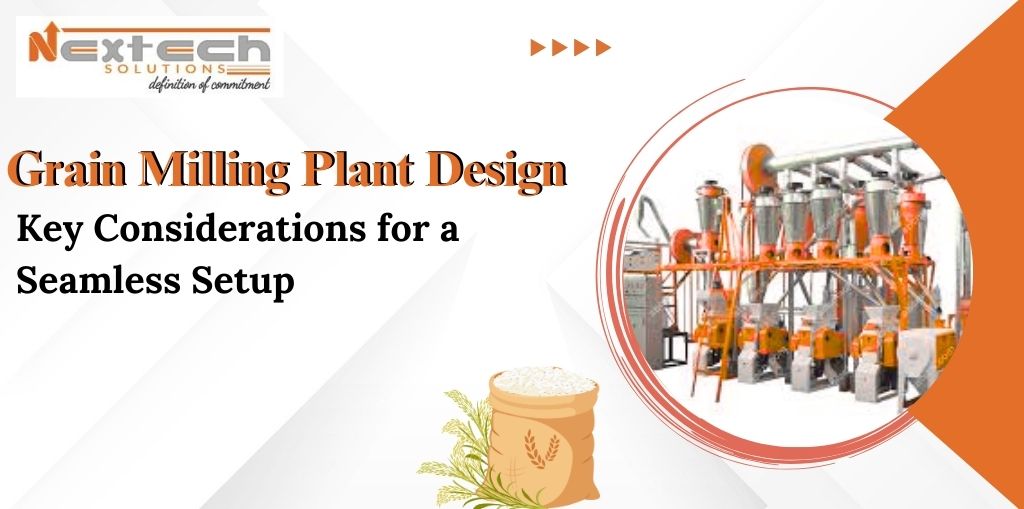
The heart of any Grain Milling Plant lies in its milling machinery. Depending on the type of grain—whether rice, wheat, maize, or pulses—different machines are used to process raw grains into finished products.
Typical milling equipment includes:
- Roller Mills – Crush and grind grains with precision for consistent flour quality.
- Hammer Mills – Break down harder grains for animal feed and coarse products.
- Plan sifters – Classify ground material into various grades.
Modern mills are equipped with automated controls to ensure uniformity and minimize human error. Automation not only increases efficiency but also reduces energy consumption.
3. Storage Silos: Safeguarding Grains and Flour
Proper storage is essential to protect both raw grains and finished flour from spoilage, moisture, and pests. Silos provide controlled environments, ensuring that products remain safe and market-ready.
Benefits of silos in milling plants:
- Maintain consistent grain quality.
- Enable bulk storage, reducing handling costs.
- Support continuous plant operations without interruptions.
Incorporating modern silo systems into your plant ensures smooth supply chain management.
4. Cleaning and Polishing Machines
In rice and maize milling, specialized cleaning and polishing machines enhance product quality by removing husks, bran layers, and other impurities. Polishing adds a glossy appearance and improves market appeal.
Common equipment includes:
- Rice Polishers – Give rice grains their characteristic shine.
- Bran Removers – Separate bran layers without damaging kernels.
This stage is vital for meeting consumer expectations of visual and nutritional quality.
5. Grading and Sorting Equipment
Not all grains are the same size or quality. To ensure uniformity, grading and sorting machines are used to separate grains based on size, weight, and color.
- Color Sorters – Detect and remove discolored or defective grains.
- Grain Graders – Separate grains into categories for specific end uses.
Accurate sorting improves product consistency and boosts the value of the final output.
6. Packaging Systems
Efficient packaging ensures that the finished product reaches the consumer safely and in good condition. In a modern milling facility, automated packaging machines are used to speed up the process and maintain hygiene standards.
Packaging options include:
- Small retail packs for direct consumer markets.
- Bulk packaging for wholesalers and distributors.
With growing competition in the food industry, attractive and durable packaging can also give your product an edge.
7. Dust Control and Aspiration Systems
Dust is an inevitable by-product of milling, but if not managed properly, it can lead to contamination, equipment wear, and even health hazards for workers. Installing dust control systems keeps the plant environment safe and compliant with regulations.
Systems often include:
- Cyclone separators.
- Bag filters and central aspiration lines.
A clean working environment enhances productivity and ensures safety.
8. Automation and Control Systems
One of the biggest advancements in modern grain milling solutions is automation. Sophisticated control systems monitor every step of the milling process, from intake to packaging.
Advantages include:
- Real-time monitoring of operations.
- Reduction in manual labor.
- Consistency in quality output.
- Energy savings and reduced downtime.
Automation ensures that the milling plant operates efficiently, with minimal errors and maximum output.
9. Auxiliary Equipment for Seamless Operations
Apart from core machinery, several auxiliary systems play a crucial role in efficient operations:
- Conveyors and elevators – For smooth material handling.
- Weighing systems – For accurate measurement and billing.
- Moisture controllers – To maintain grain quality during processing.
These supporting systems ensure that the plant functions as a cohesive unit.
Conclusion
An efficient Grain Milling Plant is much more than a collection of machines—it is a carefully designed system where each piece of equipment plays a vital role in ensuring productivity, quality, and profitability. From pre-cleaning to milling, storage, sorting, and packaging, every step requires precision and the right technology.
With the increasing demand for processed grains, businesses must invest in advanced grain milling solutions that not only meet current needs but also prepare them for future growth. Companies like Nextech Agri Solutions provide end-to-end expertise in planning, designing, and implementing these systems, helping businesses build facilities that are efficient, reliable, and sustainable.
👉 If you’re planning to set up or upgrade your Grain Milling Plant, connect with Nextech Agri Solutions today and take the first step toward building a smarter, more efficient, and future-ready milling operation.