Rice Mill Consultant Tells You How To Fix Water Damaged Phone With Rice

Losing sleep because your phone fell in water? The best rice mill consultant in Delhi & NCR, Nextech Solutions, is today sharing with you this life hack – what to do when the phone falls in the water. But why are we sharing it? You may have guessed it, the hack is to do with rice!

Losing sleep because your phone fell in water? The best rice mill consultant in Delhi & NCR, Nextech Solutions, is today sharing with you this life hack – what to do when the phone falls in the water. But why are we sharing it? You may have guessed it, the hack is to do with rice! And over the past few months, we have covered from news stories pertaining to the grain and seed industry Such as the Andhra rice miller lobby blamed to the use of current technology in milling. Anyway, without further ado, let’s get to the life hack!

For one, a water damaged phone may seem dead. But it is often possible to revive it through this method.

Acting fast is of key importance. To start with, remove the battery & SIM card from the phone and shake the device to get rid of as much water as possible. Retrieving the SIM would safeguard it against any damage. (Even though they survive water damage well) Your SIM is valuable because it contains contacts and other data.

Using paper napkins/ towels, dry the phone to the best of your ability.

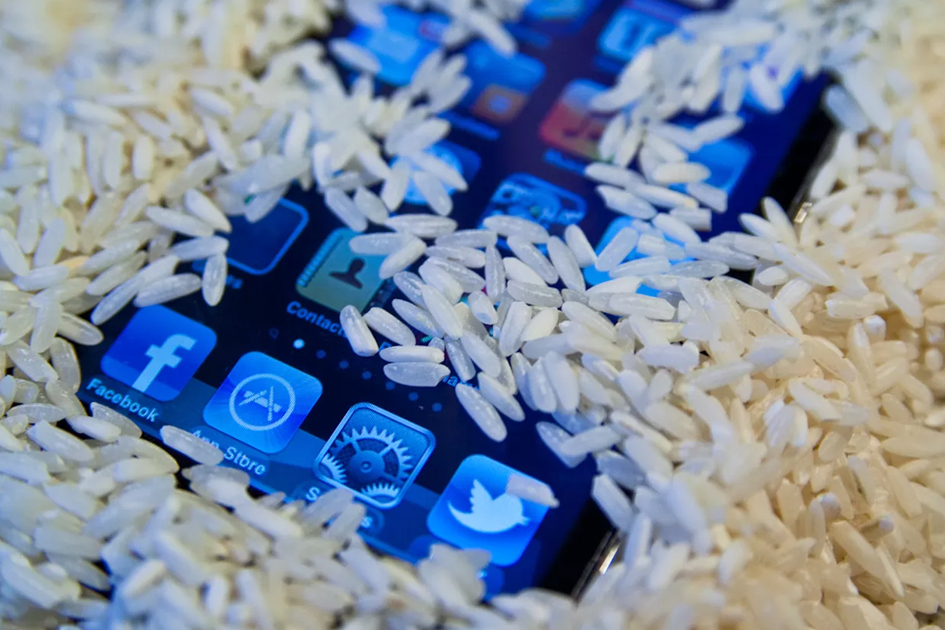
Now, stash the smartphone and the battery into a bowl of uncooked rice. Leave overnight.

Do NOT, and I repeat, do not ever attempt drying the mobile in a microwave.

While leaving the water damaged phone into a bowl of rice is not a sure shot way of saving it, the method is often successful, with the rice absorbing the moisture.

And that is it from your favourite Storage Silo Project Consultant for this week! Good Luck with your phone!

Enquire Now

New Technology To Set Up A Rice Mill In 2021

Rice is a staple diet in India which is the second largest producer of rice after China. Rice is the backbone of agrarian India as it generates the significant number of employees. Modernization drives the world as this post will highlight the new technological improvements introduced in rice milling.

Rice is a staple diet in India which is the second largest producer of rice after China. Rice is the backbone of agrarian India as it generates the significant number of employees. Modernization drives the world as this post will highlight the new technological improvements introduced in rice milling. It will also connect the dots between modernization and rice milling, one of Nextech’s specialties.

‘If one wants to set up a rice mill, he/she has to take into account the current trends and technologies’. But for dreams to become reality, fuel is a driving factor. Our expert’s point, 10 years before today that fuel was missing in the industry.

Rice Milling Technology 2021 – Then & Now

Then

Maintaining the high quality and output of rice was not an easy task. The main reasons behind this were limited technology, government policies, little investment, mismanagement etc. Many shipped consignments were rejected due to the non-fulfillment of an international quality standard.

Some faults in yesterday’s rice milling technology:

  1. The machines were non-commercial as the output quality was low.
  2. There wasn’t enough investment to buy modern Rice Mill Machinery (automatic and semi-automatic) manufactured and supplied by Japan & Germany.
  3. The machines were traditional and locally produced from non-standard fabricated items. They produced inconsistent qualities of rice.
  4. Rice plants were not efficient in terms of energy conservation, maintenance, productivity thereby leading to high production costs.
  5. Mild steel usage in rice mill machineries and corrosion of mild steel affected the rice quality.
  6. Quality management systems were not employed. There were no testing labs for routine check-ups.

Many other issues like ‘improper marketing techniques, business development, government policies and infrastructure’ crowded the industry.  A large scope for improvement was present as there was a big vacuum that the industry had to fill.

Now

The government started urging that ‘Rice mills must modernize to meet global quality standards’. Nextech also started operations around that same time, in 2006. Modern techniques and investments flew in this sector, as believed by our experts. With huge investment followed by huge demand, the government had to create policies favoring modern mills.

With that, modern rice milling machines as they were called started showing their magic. The private sector backings had a huge effect on the industry. Some new technologies introduced in today’s milling machines are:

  • Use of Rubber roller technology for husking
  • Two-stage whitening process
  • Use of Paddy  separators
  • Old stone disk hullers, vertical cone polishers have been replaced by emery-coated cylinders, friction-type whitener polisher, and dry & wet mist polishers.
  • Milled rice is now graded
  • Automated plants from Germany & Japan are the new market trends.
  • Skilled operators, good paddy quality, maintenance of machines set the tone for high-quality outputs.
  • The use of NUE (Nitrogen Use Efficient) technology has been encouraged. This increases & doubles plant growth and yield.
  • Turbo & extractive milling speed up the process.

The biggest feature of the new machines was their ability to save energy. With state governments’ hand, cost structure, investor’s expertise, development favored rice mills. Nextech wishes for more innovations to come as it encourages us to produce high-quality products for our valued customers.


Enquire Now

Wild Rice Harvest By Chippewa – Permit Torn To Shreds

The Minnesota DNR (Department of Natural Resources) has issued a surprise one day legal permit to Chippewa. The license allows individuals to harvest wild rice without having a state wild rice harvesting license. The 1855 authority’s intention was to harvest wild rice at Hole-in-the-box Day Lake in remembrance of Chief-Hole-in-the-Day.

The Minnesota DNR (Department of Natural Resources) has issued a surprise one day legal permit to Chippewa. The license allows individuals to harvest wild rice without having a state wild rice harvesting license. The 1855 authority’s intention was to harvest wild rice at Hole-in-the-box Day Lake in remembrance of Chief-Hole-in-the-Day. This was to bring attention to the treaty of 1855 and clean water issues. The DNR has prevented a court battle by doing so.

For those unaware, the treaty with the Chippewa, also known as the treaty of Washington, was conducted between the United States and the Pillager and Mississippi Chippewas. The Chippewas are a historic band that settled at the headwaters of the Mississippi River, in the present day state of Minnesota.

The DNR commissioner is allowed to issue such permits for educational purposes.
In a dramatic turn of events though, the Authority Chair LaRose tore the permit into shreds in front of news channel cameras, unimpressed by the “permission slip”.


Enquire Now

Who Are We In A Nutshell

We are not going to waste your time tonight giving a brief on how important a crop paddy is. Or how important rice is in the Indian subcontinent. Instead, we are going to cut the chase and talk about who we are, and what do we do.

Rice Milling is a combination of processes that starts with pre-cleaning, when impure paddy arrives from the field to the rice mill, and ends with the weighing and packing of the whitened, polished, blended rice. Rice without milling, cannot be consumed. Even if you eat brown rice, the paddy needs to be pre-cleaned, de-stoned and husked. We offer solutions for the setting up of rice milling plants. But that is not it, as a company promoted by two industry veterans, we also possess extensive knowledge of flour milling, bulk storage and silos and Spices Cleaning & Grading.

Pulses are a major component of Indian cuisine because a majority of our country’s people are vegetarian, and lentils form a great source of protein. Since they are economic, and offer so much variety, they can be cooked pretty much on an everyday basis. Since different dals have different characteristics, the processes of milling are different.

Indian food is incomplete without spices. A lot of spices are sold in our domestic markets, and a lot of them are exported. We help you with spice cleaning, grading and sorting.

That was about us – in a nutshell. We highly recommend you to go through our services page to know about us more. We highly recommend you to drop a query in the Contact Us section and avail our highly professional services.


Enquire Now

How to Cook Perfect Brown Rice Every Time?

Rice is a staple food for many different cultures throughout the world. White rice is more common in the United States and many other regions of the world, but brown rice is still consumed by more people overall. The key difference between the two types of rice lies in how they are processed. White takes much more processing overall, as brown is only partly milled or not milled at all.

The cooking process for both rice types also varies. The first mistake people make is assuming that you can cook brown rice just the same way as white. Some people find it harder to cook brown rice when compared to its white counterpart. Here are a few tips to ensure you end up with perfectly cooked brown rice.

To start, you should thoroughly rinse your rice until the water runs clear. The next step is to start boiling water for your rice to cook in. The rice to water ratio is very important and should be 1 cup of rice to 1-1/2 cups of water. Another important step you do not want to overlook is to add the rice only after the water is fully boiling.

Brown Rice is Good for Health

Once you have added the rice to the boiling water, cover the pot and reduce the heat to low for 20 minutes. After 20 minutes, you will want to remove the pot from the heat, but do not remove the lid. Leave the pot to rest uncovered for another 15 minutes or so. Any longer than 15 minutes and your rice can end up soggy and mushy.

The two steps that cannot be overlooked are ensuring the correct rice to water ratio, along with adding rice after the water is boiling. These two things differ from the way white rice is prepared, so they are the areas that people tend to mess up when cooking brown rice.

Once you start to cook brown rice more often, you will begin to get a better feel for the right way to cook it and in no time at all, you will be a pro.

Brian is an online writer and reviewer of kitchen appliances like a KitchenAid Slow Cooker. For the latest slow cooker reviews, along with the best discounts and special offers, visit his new blog at http://programmableslowcooker.com today.

Article Source: Ezinearticles.com


Enquire Now

Different Paddy Parboiling Methods in India

Parboiling involves partial cooking of rice paddy, and soaking, gelatinizing, and drying before milling. The main objective of parboiling is to impart hardness to the grain (without hampering the husk) so that the grain can withstand the milling operations.

Parboiling Methods in India involve partial cooking of rice paddy, and soaking, gelatinizing, and drying before milling. The main objective of parboiling is to impart hardness to the grain (without hampering the husk) so that the grain can withstand the milling operations. The paddy is parboiled in the hull to soften the kernel so that the surface starch, bran, and other components can blend. After this, the water from the rice is drained and the rice is dried with steam. The dried rice then undergoes machinery procedures to polish the kernels and remove the hull.


There are three different types of Paddy Parboiling methods in India, namely:

  1. Single-staged parboiling system which is meant for small grain and boiled cream-colored rice

  2. Two-staged parboiling system which is meant for small grain, boiled and steamed white-colored rice

  3. Three-staged Parboiling System which is meant for long grain rice like Basmati, etc.


A quick synopsis of Paddy Parboiling Methods in India

The raw paddy is first cleaned and then transferred to the soaking tank paddy storage bin. The raw paddy (only if its grain is long or of medium size) is then steamed for two to four minutes which is followed by the moving of processed paddy to the soaking tanks.


When the rice is in paddy form, it is soaked in water at an ambient temperature of 20-30°C and takes 36 – 48 hours to reach the requisite moisture content of 30%. On the other hand, if the paddy is soaked at a temperature of 60-65°C (hot water soaking), it reaches the moisture level in a mere two to four hours. One advantage of hot water soaking is that it reduces the steaming time which completes the Parboiling Process, quickly.


The smell, color, taste, and solubility of the components of rice depends on the water temperature and the duration for which it is soaked in the water. The timing must also not be too long and the temperature also must not be too high otherwise the components would dissolve in water, the seeds would start germinating, and starch fermentation would occur.


Enquire Now

Rice Parts

Rice, as we all know is one of the major crops all around the world. The crop is highly nutritious and can be easily grown in all the corners of the globe. Rice primarily has three edible parts – the germ, the bran and the endosperm. After the process of rice milling, all the rice looks almost the same

Rice, as we all know is one of the major crops all around the world. The crop is highly nutritious and can be easily grown in all corners of the globe. Rice primarily has three edible parts – the germ, the bran, and the endosperm. After the process of rice milling, all the rice looks almost the same( i.e. white in color. But at the time of harvesting, rice is of many different kinds.

Let us have a look:

Long Grain Brown Rice:
Long grain rice, as the name suggests, has a long kernel. This kernel is much longer in length than its width. These grains are light and isolated.

Sweet Brown Rice:
Sweet brown rice is also short and plumy like short grain brown rice. Though these tend to lose their shape upon cooking.

Short Grain Brown Rice:
Short grains are short, round, and the same in length and width. These also get soft on cooking.

Medium Grain Brown Rice:
Medium grain brown rice is wider and shorter in length when compared to long-grain brown rice. Cooked rice gets moist and slight. This type of rice sticks together longer.

Brown Basmati Rice:
Basmati rice is an aromatic form of long grain rice that is heavily consumed across India.

Himalayan Red Rice:
This type of rice is reddish on the outer side with a red bran layer on it. The bran layer adds to the taste of this rice.

There are numerous types of rice harvested in India throughout the country.


Enquire Now

Why Nextech is the best Rice Mill Consultant out there?

Once you plan to set up a rice mill, it brings in a lot of things to consider and finalize upon. A suitable land and property are needed, the machinery is to be installed in a proper orientation to ensure great functionality and many other logistics are involved. Rice mill setup is no cakewalk; as a matter of fact, it is a tough nut to crack in all possibilities.

Once you plan to set up a Rice Mill, it brings in a lot of things to consider and finalize upon. Suitable land and property are needed, the machinery is to be installed in a proper orientation to ensure great functionality and many other logistics are involved.

Rice mill setup is no cakewalk; as a matter of fact, it is a tough nut to crack in all possibilities. But that is why there are Rice Mill Consultants; there are many rice mill consultants crowding the market. In this blog, we would like to show that how we stand out of that crowd.

In what has not even been a decade, Nextech Solutions has already established itself as the Best Rice Mill Consultant in India. But that does not deter us from striving to excel and better our services even further. The company was founded by two vastly experienced veterans in the field of the Indian Basmati Rice Industry.

Mr. SP Singh, an electrical engineer with more than 26+ years of experience in Grains and Seeds Industry has worked with the topmost names in agriculture sector like Oswal agro furane and Buhler.

On the other hand, Mr. Charan Singh is a mechanical engineer with 22+ years of experience at top-notch agricultural solutions firms. These veterans bring a plethora of expertise and dexterity to Nextech Solutions, which is vital for us and eventually for our clients.

The Perfect Mix of Experience And Innovation:

Along with the indispensable experience that our founders guide us with, we are also home to some of the most developed technology and innovations involved in the field of agriculture solutions. Our engineering approach employs the latest computer-aided designs to come up with the most accurate and efficient solutions that meet and even exceed our client’s expectations. All of our engineers have experience of more than 15 years in rice milling and it is their commitment which fuels our ambition to excel. Plying trade in this field of business for so long has helped us in knowing our trade inside out.

Detailed designing engineering provides us with a much-sought edge over our competitors in the market. Proper designing and accurate designing results in better yields and hence add to the overall revenue.
Our association with our clients infuses great confidence in them for the reason that they feel themselves in “safe hands” and that’s because of our experience, expertise, and sense of belonging with the project that places us far ahead of our competition.

Our endeavor has always been to offer our clients, the maximum benefits by providing logical, technological & commercially optimized solutions which must suit their exact requirements.


Enquire Now