 MAIL US :
 CALL US :
>
CALL US :
>
Introduction
What happens to grain after it leaves the field can have a major impact on its final value. Harvesting large quantities is only one part of the process. Grain must also be moved, conditioned, protected, and kept in suitable surroundings until it is ready for processing or sale. This is where Bulk Grain Storage becomes an important part of a well-organized agricultural supply chain.
For grain processors, traders, and large farming operations, storage is not simply about keeping grain in one place. It is about managing quantity, quality, movement, and storage conditions in a practical way. A carefully planned system can make daily operations easier while helping businesses manage seasonal grain volumes more effectively.
What Makes Bulk Grain Storage Different?
Traditional storage methods may work for smaller quantities, but handling large inventories requires a more organized approach. When thousands of tonnes of grain need to be received and stored, manual handling can become time-consuming, space-intensive, and difficult to control.
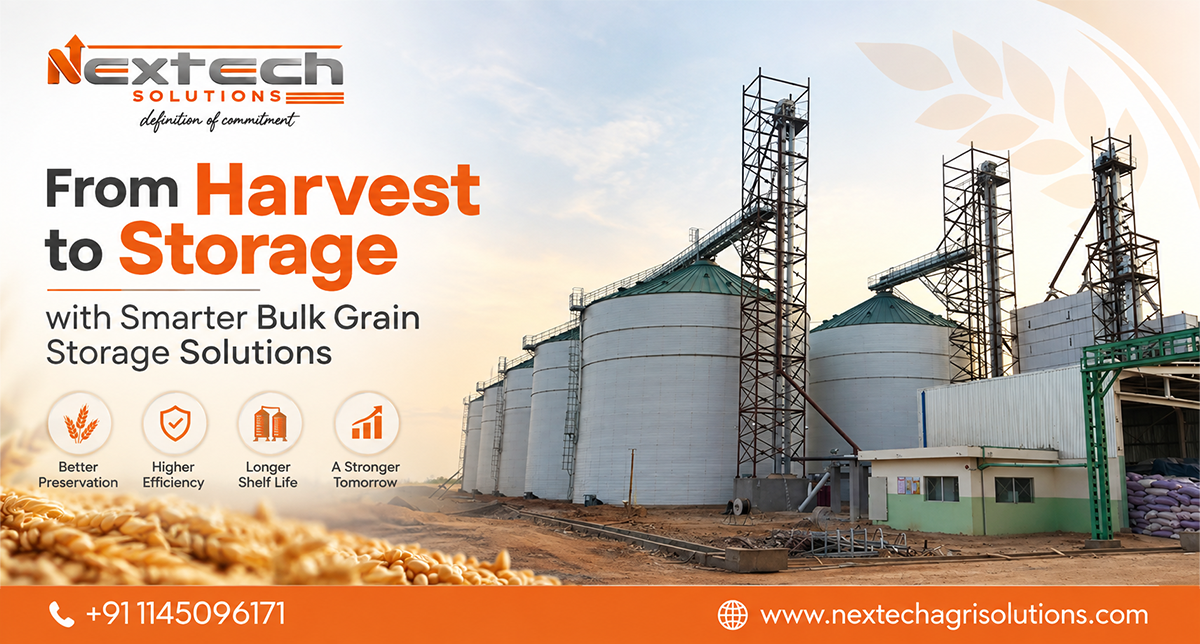
Bulk storage systems are designed around the movement and requirements of large quantities of agricultural commodities. Depending on the application, a facility may include receiving points, cleaning equipment, conveyors, elevators, storage silos, aeration arrangements, monitoring devices, and discharge systems.
The important point is that these components should work as one connected operation. For instance, if grain enters a facility faster than it can be cleaned or transferred into storage, bottlenecks can affect the entire operation. Storage planning therefore needs to consider what happens before and after the grain enters the storage unit.
Protecting Grain During the Storage Period
Grain quality does not remain unchanged simply because the product has been harvested. Conditions inside a storage facility can influence its condition over time.
Moisture is one of the factors that requires close attention. Grain entering storage with unsuitable moisture levels may develop quality problems if conditions are not managed properly. Temperature variations can also create areas where deterioration becomes more likely.
For this reason, modern storage facilities can incorporate temperature monitoring, aeration arrangements, level indicators, and other control systems. These features give operators useful information about what is happening inside the storage environment.
Regular inspection is equally important. Technology can provide data, but that information needs to be reviewed and acted upon. A combination of suitable equipment and proper operating practices creates a more dependable storage process.
Planning a More Efficient Grain Storage Facility
Good storage planning starts well before the first silo or storage structure is installed. The facility should be designed around the type and quantity of grain that will be handled.
Annual production, seasonal intake, expected storage duration, available land, vehicle movement, and future capacity requirements are all worth considering. The distance between receiving, cleaning, drying, storage, and processing areas can also influence the efficiency of the complete setup.
Material movement deserves particular attention. Grain may need to travel vertically as well as horizontally through a facility. Conveyors, bucket elevators, chutes, and other handling equipment should therefore be positioned according to the planned process flow.
A thoughtful layout can reduce unnecessary transfers and make maintenance access easier. It can also help operators understand how grain moves through the facility from arrival to final dispatch.
Technology Is Changing Grain Storage Management
Storage operations are becoming more data-driven as monitoring and automation technologies become easier to integrate into grain facilities.
Sensors can provide information about temperature and other storage conditions, while automated controls can assist with selected handling and aeration functions. Centralized monitoring can also give operators a clearer picture of multiple storage units.
The value of technology, however, depends on how well it fits the facility. A highly automated system may not be necessary for every operation. The better approach is to select technology according to storage capacity, grain characteristics, operational needs, and available resources.
This balance can help businesses avoid unnecessary complexity while still gaining useful control over their inventory.
Common Issues to Consider Before Installation
A storage project can face difficulties when capacity is calculated without considering actual seasonal intake. Another problem occurs when storage is planned separately from the rest of the grain processing facility.
For example, adding additional storage capacity may not solve a problem if the receiving section, cleaning equipment, or conveying system cannot handle the increased volume. The complete material flow needs to be assessed before deciding on individual components.
Future expansion should also be considered. A facility designed only for today’s production may require major modifications if the business grows significantly. Leaving suitable options for expansion during the initial planning stage can make future development more practical.
Maintenance access, worker safety, equipment placement, and vehicle movement should also form part of the planning process rather than being treated as secondary concerns.
Conclusion
Efficient grain handling continues long after harvest. A well-planned Bulk Grain Storage system can help businesses organize large inventories while supporting better control over storage conditions and material movement.
The right solution depends on the grain, capacity, facility layout, handling process, and long-term business requirements. Instead of treating storage as an isolated structure, businesses can plan it as part of the complete grain processing workflow.
With careful design and suitable monitoring and handling technology, grain storage can become a more organized and manageable part of the overall operation.
Call to Action
If you are planning a new grain storage facility or looking to improve an existing setup, Nextech Agri Solutions can help with professional storage planning and project consultancy. Visit the website to explore solutions designed around your facility’s operational requirements.