 MAIL US :
 CALL US :
>
CALL US :
>
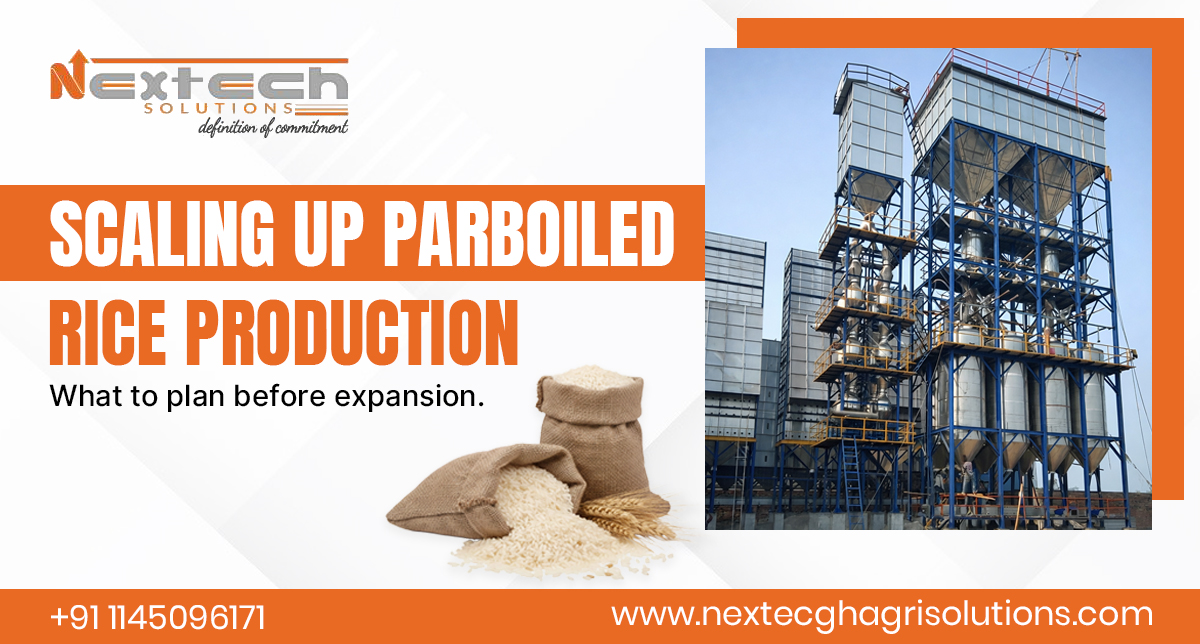
Expanding a rice processing facility is a major step for any mill owner or agribusiness operator. As global demand for Parboiled Rice continues to grow due to its nutritional value, durability, and cooking quality, many producers are planning to increase their production capacity. However, scaling operations requires more than simply adding new machines — it involves careful planning across infrastructure, technology, workflow efficiency, and quality control.
With proper strategy and technical support from industry experts like Nextech Agri Solutions, expanding production can improve efficiency, profitability, and product consistency while minimizing operational risks.
Understanding the Growing Demand for Parboiled Rice
The global market for Parboiled Rice has expanded significantly in recent years, especially in regions where rice is a staple food. The strengthening of the grain during processing, reduced breakage during milling, and improved shelf life make this product highly desirable in both domestic and export markets.
The parboiling process of rice enhances nutritional retention by driving vitamins and minerals from the husk into the grain. Because of this, consumers increasingly prefer parboiled varieties over regular milled rice.
For millers, scaling production of Parboiled Rice presents an opportunity to meet rising demand while improving operational margins.
Evaluating Existing Production Capacity
Before expanding, it’s essential to evaluate your current production system. Many mills discover that inefficiencies in workflow, drying systems, or steaming units limit output more than equipment size alone.
Assess the following:
- Current plant throughput capacity
- Boiler efficiency and steaming capability
- Drying time and drying yard capacity
- Storage infrastructure
- Milling recovery rates
A technical audit of the parboiling process often reveals opportunities to increase output without major structural changes.
Planning Infrastructure for Expansion
Infrastructure plays a critical role when scaling Parboiled Rice production. Increasing output requires consistent handling of larger volumes of paddy, water, steam, and finished product.
Key infrastructure considerations include:
Soaking Tanks
Larger soaking tanks or additional tanks may be needed to maintain continuous production cycles in the parboiling process of rice.
Steam Generation Systems
Boiler capacity must match increased production demands. Insufficient steam supply can slow the entire parboiling process.
Drying Systems
Drying is often the biggest bottleneck in Parboiled Rice production. Upgrading to mechanical dryers or expanding drying areas can significantly improve efficiency.
Storage Facilities
Expanded paddy storage and finished rice warehouses are essential to maintain uninterrupted production cycles.
Technology Selection and Automation
Modern automation plays an important role in scaling production efficiently. Automated control systems ensure consistency across the parboiling process of rice, reducing manual intervention and operational errors.
Technology upgrades may include:
- Automated soaking systems
- Controlled steaming chambers
- Mechanical or vertical dryers
- Conveyor-based material handling
- Moisture monitoring systems
When scaling Parboiled Rice production, automation improves uniformity and reduces dependency on manual labor.
Optimizing the Parboiling Process
Efficiency improvements in the parboiling process can significantly increase production without compromising quality. Uniform soaking, controlled steaming pressure, and proper drying temperatures are essential for maintaining grain integrity.
Important process optimization factors include:
- Uniform water absorption during soaking
- Controlled steaming duration and pressure
- Gradual drying to avoid grain cracking
- Proper tempering time before milling
Maintaining consistency across every stage ensures premium-quality Parboiled Rice with minimal breakage.
Energy and Resource Management
Energy consumption increases as production expands. Efficient energy management is essential for maintaining profitability in large-scale Parboiled Rice operations.
Consider improvements such as:
- Heat recovery systems
- Energy-efficient boilers
- Insulated steam pipelines
- Water recycling systems
Optimizing energy usage during the parboiling process of rice reduces operating costs and supports sustainable production.
Quality Control During Expansion
Maintaining quality standards becomes more challenging as production grows. Consistency in soaking, steaming, drying, and milling determines the final quality of Parboiled Rice.
Quality control measures should include:
- Moisture testing at each stage
- Grain strength testing
- Milling recovery monitoring
- Color and appearance inspection
Reliable quality control ensures that expanded production does not compromise product reputation.
Workforce Planning and Training
Scaling production requires skilled operators who understand the parboiling process and equipment operation. Training programs should focus on process control, equipment maintenance, and safety practices.
A well-trained workforce ensures consistent output and reduces downtime in Parboiled Rice production facilities.
Financial Planning for Expansion
Investment planning is crucial before scaling production. Expansion costs typically include:
- Equipment upgrades
- Infrastructure development
- Installation and commissioning
- Utility upgrades
- Workforce training
Working with experienced engineering partners like Nextech Agri Solutions helps mill owners design cost-effective expansion strategies for Parboiled Rice facilities.
Partnering With the Right Engineering Experts
Scaling a rice mill requires technical expertise in plant design, workflow optimization, and process engineering. Professional consultation ensures the expanded facility operates efficiently from day one.
From soaking systems to drying solutions, engineering guidance helps maintain consistency in the parboiling process of rice while increasing production capacity.
Conclusion
Expanding Parboiled Rice production is a strategic investment that requires careful planning across infrastructure, equipment, workforce training, and process optimization. When executed correctly, expansion improves productivity, reduces waste, and strengthens market competitiveness.
By focusing on efficiency, automation, and quality control, mill owners can scale operations without compromising product standards. With industry expertise and engineering support from Nextech Agri Solutions, producers can confidently expand their facilities and meet the growing global demand for high-quality Parboiled Rice.
FAQs
What is the parboiling process of rice?
It involves soaking, steaming, and drying paddy before milling to improve grain strength and nutritional value.
Why is Parboiled Rice production increasing globally?
It offers better nutrition retention, reduced grain breakage, and longer shelf life compared to regular rice.
What is the biggest challenge when scaling production?
Drying capacity and steam generation are often the main bottlenecks in large-scale Parboiled Rice production.
Does automation improve parboiling efficiency?
Yes, automation improves consistency, reduces labor dependency, and ensures uniform processing.
How can Nextech Agri Solutions help with expansion?
They provide engineering design, plant layout planning, and technology solutions for efficient Parboiled Rice production.