How to Make Profits in Rice Milling Business

Making a profit in the rice milling business is no hard to achieve if followed by proper steps. In countries like India, Rice milling remains a primary occupation for most of the population. Rice is listed amongst the top staple food, which comes in varieties and is exported widely in different nations. India has seen some rapid industrial growth in Rice Mill Business due to the introduction of new technologies and equipment. Rice milling consultants have remained one of the oldest and most practiced professions in India due to its high demand, so let us know some more steps to convert it into a profit-making business.


Land Requirement

To start with a Rice Mill Business, you need to be clear in mind about the processing capacity of your business unit, which will ultimately decide the acres of land required to perform this action. You need to choose the property wisely by considering the elevation of the property and excluding the low lying areas which are unsuitable for the process. Make sure you select the land which is well connected with the road to access the proper drainage system.


Layout and Constructions

Another essential factor to take your rice mill business to another level is the layout. The rice milling plant layout design should accurately take place to offer smoothness while carrying out the rest of the work with optimal space utilization. You also need to build up storage for raw paddy, godowns for processed rice and sheds to install rice processing unit, cleaning the unit, along with a parboiling area.

Important Resources

You need to make the right arrangements for the availability of power and electricity to run the mills without any interruption. There should be generators for backup and the required water supply for the parboiling process. You can choose your machinery depending upon the size and investment of your rice plant. This will entirely depend upon the requirements of speed, capacity, and power of the machinery. The machines can execute their performance in one, two, or multiple steps, including procedures like pre-cleaning, husk removal, and polishing.  

Lastly, for security purposes, it will be adequate to avail insurance of the assets and machinery and make sure you make the right choice of machinery models while comparing amongst their cost and performance.

Nextech Agri Solutions is the leading Rice Mill Consultant in India. If you want further to increase your profits in the rice mill business, our expert consultants can help you achieve your revenue goal in no time. What are you waiting for? Contact us now!


Enquire Now

Paddy and Rice Mill Machinery

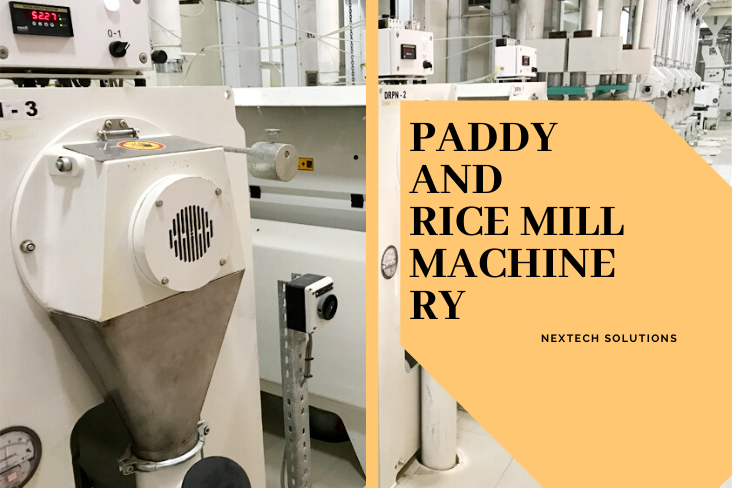
Rice in the raw form isn’t consumable for human beings. It must be processed and refined in a number of ways. In order to do so, you will need to purchase various types of rice mill machinery for different processes. 

The modern machines are designed to provide higher yield and profitability for the rice millers. Besides, these paddy and Rice Mill Machinery minimize the in-process wastage, improve the quality of the output, and maintain the hygienic standards of food processing. 

Here is the various rice mill machinery that can help you complete your rice mill setup: 

Paddy Cleaner/ Pre-Cleaner:

This machine is effective in separating both the large coarse material, such as iron particles, immature grain, and fine materials, such as grit before rice processing starts. It will significantly improve output quality and minimize grain damage. There are different types of pre-cleaner available as per their capacity. Choose the one that fits your daily or hourly requirements. 

Destoner:

The Destoner machine is used to separate stones and other heavy impurities from grains by observing the differences in their density. A Destoner can effectively remove the impurities faster than humans can, thereby increasing your overall productivity. 

Classifier:

A classifier can be used to separate different sizes of a product. This will help you remove the irregular size of grain from the bunch, thereby improving the overall quality of the yield. 

Flow Balancer/Measurer:

A flow balancer is used to discharge the required and controlled amount of various throughputs of products automatically. This will help you measure the flow rate regularly. 

Rotary Sifter:

The rotary sifter is designed to improve the Rice Milling technique. It can sift milled rice efficiently and accurately into two-seven grades. This means all the large impurities, head rice, large broken, medium broken, small broken, and bran will be removed in this process. 

Thickness Grader:

Thickness grader can effectively remove the broken and immature grain from polished rice. This can help you maintain consistency in the output. 

Rice Whitener:

The rice whitener uses advanced technology to whiten the brown rice. It uses the vertical abrasive grinding wheel to whiten the rice without influencing the original shape of the rice kernel.

Rice Polisher:

The rice polisher significantly enhances the quality of the finished product by cleaning the surface of the rice. This makes the rice ready to be sold in the market.

Colour Sorter:

Last but not least, the colour sorter can help you eliminate foreign materials, off-colour, and other bad products that are mixed with rice. It uses lighting and high-resolution cameras to identify the defective product and then rejects it using the small air nozzles at high velocities. 

Nextech Agri Solutions is the leading provider of rice mill consultants who can help you run and manage your rice mill effectively. Besides, we also offer rice mill engineers and designers to assist you with the Rice Mill Setup.


Enquire Now

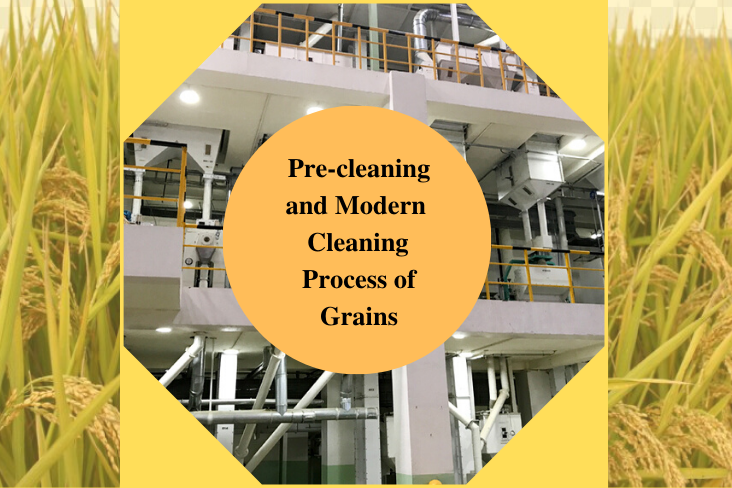
Pre-cleaning and Modern Cleaning Process of Grains

Cleaning has always been an integral part of rice milling. It helps you remove unwanted materials from the paddy, such as husks, chaff, soil, and stones. Besides, it increases the overall quality of processed rice as well as the storability of rice. Earlier the traditional methods were used, such as drying in the open, tossing and winnowing which were ineffective in cleaning the grain. This resulted in the development of new methods for cleaning and pre-cleaning. 

Pre-Cleaning

When paddy comes into the mill from farmers, it contains lots of foreign materials, such as weed seeds, soil, rubbish, and other non-grain materials. 

Pre-cleaning helps remove these materials to improve the efficiency of huller and milling recovery. No removal of these can result in damage to the machinery by blocking the bin outlets. The grains are passed via a sieve drum and are rotated in a sieve cylinder. The brush attached in the sieve cylinder keeps cleaning it. The product flows over the magnet installed in it which functions as a speed breaker to remove dust and impurities. The grain is separated according to their sizes with the help of separators. The aspiration channel emits the soil with the help of the connection pipe. The pre-cleaner consists of circular, drum pre-cleaner and clobber.

Modern Cleaning

Modern cleaning includes a colour sorting process to separate white and contaminated black grains which were earlier used by a durum processor. With the technological advancement and fitting of high-resolution cameras, the grains can be quickly inspected in a broader spectrum to subtle the impurities. Nowadays, UV rays sorting technologies are being used to check foreign materials as they offer better light density. These machines have the potential to provide more output than traditional cleaning methods, thereby improving the overall output quantity. The next step is insecticide treatments and cleaning of premises to destroy the insects before they damage the food. 

If you’re looking to improve the quality and quantity of the yield, cleaning and pre-cleaning are a must. If you’re still not sure about the modern cleaning and pre-cleaning processes, it is recommended to hire rice mill consultants to advise you until you’re confident about it. 

Nextech Agri Solutions are one of the leading Rice Mill Consultants in India who can help you with everything in rice mill plant design. From rice mill plant design to modern cleaning and pre-cleaning processing of grain, they can help you run the Rice Mill Business effectively. 


Enquire Now

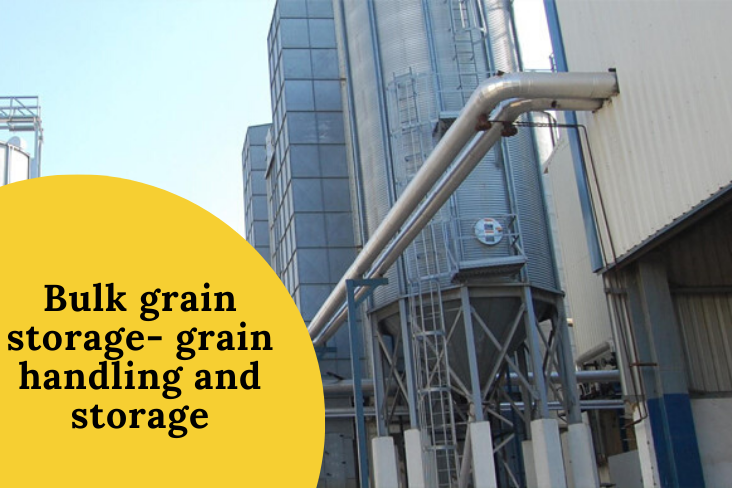
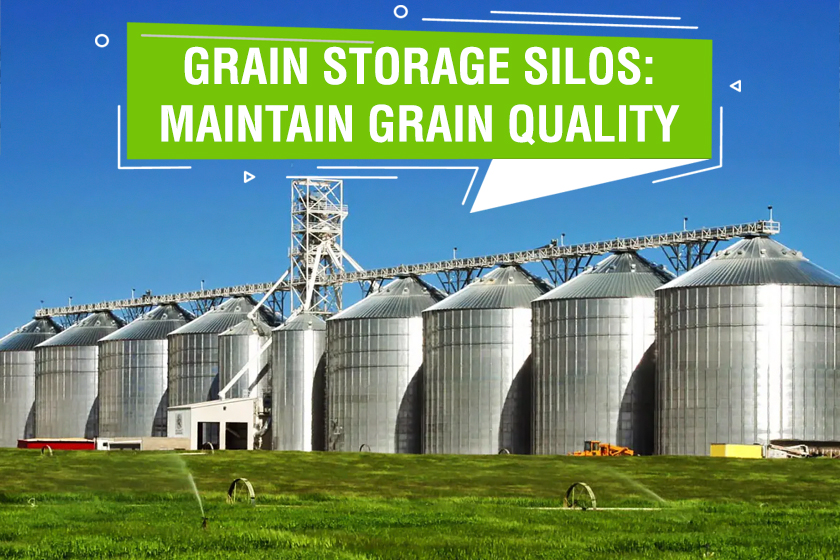
Grain storage Silos: Maintain Grain Quality

Grain which is stored by the farms either for seed or for feeding of livestock is a very beneficial investment. As the season tends to end, the farmers or even the large industries of grain have to face one last big challenge which is the management of storage. As grains are stored for a relatively long period of time, storage of the same is considered as a very delicate process of grain production which also needs proper management. 

For the need of maximizing the life of Grain Storage and also for preserving the total yield, most of the farmers and industries today opt for silos which make it easier for them to store up all the yield. Silos are the modern-day high-capacity industrial or commercial structures which are extensively used for permanent storage of grain. Not only storage but the commercial silos also help by providing various functions of harvest management.

For instance, silos can also be used for grain collection and also as centers of distribution. Most importantly, silos help in maintaining the quality of the grain. Grains are very much prone to bacteria, insects and fungal growth. Silos help in maintaining the moisture levels and thus prevent the grain from getting wasted. The sealed form of a silo is regarded as the best choice when it comes to the protection of grain. It is also recommended to have at least one large sealed silo for controlling weevils in the stored grain. When it comes to sealed silos, nothing can be better than Nextech Solutions. They also function as Storage Silo Consultant

Silo allows fumigation of the stored grain so that it can eradicate all forms of insects and bacteria from the stored grain. For final export or distribution, it is very important to maintain the quality of the grain which becomes easier by the use of silos. Also, silos help in maintaining the temperature inside so that the grain can be kept fresh.

If you are confused about whom to choose as your storage silo project consultant, Nextech Solutions is right here for you. Not only silos but they also function as rice mill engineers and designers and also as Rice Mill Consultant. So, if you have any kind of requirement regarding grain storage or any kind of commercial Grain Milling Solution, feel free to contact Nextech Solutions for getting the best advices and services for your grain.


Enquire Now

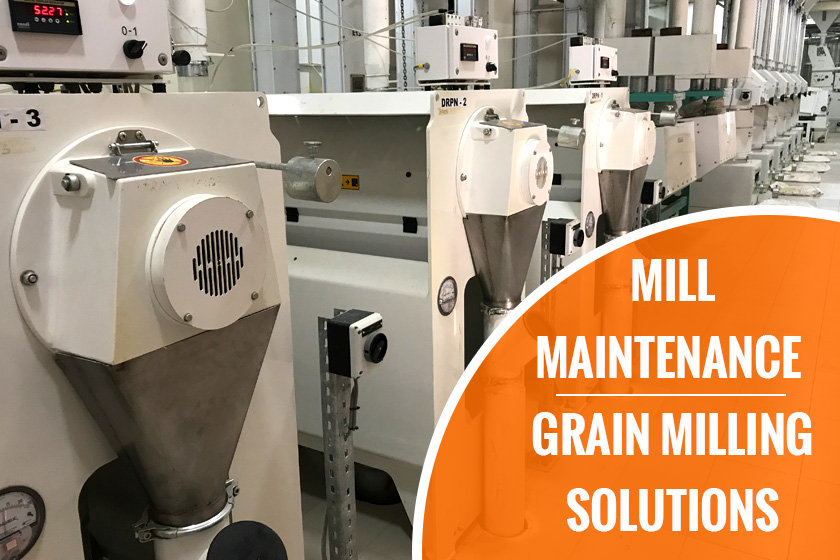
Mill Maintenance – Grain Milling Solutions

Repairing, technical services and maintenance of the rice mills are essential as they can affect the lifetime of the milling machines and makes them work accurately for a long time. If good and regular maintenance are carried out, machines can’t be able to work for a long time.

As per the recommendation of Rice Mill Consultant, Maintenance of Rice Mill Plant Design at a decided time will monitor the active machines and pieces of equipment designed by Rice Mill Engineers & Designers to detect the possible breakdowns. Therefore, it avoids downtimes for equipment and machines because of unexpected maintenance plus loss of production and needless replacement of parts.

As an outcome, downtime and maintenance stemming from breakdowns decrease more than 25% to 30%. It facilitates eradicates slight flaws before leasing them to develop into more grave troubles. 

Grain Milling Solutions

Important and crucial maintenance of the mills can be easily attained with the help of three variant methods such as Predictive Maintenance, Unscheduled Maintenance, Preventive maintenance. Mill consultants and inspectors can arrange and choose maintenance systems as per specific requirements and local situations by making use of these methods. 

Predictive Maintenance 

This method is a new approach towards new technological developments in the rice mills. The concept of predictive maintenance is first introduced by R. kubilay Kose i 1988 in turkey at national machine design and manufacturing congress of a middle east technical university. He selected to use the term “kestirimci Bakim” for a method of predictive maintenance. 

This technique of mill maintenance allows monitoring of equipment and machines to detect possible breakdowns. As an outcome, an unscheduled shutdown of equipment and machines, unnecessary part replacement and loss of production are reduced. 

Advantages of Predictive Maintenance 

  1. Breakdown decrease by 35-34%. 
  2. Expected productive and a lifetime of equipment augmented. 
  3. Machines that are in working and good conditions are not stopped unnecessarily which ultimately saves time. 
  4. Enables corrective maintenance for critical components. 
  5. Production loss decreases considerably. Production levels go up by 20-25%. 
  6. Prevent minor flaws to become a source of bigger problems in time. 
  7. It is 8-12% more profitable than preventive maintenance. 
  8. More saving of energy. 
  9. Maintenance cost decreases significantly. 
  10. Maintenance time and downtime for machine breakdowns decrease 25-30%. Work-load and labour costs decrease. 

Unscheduled Maintenance 

It is also known as “emergency maintenance, repair maintenance and breakdown maintenance. Repair and maintenance are carried out when the pieces of equipment and machines don’t work properly or stopped working. As an outcome, loss of production at the time of repair is much high. Defects occur in machines and pieces of equipment also affect the other machines and pieces of equipment. While performing unscheduled maintenance, the equipment and mills are revisited to base or original situation and efficiency by reinstating materials and parts only after the collapse. 

Because of its disadvantages, repair maintenance is not performing by any mill until needed the most. Otherwise, scheduled maintenance techniques are essentially performed.

Scheduled maintenance 

The goal of preventive and planned maintenance is to decrease the need for emergency maintenance. It is carried out by following given methods: 

Predictive maintenance 

The method of predictive maintenance is carried out of three main steps such as measurement, analysis and repair. 

Periodical maintenance 

The goal of this technique is to prevent components of machines or equipment from failure and to improve their strength before any collapse. 

The period of maintenance for equipment and machines at mills can be classified as: 
  1. Daily
  2. Weekly
  3. Long term. 

The period of maintenance for equipment and machines are already planned as per the specification provided by the companies that install them. 


Enquire Now

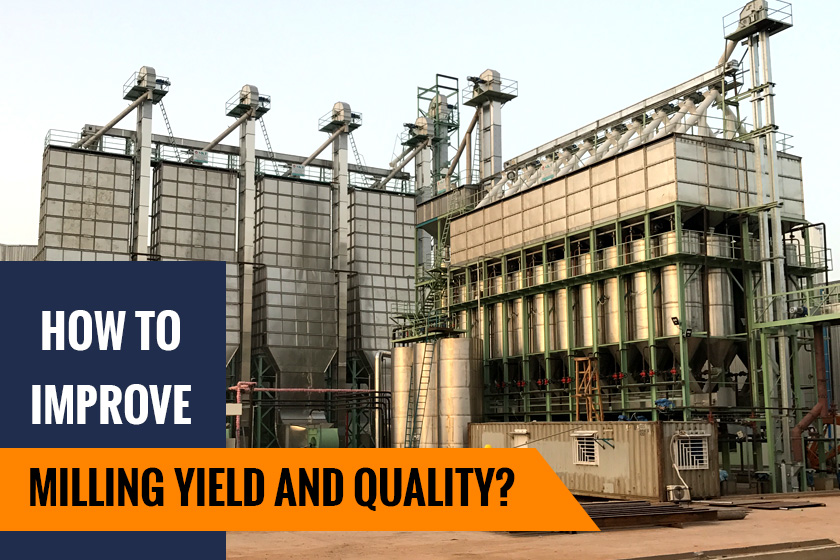
How to Improve Milling Yield and Quality?

Although milling quality is a high-priority objective for rice millers, many mill owners still struggle to achieve that. The reason is evident because Improving Milling Quality is delicate, especially if you don’t have proper knowledge of milling. rice mill

Besides, milling quality is affected by a lot of other factors including environmental factors. Other factors that might affect the milling quality are grain length, grain thickness, chalkiness, and fissure. 

Rice, being the staple food of India, will surely rise in demand in the upcoming years. This has forced rice mill owners to produce as much rice as possible. 

However, improving milling yield is yet another challenge faced by rice mill owners. We at Nextech, offer full-fledged Rice Mill Consultants to help you improve milling yield and quality. 

The first step to improve the quality of milled rice is choosing a good quality paddy. Ensure that the paddy you select has the right moisture content (14%) and has high purity. 

Other characteristics to look for are:
  • Uniformly mature kernels
  • Uniform size and shape
  • Free of fissures
  • Free of empty or half-filled grains
  • Free of contaminants such as stones and weed seeds
Characteristics of a good quality milled rice:
  • High milling recovery
  • High head rice recovery
  • No discoloration

Additionally, make sure your rice mill operator is skilled enough. Often, mill operators hire an untrained apprentice to reduce the operation cost. This hampers the quality of the milled rice. 

The equipment quality also play a massive role in the milling yield and quantity. Having a poorly maintained machine or a low-quality machine can harm the quality of the rice. 

One of the best ways to improve milling yield is by reducing the grain breakage as opposed to running the mill for additional hours every day. 

Another way to enhance the milling quality is by parboiling rice. Numerous researches have shown a significant decrease in grain breakage in parboiled rice. 

For more information on how to improve milling yield and quality, contact Nextech Solutions. From complete Rice Mill Setup to producing high-quality rice, our team of expert rice mill consultants and rice mill engineers & designers can help you achieve your business goals efficiently. Contact Nextech Solutions now.


Enquire Now

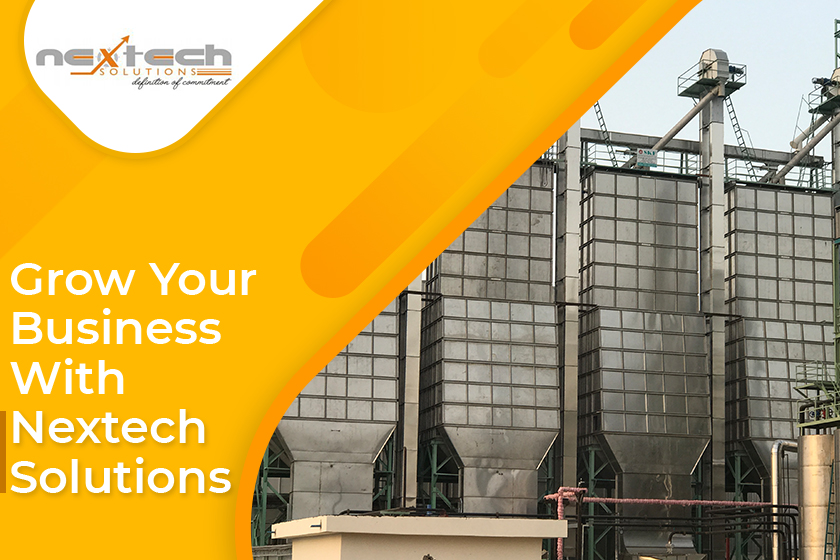
Grow Your Business with Nextech Solutions

Nextech Solutions is a company that will solve every problem and answer all your queries related to Mill Processing Business

Founded by two of the top industry experts S.P Singh and Charan Singh, Nextech commits to provide the best solution and is committed to providing you entire satisfaction of our partners. 

Being in the rice industry for more than 30 years, we exactly know what you need to increase profits and survive the competitive market easily. 

Services We Offer

We are into the consultation business. Being one of the best rice mill plant consultants in Delhi, we offer a wide range of services including:


  • Paddy Milling Plants: From rice mill plant layout design to complete rice mill setup, we offer everything you’ll need to run a successful paddy milling plant business. 
  • Rice Re-Processing: Rice re-processing is one of the most important processes in the modern milling system. We will help you generate the best quality rice after re-processing. 
  • Rice Blending Solutions: Rice processing and blending is yet another important part of modern rice mills to make sure you build your own brand. 
  • Raw Paddy Drying Solutions: Raw paddy when dried properly can help you produce high-quality rice easily. Did you know the moisture percentage in freshly harvested paddy is 18% and above? which can hamper your rice quality, if not dried properly. 
  • Bulk Grain Storage (Silos): With ever-increasing land prices, storing more grain in less space has become more important than ever. We will help you save a lot of money in grain storage. 
  • Pulses/Dal Milling: Just like rice, pulses are one of the staple foods of our country. We will help you understand the process of pulses milling.
  • Mustard Seeds Oil Mill: Mustard seeds oil is not only used in foods but is also used for rub-downs and massages. 
  • Sesame Seed Processing: Sesame seed is exported in bulk from India to European countries. This could be your next most beneficial business and we can help you achieve that feat. 
  • Multi Commodity Processing Unit: As the name suggests, a multi-commodity processing unit means processing multiple commodities of similar shape. We offer complete grain milling solutions. 


Why we are the Best for Mill Processing Business?

Nextech has highly qualified engineers who can handle all your business needs. We strive to achieve the highest customer satisfaction and being the best Rice Milling Services Provider in Delhi we handle milling businesses of all sizes. If you’re looking to make your mill processing business successful, contact us now.


Enquire Now

Need for Modernizing the Methods and Machinery of Paddy Processing?

Modernizing the Methods And Machinery of Paddy Processing not only helps you save your time but it also helps you improve the quality of the rice and produce more rice in less time. 

Paddy separators and other modern methods such as husking-rubber rolling technology, friction-type whitener polisher are being widely accepted in the modern rice mills. 

 Benefits of modern machinery for paddy processing

There are a lot of things that modern machines can do and the old ones cannot. Few of them are: 

  • Modern machines can help you process rice of all degrees of whiteness with minimum broken
  • It can help you produce high-quality rice.
  • They have higher milling efficiency. It can produce a high amount of rice in less amount of time. This is really useful for people who export rice to other countries. 
  • They don’t require too much maintenance.
  • They reduce the electricity bill.

Benefits of modern methods of paddy processing

Just like modern machinery, modern methods of paddy processing are also being widely accepted across the country. They offer a lot of benefits such as:

  • You can cater to the exact customer demand for quality and quantity. 
  • Less loss of grains.
  • Can store the milled rice for a longer period of time i.e better grain storage solutions

In the milling business, sustained production is the biggest challenge rice millers have to face. Moreover, people are getting more concerned about the quality of the rice. 

The best way to meet both the demands i.e. increased productivity and better quality is by Modernizing the Methods And Machinery of paddy processing.

Bottom Line

Allowing you to increase productivity and improve quality, modernization is the best way to increase your profits. 

We at Nextech Solutions can help you modernize your rice mill so you have to spend less on operations and can earn more by producing better quality rice. Being the leading Rice Mill Consultant we even help you if you want to export your rice. No matter if you’re looking for a storage silo consultant or a rice mill project consultant or rice mill engineers & designers, or just storage solutions. We offer everything you’ll ever need throughout your rice milling business.

How to Make Profitable Rice Milling Business

Many countries still depend on India to meet their rice needs. Being one of the top exporters of rice in the world, India provides tremendous opportunities to make a profitable Rice Mill Business. Because, of course, you cannot consume paddy in its raw form. 

Also, it’s not only about export, but rice is also the staple food in India, which means there is a huge opportunity even if you build a small rice mill that just caters to the needs of your local area.

Things to keep in mind when starting out a rice milling business

Starting a business in India is not easy, you need to acquire necessary licenses and permits from state Government, you need to create a fixed source for buying raw products, and lastly, you need a great location. 

To start with the required licenses and permits.

  • Registration of the firm
  • Udyog Aadhaar MSME registration
  • Factory license
  • No pollution certificate
  • Rice-Milling industry Acts 1958
  • PFA and ESIC registration
  • IEC registration
  • FSSAI license
  • GST registration

For a complete rice mill plant setup, you will need a minimum of 1500 sq. ft. area, however, you need to make sure the location is just right. What I mean to say is that it should be somewhere near the place where rice is grown. This will help you in two ways: one that you are assured of getting the raw materials and other is that you can save a lot on transportation cost resulting in an increase in your profit. 

Ways to make it profitable

The cost of setting up a modern rice mill plant is quite high, however, with the right steps you can easily get a high return on investment. As mentioned above, the Best Way To Make a Profitable Rice Milling Business is by ensuring that you choose a great location. Other ways to make it profitable includes:

  • Modern machinery and infrastructure (as it requires less to no maintenance)
  • Machines with high operating capacity (capacity of the machine is directly proportional to how much profit you make)
  • A proper rice mill plant layout design (for better results in rice production)

Though there is a huge opportunity in the rice milling business, we have noticed that a lot of rice mills get closed as soon as they are opened. The reason for this is simple: mill owners don’t know much about the rice business, however, they are attracted because of the money in the industry. Therefore, it is better to talk to rice mill plant consultants before you start your own rice milling plant business.

Nextech Solutions is the leading rice milling services provider in Delhi. We will not only help you make your rice milling business sustainable, but we will also help you keep your business profitable for a longer period of time.

Modern Dal Mill Plant

For every industry that aims at prospering in their field, the most important phase of their working is Production. Especially in the Food Processing Industry, trivial details like the location of the plant can influence the production factor by a large scale. Earlier known as Nextech solutions, Nextech Grain Processing and Engineering Solutions Pvt. Ltd was started 10 years ago with the vision of improving the quality of produced grains. 

The Dal Mill Plant is one of the important parts of Nextech. The use of fine and chosen machinery works delicately to produce high quality of Dal. But before moving further let’s understand certain basic concepts as mentioned below.

Milling of Pulses? 

The Dal consumed by millions of people around the globe comes in the raw form of Pulses. The pulses are dehusked and split to mold in the shape of edible dal. 

This process comprises of two general steps: 

  • Loosen the husk on pulses.
  • Removing the husk.
  • Using a machine to split the remainder into cotyledons.

The efficiency of the machinery used for the process of splitting the cotyledons marks the success of any Dal Milling project. Every kind of pulse requires an additional step that helps in better loosening of the husk. This step is known as a pre-milling treatment. The adamant cover is loosened up for better production of dal. 

Methods of Processing Pulses

The raw pulses are first brought in to clean the grain and remove any impurities or irregular sized grain. Then they are further graded into different fractions that are sent for processing. The stepwise mention of the methods used in processing pulses is provided below. 

  1. Cleaning and Grading
  2. Pitting 
  3. Pre Milling Treatment
  4. Tempering 
  5. Drying 
  6. Dehusking 
  7. Polishing

The Process of Setting Up Pulses Dal Mill

As you might have understood by now, the Dal Mill Manufacturing Process requires excellent implementation and management to produce exceptional results. 

The most important step involves rigorous brainstorming for the creation of the right business plan. The construction and implementation of a Pulses Dal Mill depend entirely on the business plan. With the years of experience, Nextech can guarantee that your search for the right resources will end at their place. 

Apart from Dal Mill Plant, Nextech is known in the market for the experienced Rice Mill Engineers and Designers that provide unique solutions for your rice production needs. A Rice Mill Consultant will be provided to study your needs and provide feasible solutions as per your guidelines. 

With Nextech, you can calmly be assured about the quality of their services.

Enquire Now